


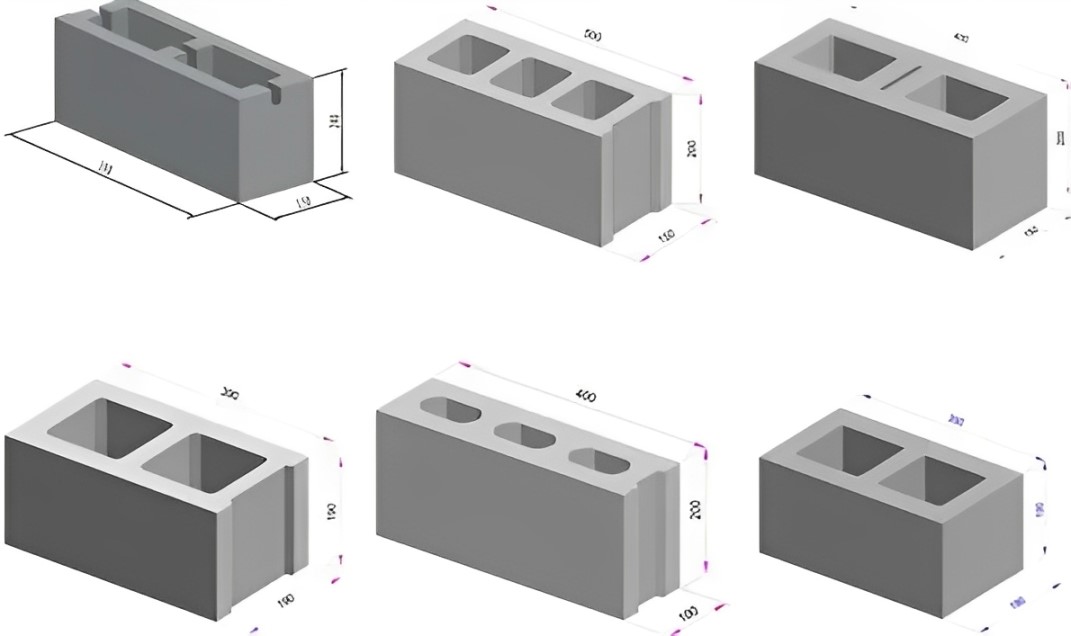
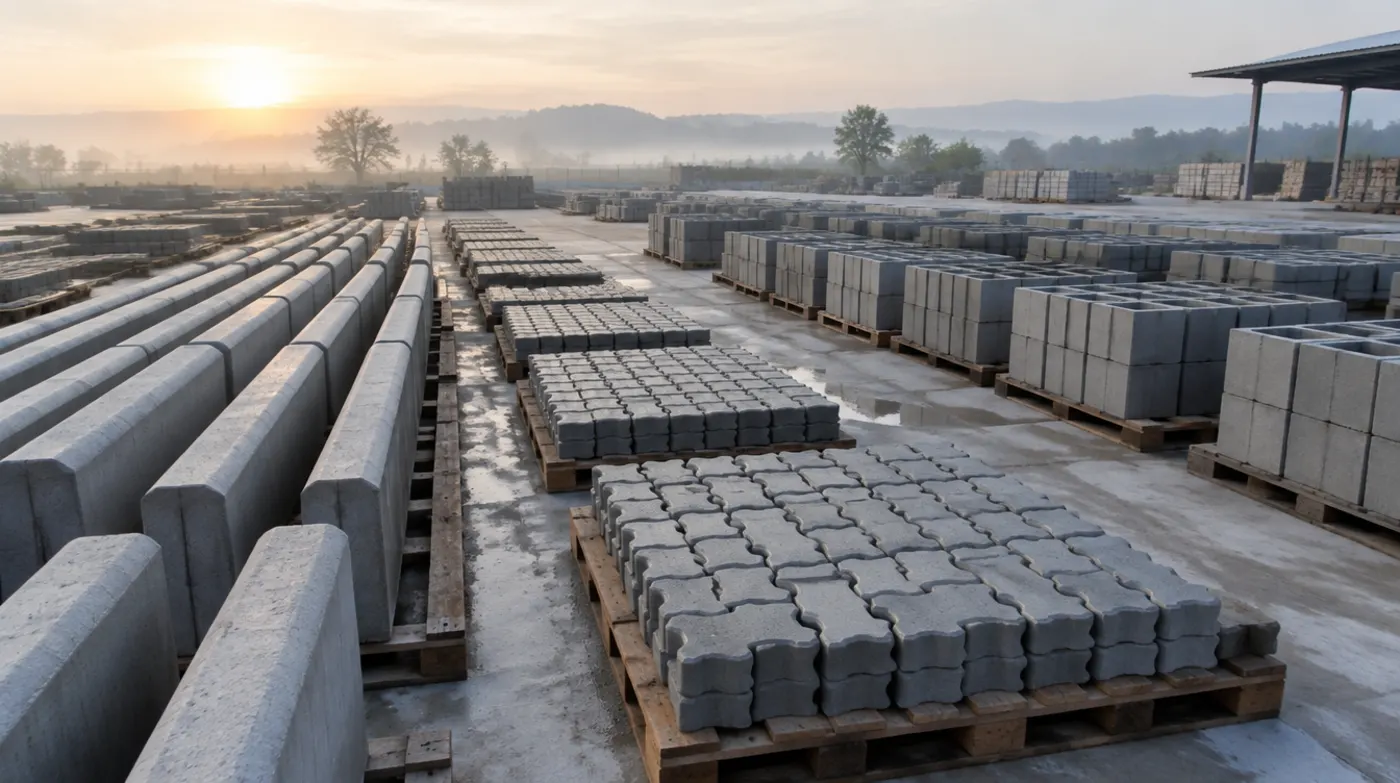
Concrete products are among the most basic and widely used components in the construction industry, and they play a major role in developing modern infrastructure. Their strength, durability, and design flexibility make them an ideal choice for a wide range of projects. As technology and concrete production machinery have advanced, new and creative types of concrete products have reached the market, and they make a strong impact on civil and building projects in both function and appearance.
This article introduces the main types of concrete products, meaning items manufactured from concrete, along with their uses and the machinery that produces them. Note that the products below are made by various companies around the world.
Architectural Blocks
Architectural blocks are the same sand-and-cement blocks as standard units, with one difference: a special process is applied after production to add value and give them an attractive look in a variety of designs. Unfortunately, there has not yet been adequate investment in this area in Iran, and most blocks made in the country still have a plain, traditional appearance. If block manufacturers invest in the machinery for these blocks, and architects become familiar with them and use them in construction, Iran will see many truly beautiful buildings and structures.
Split-Face Blocks
Split-face blocks have a stone-like face that gives a building an attractive stone appearance, and they are used mostly for exterior walls. These blocks are produced with a block splitter machine. After production and curing, the blocks are cut at a marked line using the cutting machine, known as the splitter. This is why the face looks natural and offers high strength and durability.
Granite Blocks
Granite blocks look similar to granite stone. A special treatment exposes the natural aggregate in the concrete and leaves a smooth, uniform surface. They are used mainly in schools, government offices, libraries, chain stores, fire stations, and small projects. The granite block is one of the most widely used blocks in building construction today, and it suits almost any structure that can benefit from a smooth, glossy look. Water-based acrylic is used in making these blocks.
Polished Blocks
The newest and one of the most creative block types is the polished block, which has a much smoother and glossier appearance than the granite block. It is made through skillfully executed grinding and finishing, which brings out its natural beauty and creates a unique finish that is almost impossible to replicate. This beautiful, eye-catching block adds exceptional value to any project and can be used in boutiques, courthouses, and city hall buildings.
Antique Blocks
The antique block has a shot-blasted finish that displays the natural beauty of the aggregate, the main element inside the block. This finish gives the block a distinctive rustic texture and a weathered face. The block meets the ASTM C90 standard specification for load-bearing concrete masonry units, and its weathered antique look makes it excellent for interior and exterior facades, walls, accent bands, and more.
Antique blocks are not only visually appealing and durable, but they also offer building owners many other advantages. They install quickly and easily, which saves time and reduces construction costs. They also provide reliable resistance to fire damage for up to four hours, and for this reason they are well suited to keeping conditioned or heated air inside a facility, which results in lower energy costs.
Brick-Look Blocks
For some building projects, architects want the look of brick with the properties of concrete. Brick blocks, also called brick-look blocks, meet this need. With its brick appearance, this block is stronger and more realistic than many other brick substitutes. Brick-look blocks comply with the ASTM C90 standard for load-bearing wall masonry. Their height equals that of one brick, but they have the length and depth of a traditional cement block. After curing, these blocks are cut with the diamond blade of a cutting machine to sizes of 9×9×39, 19×9×39, and 29×9×39 cm.
Patterned Blocks
Patterned blocks are cement blocks with a variety of shapes on their face. Also known as decorative blocks, they are used to build attractive and varied walls.
Special Concrete Products
Several other concrete products are available on the global market, as described below:
Concrete Wheel Stops
Concrete wheel stops are highly durable and easy to install. Large businesses, organizations, and agencies with many staff need concrete blocks in their parking lots. These blocks help make many areas safer, more efficient, and better organized, mark out spaces, and maintain order in busy areas used by employees, customers, and others.
Advantages of Concrete Wheel Stops
Concrete: Traditional concrete may be the most popular material for parking stops. If you want a fast, simple, and effective solution, choose concrete stops.
Concrete logs: Log-style concrete stops look like real trees, which lets them blend with the natural surroundings of a parking lot and avoid creating an eyesore for employees or customers.
Bright yellow concrete: Bright yellow concrete parking stops are popular for their high visibility and for the way they clearly outline the layout of a parking lot.
Concrete wheel stops are made in two sizes: 1.8 m for passenger cars and 2.5 m for trailer trucks.
Splash Blocks (Downspout Blocks)
Are you renovating the gutters at your home or workplace? Do you want to improve how water drains away from the base of the structure? If so, splash blocks will solve this problem and stop water from splashing onto the surrounding area.
Advantages of Splash Blocks
Proper drainage: To protect a house and its foundation, water must be moved effectively away from the base of the house. A splash guard helps the channel direct water where you want it to go, so you can avoid the damage and cost of foundation problems.
Stain elimination: Without a splash guard, water pouring out of the gutter system can spray mud all over your house. The resulting stains are ugly and can also damage your siding over time.
Appearance: Thanks to their attractive look, concrete blocks make good additions to the exterior of a home. They can serve as decoration and complement other landscaping and hardscaping in your yard.
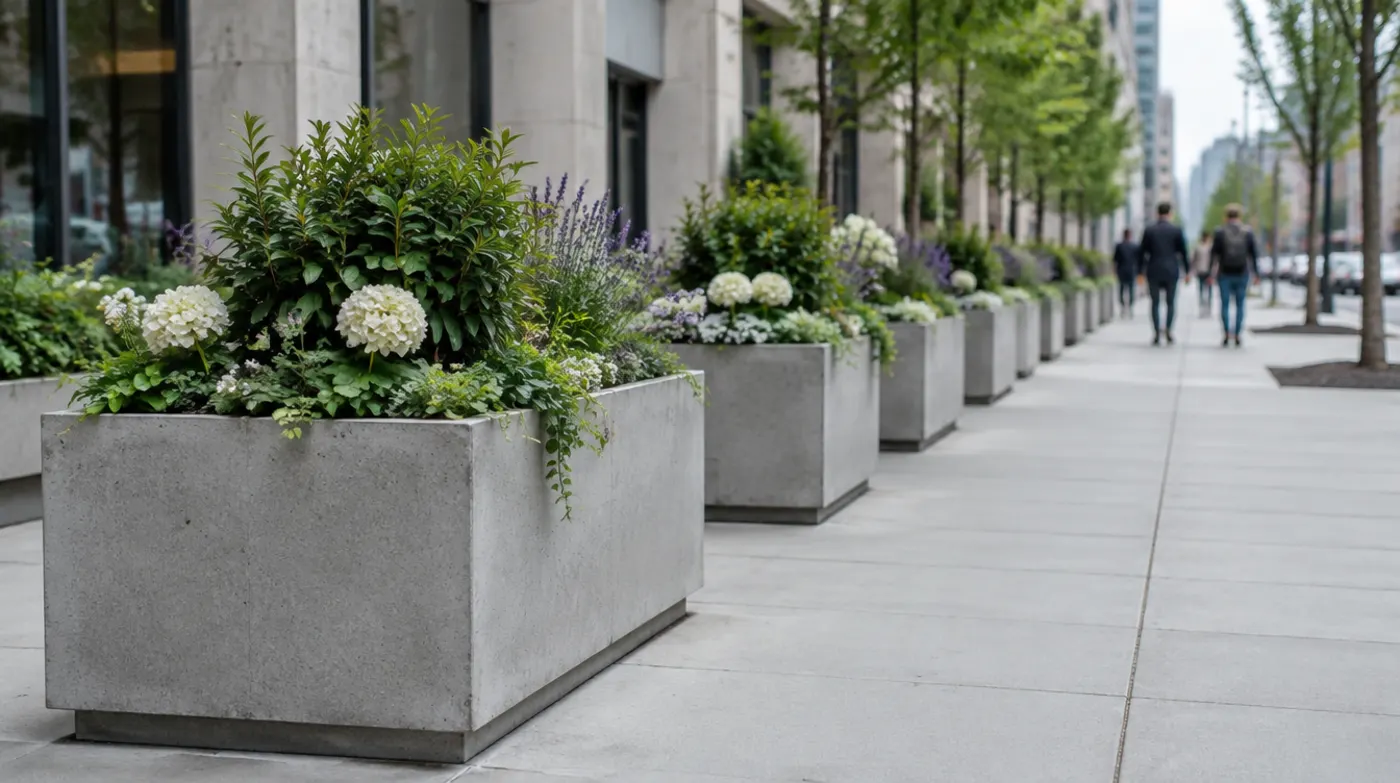
Concrete products are not limited to blocks and pavers. Concrete planters and planter blocks are also widely used in landscaping and slope stabilization. To learn about their types, uses, and how they are made, read our guide to the concrete flower box. If you plan to produce these items, our article on types of concrete molds explains how to choose and maintain a mold. Each mold is built for a specific machine; see the product pages for specifications of the Tarahan Machinery concrete block mold, concrete paving mold, and concrete curb mold.
Conclusion
With their variety of designs, materials, and uses, concrete products are a good fit for many different building and civil engineering needs. Products such as architectural, granite, polished, and antique blocks are not only technically strong but also add beauty and visual appeal to projects. Special products such as concrete wheel stops and splash blocks also help improve the performance and safety of structures. With a better understanding of these products and their characteristics, this technology can be put to use in more modern and efficient construction.
To produce concrete pavers and paving stones, compare the single-hopper and double-hopper models on the paving block making machine page.


Submit Comment: