


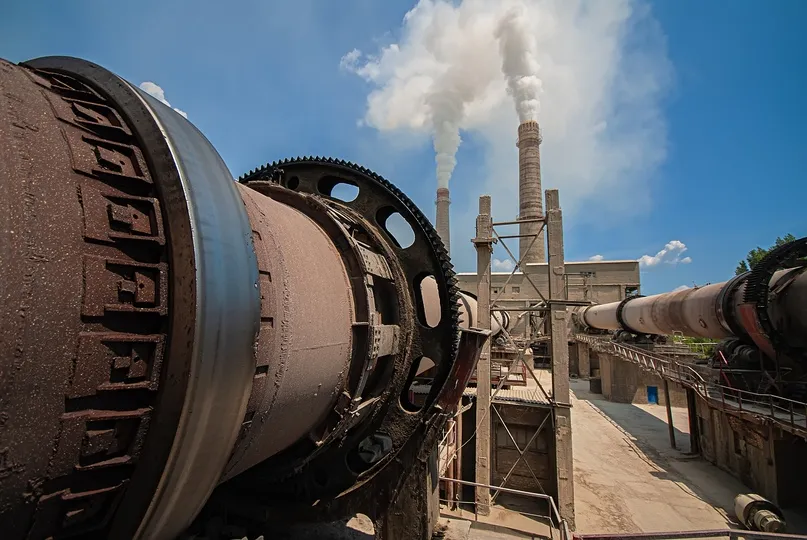
The carbon impact of cement production is large: Chatham House (2018) estimates that about 8 percent of the world’s carbon dioxide comes from cement production. Roughly half of that carbon comes from breaking down limestone in the kiln and about 40 percent from kiln fuel. The ways to cut it are replacing part of the clinker, using cleaner fuel and energy, and, in block plants, dosing cement more precisely and producing less waste.
This is not only an environmental issue. For anyone producing blocks, curbstones or pavers, cement is usually the most expensive raw material. Every kilogram of cement that goes into the mix for no reason, or ends up in the scrap pile with a broken block, is both money and carbon. That is why the last part of this guide is devoted to practical steps on the shop floor.
Why is cement one of the world’s largest sources of carbon?
Cement is the glue in concrete, and concrete is everywhere in buildings and infrastructure: foundations, slabs, roads, bridges, canals, wall blocks and street curbs. According to the Global Cement and Concrete Association (GCCA), concrete is the most used material on earth after water. When a material is used on this scale, even a moderate carbon footprint per ton adds up to a huge total.
The International Energy Agency (IEA) estimates that global cement production has been around 4 billion tons a year in recent years. A large share of it is used in developing countries that are still building housing, roads, and water and sewer networks. Demand will not fall any time soon, so the solution has to come from cutting the carbon in every ton of cement and every cubic meter of concrete, not from abandoning concrete.
The key point is that concrete itself is not a carbon-intensive material. Aggregate, meaning sand and gravel, makes up most of the volume of concrete and carries little carbon. Most of the carbon in concrete comes from the cement that goes into it, so any solution that uses less cement per unit directly reduces that unit’s carbon.
How is cement made, and at which stage is carbon released?
Portland cement production has several main stages:
- Quarrying and raw material preparation: Limestone and clay (or similar materials) are quarried, crushed and blended in set proportions.
- Grinding and homogenizing: The raw materials are ground into a fine powder so they react evenly in the kiln.
- Preheater and rotary kiln: The powder moves down the preheater tower and enters the rotary kiln. The burning zone of the kiln is usually around 1450°C. At this stage the limestone breaks down and the material turns into hard nodules called clinker.
- Clinker cooling: The hot clinker is cooled quickly.
- Finish grinding: The clinker is ground with some gypsum (and, in blended cements, other additives) to make cement.
Carbon is present at almost every point in this chain, but the bulk of it comes from the kiln stage. This stage is what sets the cement industry apart from most other industries.
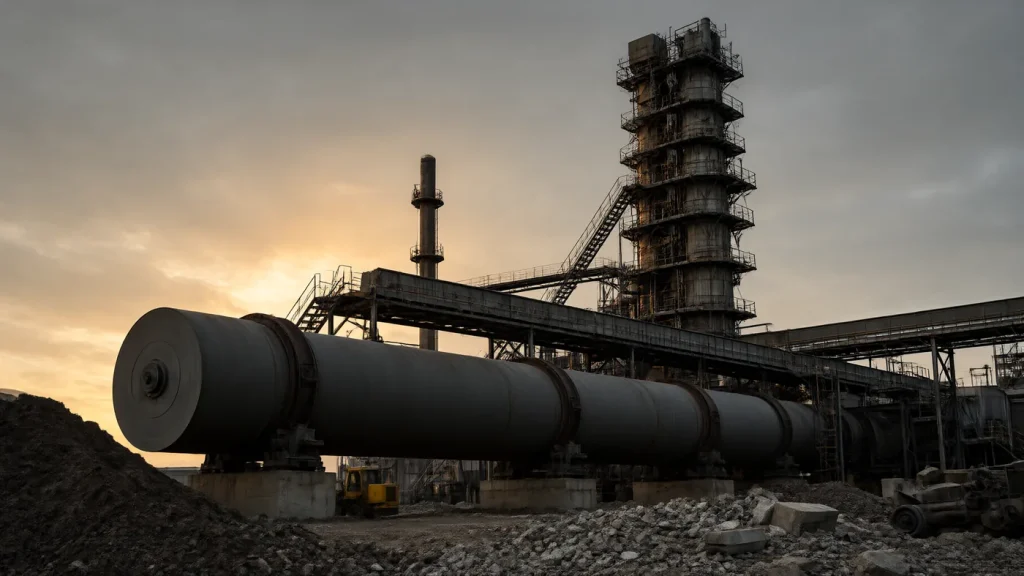
Main sources of carbon dioxide emissions in cement production
Based on the 2018 Chatham House report “Making Concrete Change” and a 2018 summary by Carbon Brief, the carbon from cement production can be split into three main shares. The figures below are approximate global averages and vary from plant to plant.
1. Limestone calcination (about half of the carbon)
Limestone is made of calcium carbonate. When it is heated in the kiln, it breaks down into calcium oxide (lime) and carbon dioxide. This reaction is called calcination. This carbon comes from the rock itself, not from fuel, so it is released even if the kiln runs on 100 percent clean electricity. This share is the hardest part of the problem and the main reason most solutions focus on reducing clinker.
2. Kiln fuel (about 40 percent)
Bringing a kiln up to about 1450°C takes a lot of thermal energy. Depending on the country, the kiln burns coal, petroleum coke, heavy fuel oil or natural gas. The fuel type and the kiln’s thermal efficiency directly affect this share; older kilns and the wet process use more energy than newer kilns with multi-stage preheaters.
3. Quarrying, transport and electricity (the remainder, about 10 percent)
Quarrying and hauling raw materials and cement takes fuel, and mills, fans and conveyor belts also use a lot of electricity. This share is smaller, but it depends on how the grid’s power is generated.
What is the climate impact of carbon from cement production?
Carbon dioxide is the most important greenhouse gas from human activity, and it stays in the atmosphere for a long time. The cement industry stands out in the climate debate because it is both large and “hard to abate”: the calcination share does not go away by switching fuels. That is why the roadmaps published by the IEA and GCCA for this industry propose a mix of several tools together rather than betting on a single technology.
There is also a less discussed point: over its service life, concrete slowly absorbs some carbon dioxide from the air (a process called carbonation). This uptake is real, but it offsets only part of the carbon from production and does not replace cutting emissions at the production stage.
Global solutions for reducing carbon in cement and concrete
Lowering the clinker ratio in cement (blended cements)
The most effective and accessible approach is to replace part of the clinker with other materials: blast furnace slag, power plant fly ash, natural pozzolans, limestone powder and calcined clay. Cements containing these materials are called blended cements; pozzolanic and slag cements are familiar examples. These cements usually reach their final strength more slowly and need more careful curing, so they should be checked with a few trial batches before being used in production.
Energy efficiency and alternative fuels
More efficient kilns, waste heat recovery and alternative fuels (such as industrial waste and biomass) reduce the fuel share. These are jobs for cement plants; concrete product manufacturers have no direct role in them.
Carbon capture, utilization and storage (CCUS)
In this method, carbon dioxide is captured from the plant’s stack and then stored or used. Because the calcination share cannot be removed any other way, this technology plays a major role in long-term roadmaps; but it is still expensive and only deployed on a limited scale.
Injecting carbon into concrete: CarbonCure
The Canadian company CarbonCure offers a technology in which a small amount of captured carbon dioxide is injected into fresh concrete during mixing. The gas reacts with cement compounds and turns into tiny calcium carbonate particles that stay locked in the concrete. According to the manufacturer, this lets producers use slightly less cement without losing strength. The system is designed for ready-mix concrete plants and precast producers, and it requires a gas supply and dedicated equipment.
Carbon curing: Solidia
Solidia takes a different approach: a lower-lime cement that is fired at a lower temperature, and products made with it are cured in a carbon dioxide chamber instead of with water. This method has been proposed mostly for factory-made precast products such as blocks and pavers, because it needs a controlled curing chamber.
Both technologies are interesting, but for a small plant in Iran they are not a practical option today. The real work of a plant lies elsewhere.
What can a block, curbstone and paver plant owner do?
A concrete product manufacturer does not control the cement kiln or its fuel, but has full control over how much cement goes into each block and how much of the output reaches the customer intact. Fortunately, most of the steps that use less cement are the same ones that raise quality and cut waste.
1. Make your mix design weight-based and consistent
In many plants, cement is added with “one extra bag just to be safe” because the operator is not confident in the product’s strength. That extra cement usually covers up weaknesses in mixing, compaction or curing. It is better to have a defined mix design, batch materials by weight (not by eye with a bucket), and use a few trial batches to find the lowest cement content that delivers the required strength. A cement weighing scale brings that accuracy to every batch. We explain the basic proportions and the role of each material in our article on how to make concrete block mortar.
2. Control the water, not just the cement
The water-cement ratio is one of the main factors in strength. Tarahan Machinery’s article on block mix gives a range of about 0.4 to 0.5 for block mortar. Excess water evaporates after drying and leaves tiny voids; the result is a weaker block that tempts the producer to add more cement next time. With controlled water, the same amount of cement gives more strength. Also dampen porous aggregate such as pumice slightly before mixing so it does not soak up the mix water.
3. Uniform mixing
If cement does not coat every particle, part of it is effectively wasted and part of the block is left short of cement. A mixer suited to the dry mix used in block making is a prerequisite for getting full value from every kilogram of cement. See the criteria for choosing a mixer in our guide to choosing a mixer for block making.
4. Strong vibration and pressing: higher density with less cement
Block mix is dry, and its strength depends above all on compaction. When the machine locks the particles tightly together with enough vibration and pressing force, fewer voids remain and you need less cement to reach the same strength. Conversely, a weak machine or poorly tuned vibration forces the plant to make up for poor compaction with cement. For example, the TM-104 stationary block machine has 120 bar of hydraulic pressure and double vibration, according to Tarahan Machinery’s published specifications. If you already own a machine, follow our article on adjusting block machine vibration to set it up correctly, and to compare models see the block making machine page.
5. Natural lightweight aggregate for non-load-bearing walls
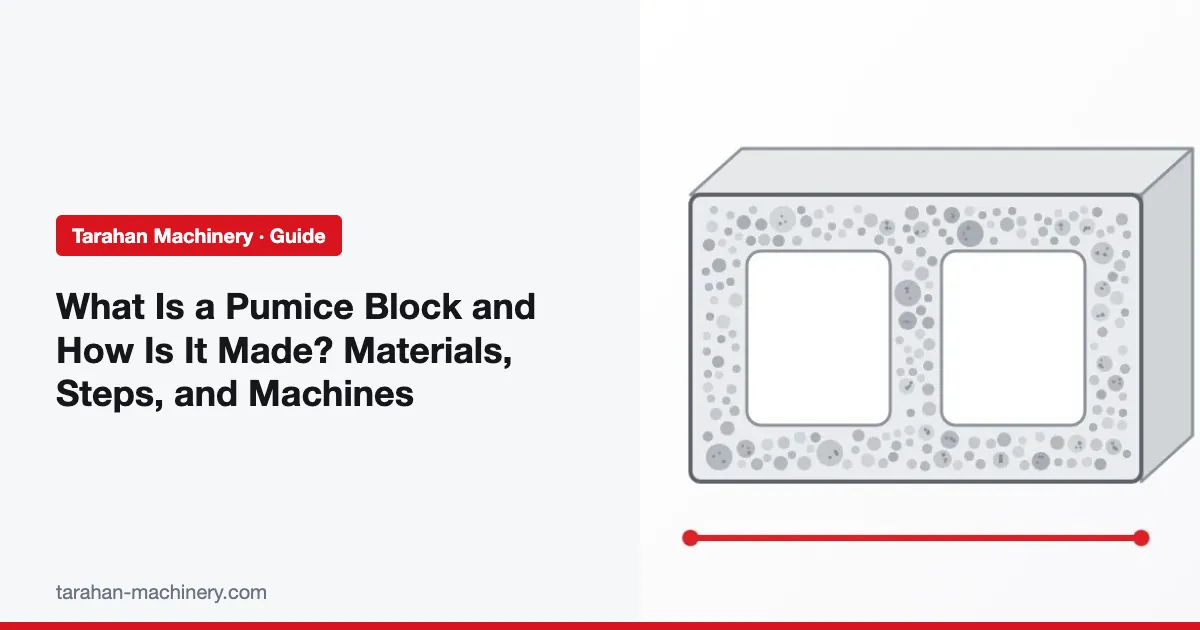
Pumice is a natural volcanic rock used as aggregate without any kiln firing. Pumice blocks are lighter and put less dead load on the building frame, which at building scale means a lighter frame and foundation. That said, pumice is more sensitive to moisture and compaction, and if it is not produced correctly, waste goes up. We cover the correct steps in our pumice block production guide.
6. Foam concrete and CLC blocks for non-structural work
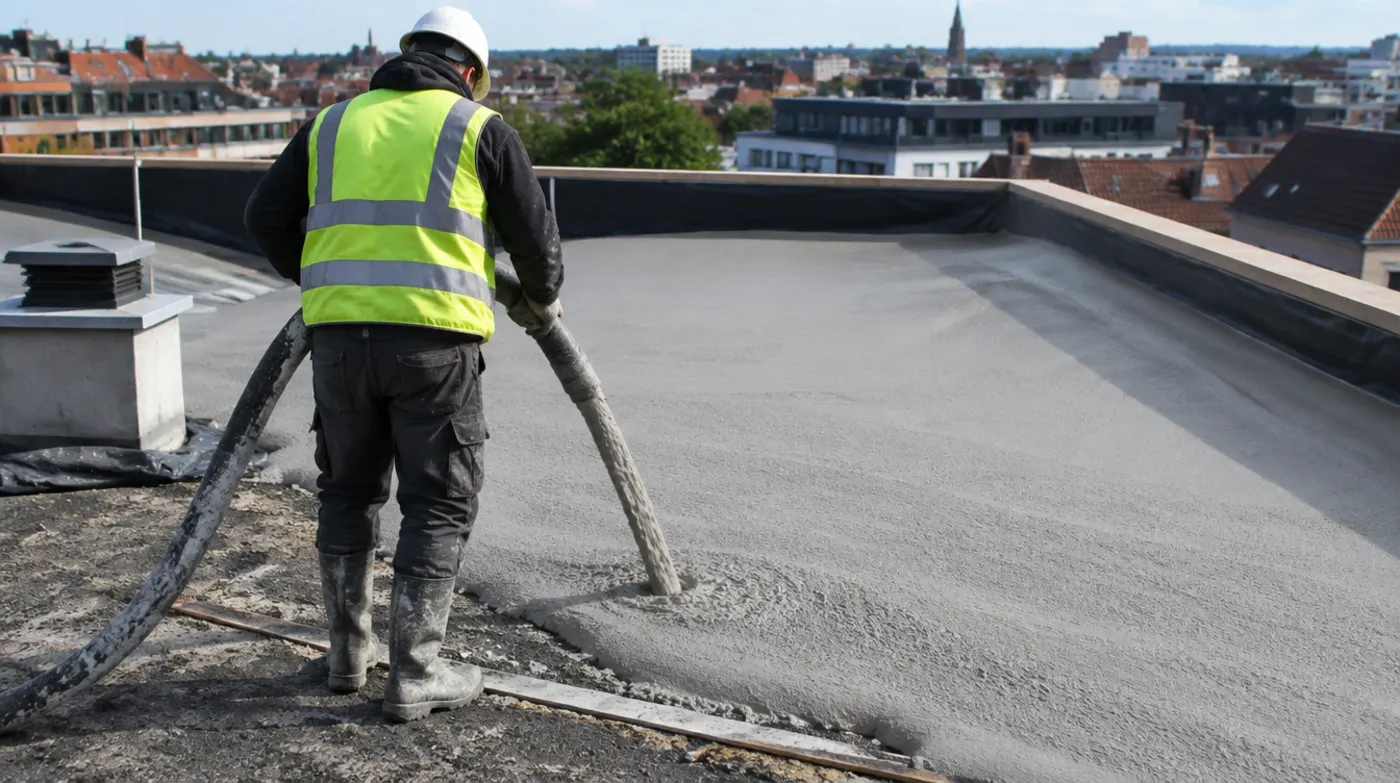
In foam concrete, air bubbles fill a large part of the volume and gravel is left out, so less material is used per cubic meter. Foam concrete does not replace structural concrete, but it is a lightweight option for roof slope screeds, floor fill, insulation layers and void filling. Tarahan Machinery’s foam concrete machine comes in six models, FM 20 to FM 50, with a capacity of 20 to 50 cubic meters per 8-hour shift, and is mounted on a pickup or truck. If you want to produce lightweight wall blocks at your plant, the CLC lightweight block production line is built for exactly that. Read about how foam concrete differs from regular concrete and where it is used in our article what is foam concrete.
7. Proper curing
Cement needs moisture and time to set and gain strength. In a block that dries too fast in sun and wind, part of the cement never fully reacts; in other words, you paid for that cement but never got its strength. According to Tarahan Machinery’s technical articles, curing by water spraying usually takes about a week, and in a steam room about a day. Methods and standards for this stage are covered in our article on concrete block production basics.
8. Keep waste to a minimum: a broken block is wasted cement
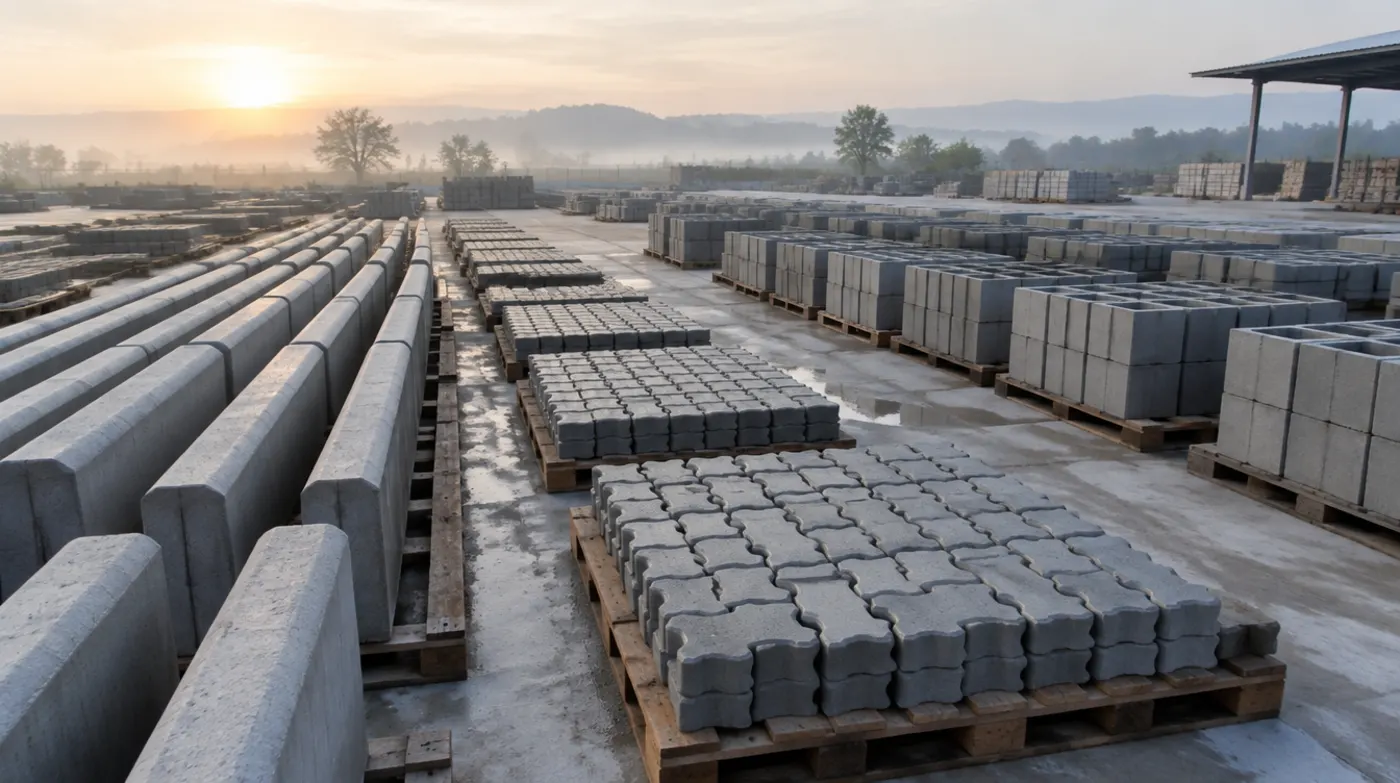
Every block that chips or breaks during collecting, stacking or loading wastes all the cement, energy and labor that went into making it. Cutting waste may be the simplest way to reduce a plant’s carbon, because it requires no change in materials. We look at common reasons blocks break and ways to increase density in our article on why pumice blocks crumble.
Comparing carbon reduction methods: which suit a small plant?
| Method | Where it is applied | What it requires | Suitable for a small plant? |
|---|---|---|---|
| Blended cement (pozzolanic, slag) | Cement plant; chosen at the block yard | Local availability, trial batches, more careful curing | Yes, with testing before full-scale production |
| Alternative fuels and efficient kilns | Cement plant | Industrial investment | No; outside the plant’s control |
| Carbon capture, utilization and storage (CCUS) | Cement plant | Costly technology and infrastructure | No |
| CarbonCure | Ready-mix and precast concrete plants | Dedicated equipment and a CO2 supply | Not yet |
| Solidia | Precast element plants | Special cement and a CO2 curing chamber | Not yet |
| Mix design by weight and water control | Block yard | Weighing scale, consistent batching, sampling | Yes; low cost and immediate |
| Strong vibration and pressing | Block yard | A sound, properly adjusted machine | Yes; when buying or repairing a machine |
| Pumice, foam concrete and CLC | Block yard and job site (non-structural only) | Moisture control; for foam, a foam concrete machine or CLC line | Yes, for walls and non-load-bearing layers |
| Proper curing and less waste | Block yard | Shaded area, water or a steam room, careful handling | Yes; the biggest impact for the lowest cost |
Challenges of cutting carbon in the cement industry
- The chemistry of calcination: as long as clinker is made from limestone, some carbon release is unavoidable.
- Cost and capital: technologies such as CCUS are expensive, and their payback depends on policy and the carbon price.
- Availability of substitute materials: slag and fly ash are not available in sufficient quantities everywhere.
- Standards and market trust: builders trust the cement and concrete they know, and changing specifications takes time.
- Production quality: lower-carbon cement will not perform well in a plant with weak vibration and poor curing; production quality is a precondition for every solution.
The future of low-carbon cement and concrete
The path laid out by international roadmaps is not a single silver bullet. It is a combination of less clinker in cement, less cement in concrete, less concrete in structures through better design, cleaner energy and, eventually, carbon capture. The “less cement in concrete” link is exactly where concrete product manufacturers have a role. A plant that already runs a precise mix design, good compaction and low waste today has a lower unit cost and is better prepared for whatever stricter market requirements come next.
Frequently asked questions
What share of global carbon emissions comes from cement production?
According to Chatham House (2018), about 8% of the world’s carbon dioxide emissions come from cement production.
Where does most of the carbon in cement come from?
About half comes from the breakdown of limestone in the kiln (calcination) and about 40% from the fuel that heats the kiln. The rest comes from quarrying, transport and electricity.
Does adding more cement to the block mix always increase strength?
Not necessarily. If the real problem is too much water, poor mixing, weak vibration or bad curing, extra cement only raises costs. Fix those factors first, then find the minimum cement content you need with trial batches.
Do pumice blocks or foam concrete have a lower carbon footprint?
These materials are lightweight and put less dead load on the structure. Pumice is a natural stone used without kiln firing. The exact carbon footprint depends on the mix design and cement content of each product, so no general figure can be given.
Can foam concrete be used for a building’s structural frame?
No. Foam concrete is used for non-structural layers such as roof slope screeds, floor screeds and insulation. Columns, beams, slabs and foundations are built with ordinary and reinforced concrete.
Can CarbonCure and Solidia be used in small plants?
Not at present. Both are designed for ready-mix or precast plants with dedicated equipment. For a small plant, controlling the mix design, compaction, curing and waste has a more immediate effect.
Conclusion
The carbon impact of cement production is real and large, and it is rooted in limestone chemistry and kiln energy. Cement plants are reducing this share with less clinker, better fuels and, in the future, carbon capture. The role of a block, curbstone and paver plant is simpler and closer to home: batch cement by weight, control the water, get good compaction with a sound machine, use pumice and foam concrete for non-load-bearing work, cure properly and don’t let blocks break. If you need advice on choosing a block making machine, a foam concrete machine or a CLC line, call the Tarahan Machinery team at +98 914 584 1914.


Submit Comment: