


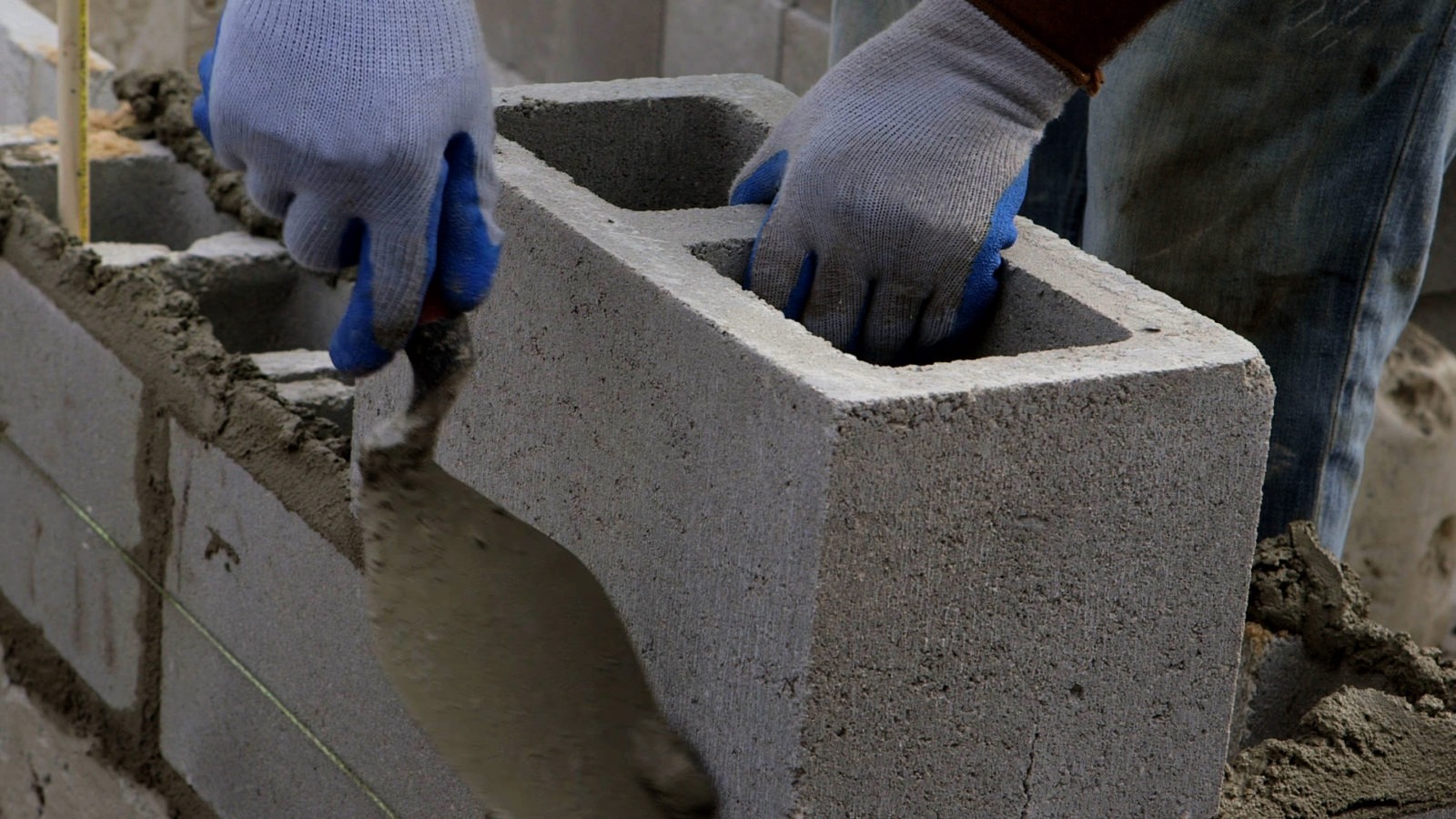
Cement blocks, also called concrete blocks, are among the most widely used materials in modern construction. In cement block manufacturing, cement is combined with other materials such as sand, pumice, perlite, or LECA. The resulting high strength and insulating properties have earned these blocks a special place in wall building, partition work, and roof construction.
In recent years, clay blocks have been banned in some cities in Iran and high-quality pumice has become easier to obtain. As a result, lightweight pumice blocks are getting more attention than ever because of their lower weight and good insulating properties.
Making Cement Blocks
Cement blocks, or concrete blocks, can be made from a variety of materials. Cement is the constant in all of them, and the other ingredients may be sand, pumice, perlite, or LECA, each with its own properties. Recently, however, pumice has become the more common choice, especially in the western cities of Iran, because Tabriz has numerous high-quality pumice mines. Pumice makes the block lighter, which is why these blocks are sometimes known on the market as “lightweight blocks.”
Since Iran’s Construction Engineering Organization banned clay blocks in some cities, cement blocks have become common for walls, partitions, and roofs.
Cement Block Standards
In terms of appearance, cement blocks must be smooth and unbroken, and their surface must allow plaster and mortar to bond easily.
Iranian National Standard No. 70 divides hollow wall blocks into several categories, with these standard sizes: 20×40×10, 20×40×15, and 20×40×20. The shell thickness of the blocks must be 3 cm for small blocks and 4 cm for medium and large blocks.
Lightweight wall and roof blocks are used to reduce the dead load of a building and limit heat and sound transfer. As mentioned above, lightweight blocks here means pumice blocks, aerated (AAC) blocks, or cellular (CLC) blocks.
The density of a lightweight block is between 1200 and 1450 kg/m³. The average compressive strength of three samples must be at least 70 kg/cm², and the minimum compressive strength of any single sample must be 55 kg/cm². A block made of sand and gravel weighs about 2000 kg/m³.
Mix Design for Sand Blocks
The concrete used to produce blocks must be made from a dry mix.
The mix design for the concrete used in block production should be:
- 1 part cement
- 3.5 parts gravel
- 2.5 parts sand
- 130-150 liters of water for vibrated concrete, or 160-180 liters for non-vibrated concrete.
Curing Cement Blocks
The following methods are used to cure cement blocks:
1. Curing with a Heater
This method is used in small block-making workshops with low production capacity because it requires little equipment. The blocks are placed in front of a heater or fan-equipped stove, and warm air passes between them. The blocks must be covered to retain the heat.
2. Curing with Water
Like the method above, water curing requires no special equipment. It is used mostly where blocks sit in the open and are exposed to direct sunlight. The blocks are sprayed with a sprinkler to keep their moisture from dropping. Curing with this method usually takes one week.
3. Curing with Steam
High-capacity plants use this method to shorten drying and curing time. It requires designing and building a steam room, which must be kept at 80°C. With this method, curing time is reduced to one day.
Important Note
Whichever of the above methods is used, once the stated times have passed, the blocks must be stored where they are not exposed to direct sunlight or wind. It is also best to keep them in these conditions for up to three weeks so they dry evenly.
Block moisture must not exceed 2% for blocks with a density of 1400 kg/m³ or 5% for blocks with a density below 1400 kg/m³, because excess moisture causes cracking and shrinkage.
Conclusion
Thanks to their strength, high durability, and suitability for all kinds of construction projects, cement blocks are one of the most important building materials. Following standards and production principles, including choosing quality materials, using an accurate mix design, and applying a suitable curing method, has a major effect on the final quality of the blocks.
In addition, lightweight blocks with thermal and acoustic insulation properties can meet the needs of modern construction. Following the points above makes it possible to produce high-quality, practical cement blocks, which improves the efficiency of construction projects while helping to save costs and reduce building problems.
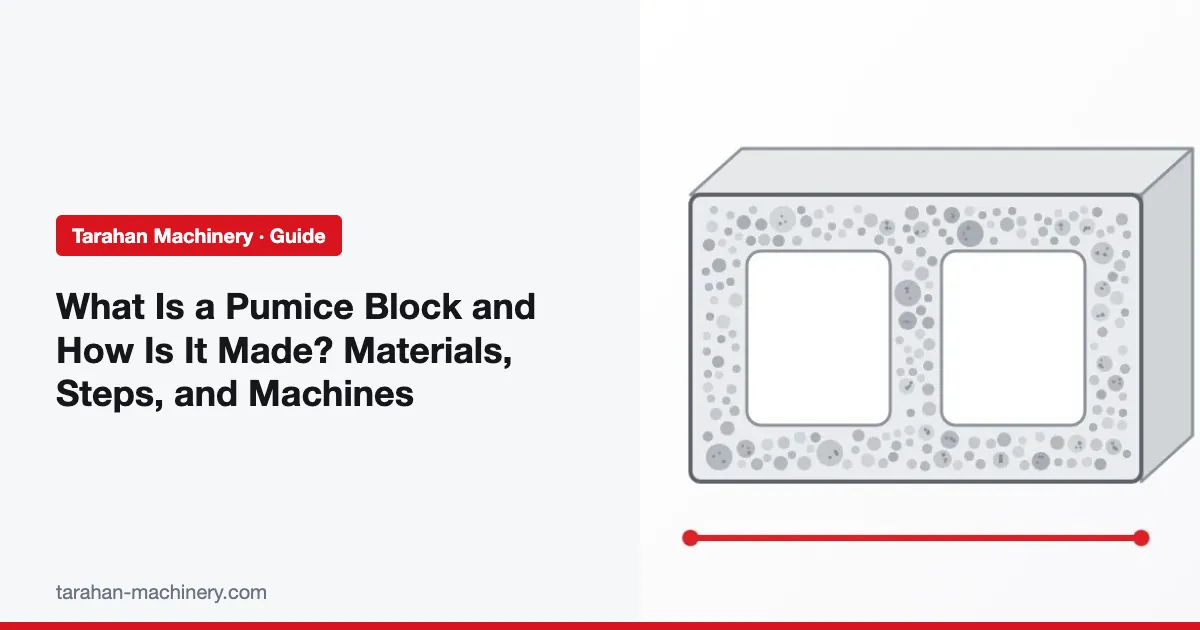
For details on producing lightweight blocks with pumice, from raw materials to quality tips, read our article What Pumice Blocks Are and How They Are Made.
We cover the cement, sand, and water ratios and the mortar preparation method separately in our guide to cement block mortar mix design and preparation.

Submit Comment: