


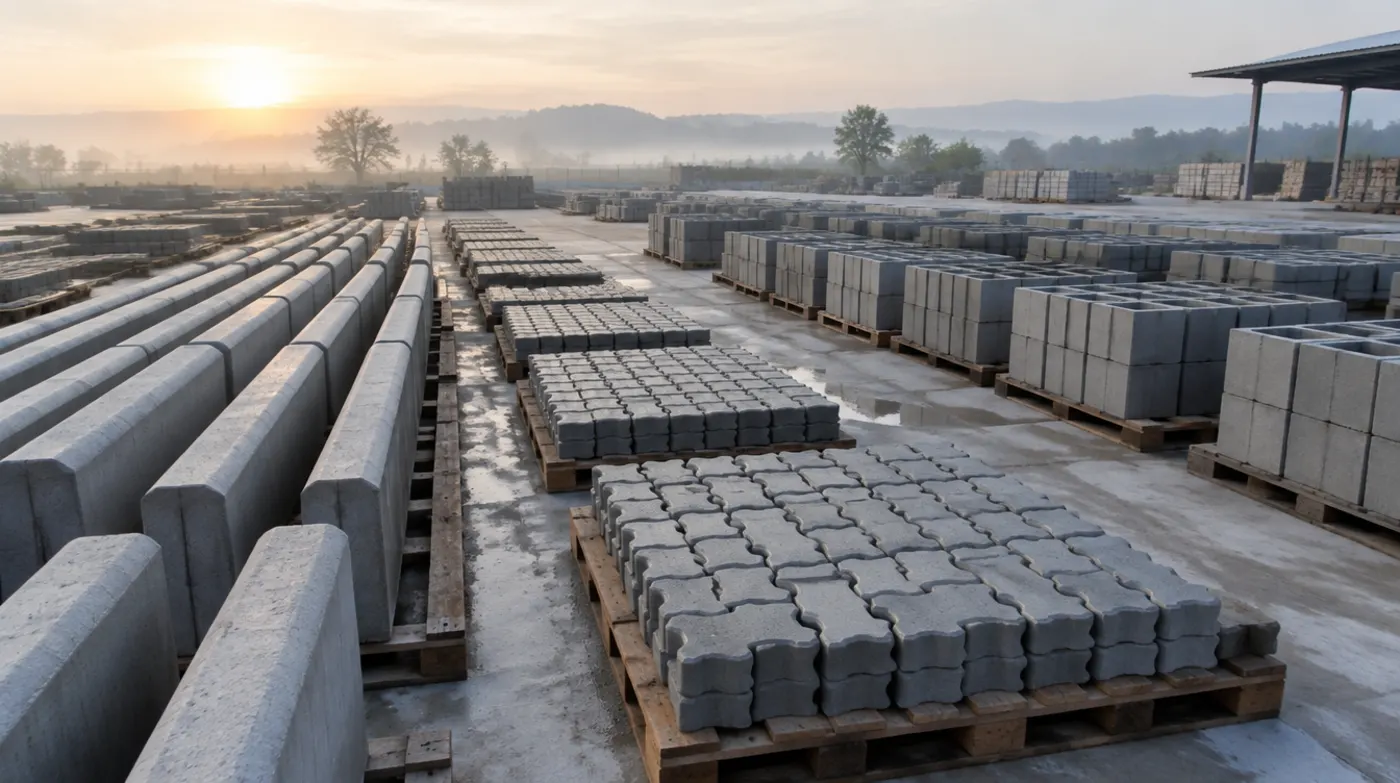
Every concrete mold falls into one of three separate families: plastic and rubber hand molds for low-volume paving stones and planters, formwork for casting walls and columns in place, and hardened steel molds for block making, curbstone and paver machines. For continuous production and selling finished pieces, you need a steel mold built for your specific machine model.
A concrete mold (also sold as a “cement mold”) is the tool that sets the shape, dimensions and surface quality of a concrete product such as a block, curb, paver or drain channel. Industrial molds are usually steel and mount on a press-and-vibration machine; plastic and polymer molds are used mostly for decorative pieces and production on a vibration table. Choosing the right mold means finding one that suits your product, machine and output, not simply the cheapest option.
If you run a concrete products plant or are about to start one, the mold question will come up sooner or later: What mold can I order for my current machine? Is a one-piece mold better than a welded one? When does a mold need replacing? Below, we answer these questions based on the experience of building all kinds of cement molds at Tarahan Machinery.
“Concrete mold” or “cement mold”: which mold do people mean?
In the Iranian market, three completely different tools are bought and sold under one name, and many wrong purchases start right there. A homeowner who wants paving stones for the yard, a contractor casting a concrete wall in place and a plant selling blocks and curbs every day may all say “I need a concrete mold.” Before you compare prices, be clear about which one you need.
1. Plastic and rubber hand molds
Lightweight plastic, polymer or rubber molds that are filled by hand and used mainly for patterned pavers and paving stones, concrete yard tiles, planters and decorative pieces. A more fluid concrete is poured in, air is driven out by tapping or on a vibration table, and the piece stays in the mold until initial set. The advantages are low capital cost, a wide choice of designs and a smooth, glossy surface. The limits: each mold yields only one piece per casting; filling, moving and demolding are all manual; and daily output grows with the number of molds and workers, not with machine speed.
2. Formwork for cast-in-place concrete
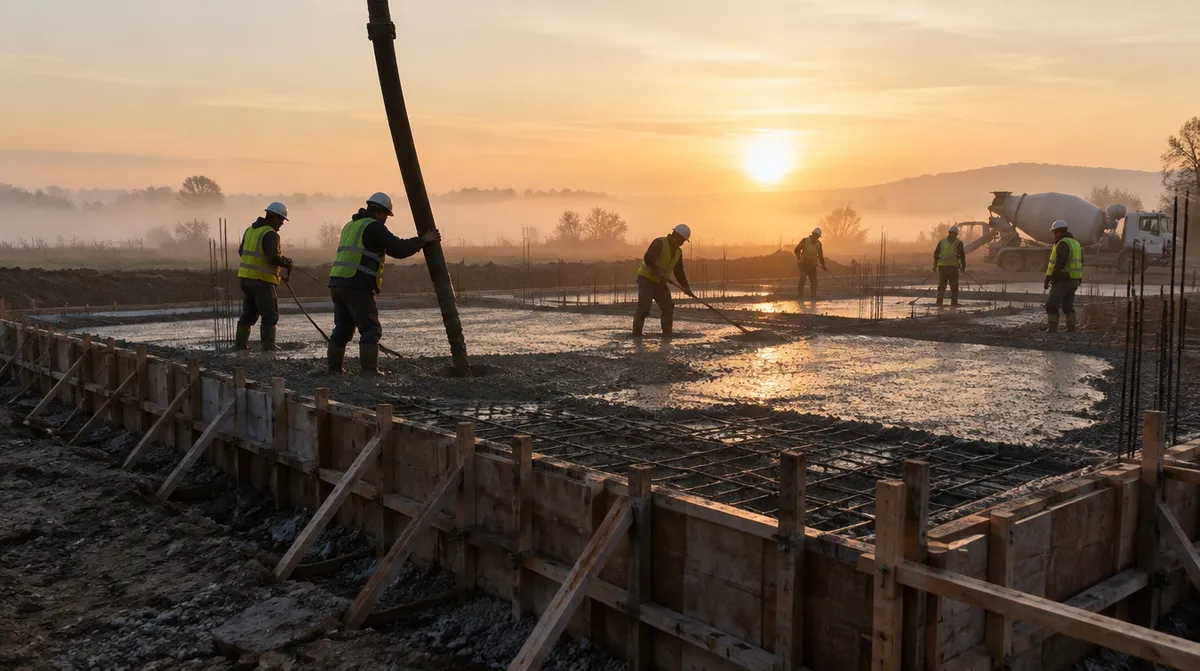
Metal or timber forms for walls, columns, slabs and foundations, set up around the rebar on a building site so concrete can be cast in place. This type of mold does not produce pieces; it shapes part of the structure on site and is removed after the concrete sets. Building formwork is not a Tarahan product and is outside the scope of this guide; if you need metal formwork for cast-in-place concrete, go to a formwork manufacturer.
3. Steel machine molds
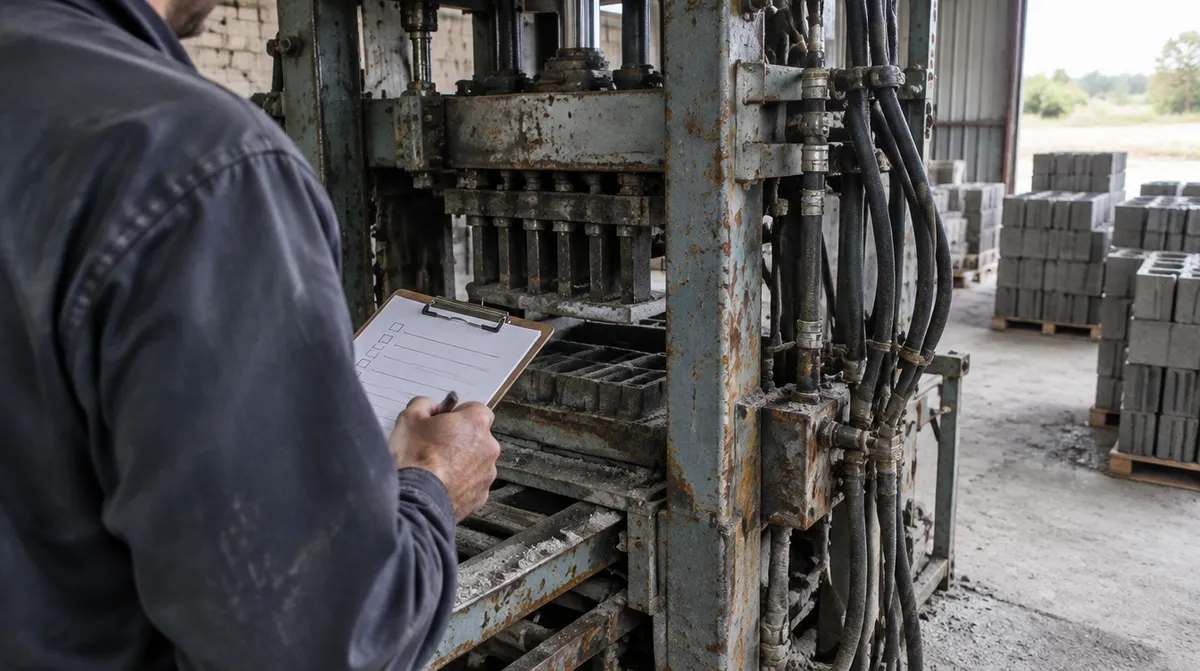
A steel mold mounted on a block making machine, curbstone machine or paver machine. With pressure and vibration, it turns dry-mix concrete into a finished piece in a short cycle, and the piece leaves the mold immediately. Steel cement block molds, concrete curb molds and paver molds belong to this family. Because the piece does not stay in the mold, one mold is filled and emptied over and over during a shift, so its walls and cores must be hardened and must match the mounting plate, vibration points and press of that particular machine. This family is exactly what Tarahan specializes in: we design and build molds for a specific machine, whether it is ours or another brand’s.
Which mold for which job? A decision table
The table below points you to the right mold family based on your type of work, production volume, labor and required surface quality. Figures are deliberately left out, because the decision point at each plant depends on material prices, wages and the local market.
| Your work | Production volume | Suitable mold | Labor | Surface and piece quality |
|---|---|---|---|---|
| Paving stones or concrete tiles for your own yard or villa | Low, one-off | Plastic or rubber hand mold | Manual; one or two people | Smooth, patterned surface; thickness and uniformity depend on the worker’s care |
| Planters, benches and decorative pieces | Low to medium, varied designs | Polymer or fiberglass mold on a vibration table; steel mold for municipal flower boxes | High per piece | Appearance is the top criterion |
| Patterned pavers for local sale | Medium | Polymer mold on a vibration table | High; output grows with the number of molds | Good surface; needs enough space for the molds during curing |
| Sidewalk and yard pavers for projects or municipalities | High and continuous | Steel paver mold on a stationary paver machine | Low per square meter | Uniform thickness and dimensions across the whole shipment |
| Wall, partition and ceiling blocks | Medium to high | Steel block mold on a manual, mobile or stationary block machine | From manual to automatic, depending on the machine | Uniform height and weight, which matter to masons and buyers |
| Street and garden curbs | Medium to high | Steel curb mold on a stationary or mobile curbstone machine | Low to medium | Chamfered edge and a straight line once installed |
| Drain channels, canyo channels and box culverts | Project-based | Custom steel mold; precast or cast-in-place | Medium | Accurate cross-section and watertight joints |
| Cast-in-place walls, columns or slabs | — | Formwork; not a Tarahan product | — | — |
Rule of thumb: if you make pieces for continuous sale and your customers check dimensional consistency (masons, contractors, municipalities), you will end up with a machine mold sooner or later. If design and appearance matter more than volume, hand molds and a vibration table make more sense. To see all Tarahan steel molds and to buy cement block molds and other molds, visit the mold category page.
Concrete box mold: flower box or box culvert?
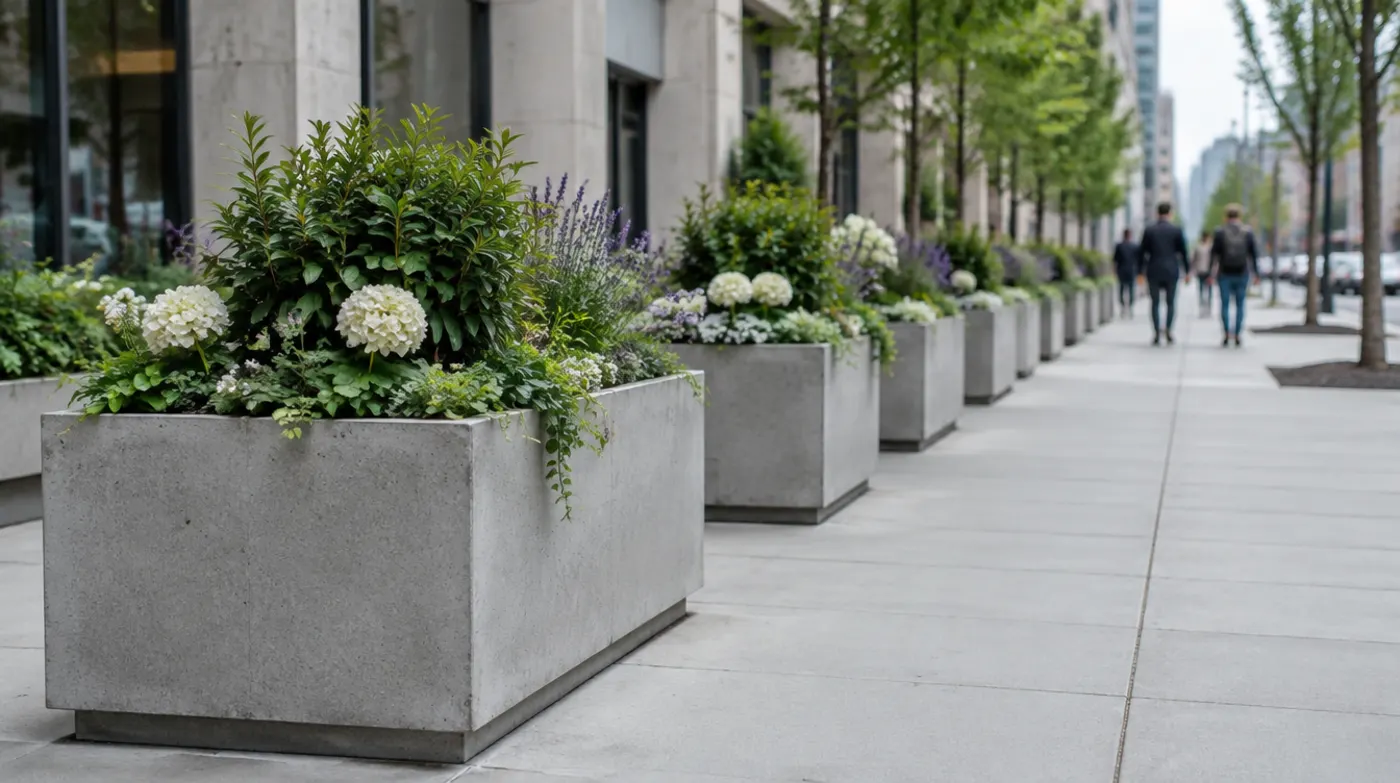
“Concrete box mold” also has two meanings. Sometimes it refers to planters and planter blocks (flower boxes) for landscaping and green walls, and sometimes to the box-shaped drain section, known as a box culvert, that carries water under roads and streets. The first prioritizes surface appearance and a manageable weight; the second prioritizes the hydraulic cross-section, a collapsible core and watertight joints. Tarahan builds both as custom steel molds, and the details are in the flower box mold and drain mold sections below.
What is an industrial concrete mold and how does it work?
In the simplest terms, a concrete mold is a chamber in which fresh concrete takes shape. In industrial production of concrete products, however, the mold is not just a “container”; it is part of the machine itself. In block making, curbstone and paver machines, dry (low-water) concrete is fed into the mold, vibration and pressure compact it, and the piece comes straight out of the mold to cure on a pallet or on the ground. That means every mold goes through pressure, vibration and material abrasion hundreds of times per shift.
That is why a machine mold is made up of several main parts:
- Body or mold box: The walls that form the outer shape of the piece and take the most abrasion.
- Cores: In hollow blocks, these create the voids and determine the block’s weight and strength.
- Tamper head or press plate: The upper part that presses on the concrete and forms the top surface of the piece.
- Fittings and guides: The mounting plate, machine attachment points, bushings and guide rods that keep the mold and tamper head aligned.
By contrast, wet-cast molds (plastic, polymer, rubber or fiberglass) are filled with a more fluid concrete and compacted on a vibration table, and the piece is released after initial set. This method is common for decorative pieces, artificial stone and smaller production volumes.
Types of concrete molds by product
Every concrete product has its own mold, and the design details differ for each. At Tarahan, all of these molds are designed from the piece drawing and the customer’s machine model. The table below gives an overview, and each type is explained separately after it.
| Mold type | Product | Common use | Machine or production method |
|---|---|---|---|
| Wall block mold | Hollow two- or three-cell block: plain, tongue-and-groove or decorative-face | Load-bearing and non-load-bearing walls and partitions | Manual, mobile, stationary hydraulic and automatic block machines |
| Partition block mold | Lightweight block 7, 8 or 10 cm wide | Interior non-load-bearing walls and partitions | Manual, mobile, stationary hydraulic and automatic block machines |
| Ceiling block mold | Ceiling filler block with lengthwise or combined voids | Joist-and-block ceilings | Manual, mobile, stationary hydraulic and automatic block machines |
| Concrete curb mold | Street, edge and garden curbs + corner, start and end pieces | Streets, parks, open areas | Mobile curbstone machine (upright mold) and stationary machine (horizontal mold) |
| Concrete paving mold | Pavers in patterns such as dumbbell, brick, hexagon, tactile (for the visually impaired) and grass | Sidewalks, open areas, parking lots | Steel for TM series stationary machines; polymer for vibration tables |
| Concrete drain mold | Drain channels with U, V, trapezoidal, semicircular and box culvert sections | Municipal, industrial and road construction projects | Manual to automatic machines; precast lines and cast-in-place concrete |
| Concrete canyo mold | Canyo (curbside gutter) channels 50 to 100 cm long with semicircular, trapezoidal or rectangular sections | Carrying surface water along streets and parking lots | Manual, mobile, stationary hydraulic and automatic machines |
| Concrete flower box mold | Planters and slope planter blocks | Landscaping, green walls, slope stabilization | Semi-automatic lines and vibration tables |
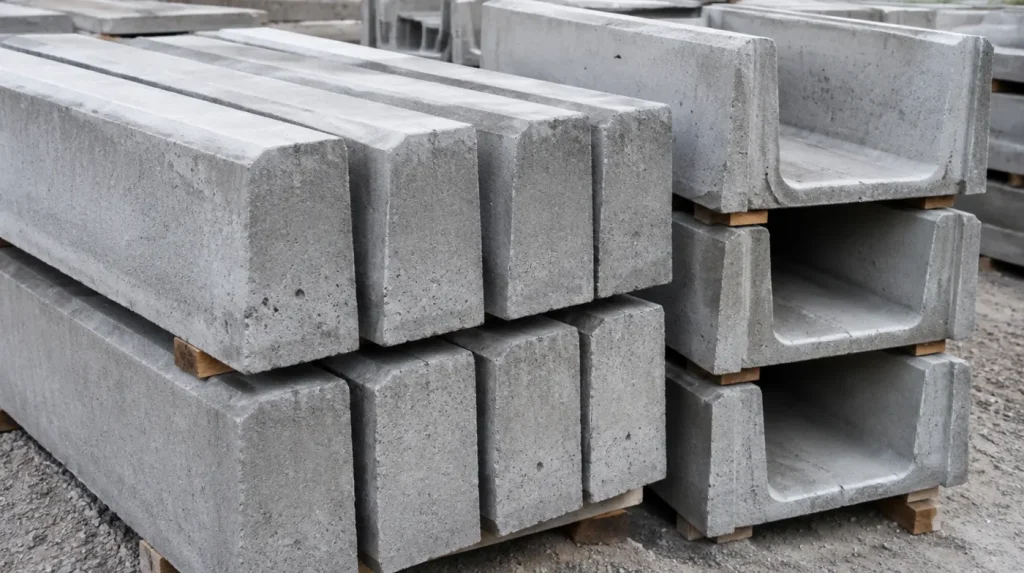
Wall and partition block molds
A wall cement block mold is built for two- or three-cell blocks, and its edge can be plain, tongue-and-groove or decorative-face. The number of cavities also varies: a single-cavity mold for samples, low output or special dimensions, and a multi-cavity mold for high-volume production that lowers the cost of each block.
A partition block mold looks similar to a wall block mold, but it is more demanding to build. With thin walls and elongated voids, warping, chipped edges and pieces sticking on the way out show up much sooner. Common market dimensions for this block are 7, 8 or 10 cm wide, 40 cm long and 20 cm high, with two or three lengthwise voids.
Ceiling block mold
A ceiling block fills the gap between the joists in a joist-and-block ceiling. Three things matter in a ceiling block mold: low piece weight, edges that do not crumble during handling and placement, and seating surfaces that set the block accurately on the joist. For this reason, the corners are locally reinforced and the voids are designed to bring the weight down while keeping the block stable during handling.
Concrete curb mold
Curbs are heavier and taller, and their mold has to withstand the impact and pressure of fresh concrete in continuous production. The Tarahan concrete curb mold is built for street, roadside and garden curbs, and you can also order complementary pieces such as corners, start and end pieces and connections to drain channels. A logo or an installation direction arrow can also be added to the piece.
One important point: how a curb mold is positioned depends on the type of machine. On stationary machines, the mold is usually designed horizontal, and on mobile machines, upright, so that pressing and discharge are faster. So a curb mold from a mobile machine cannot be put on a stationary machine without modification. If you are still undecided between curb sizes and types, our article What is a concrete curb can help.
Concrete paving mold
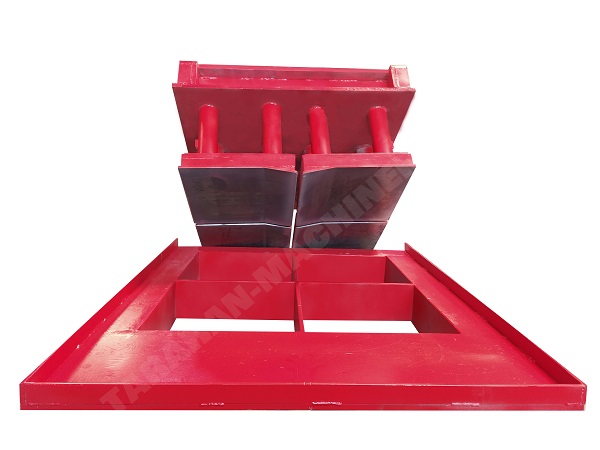
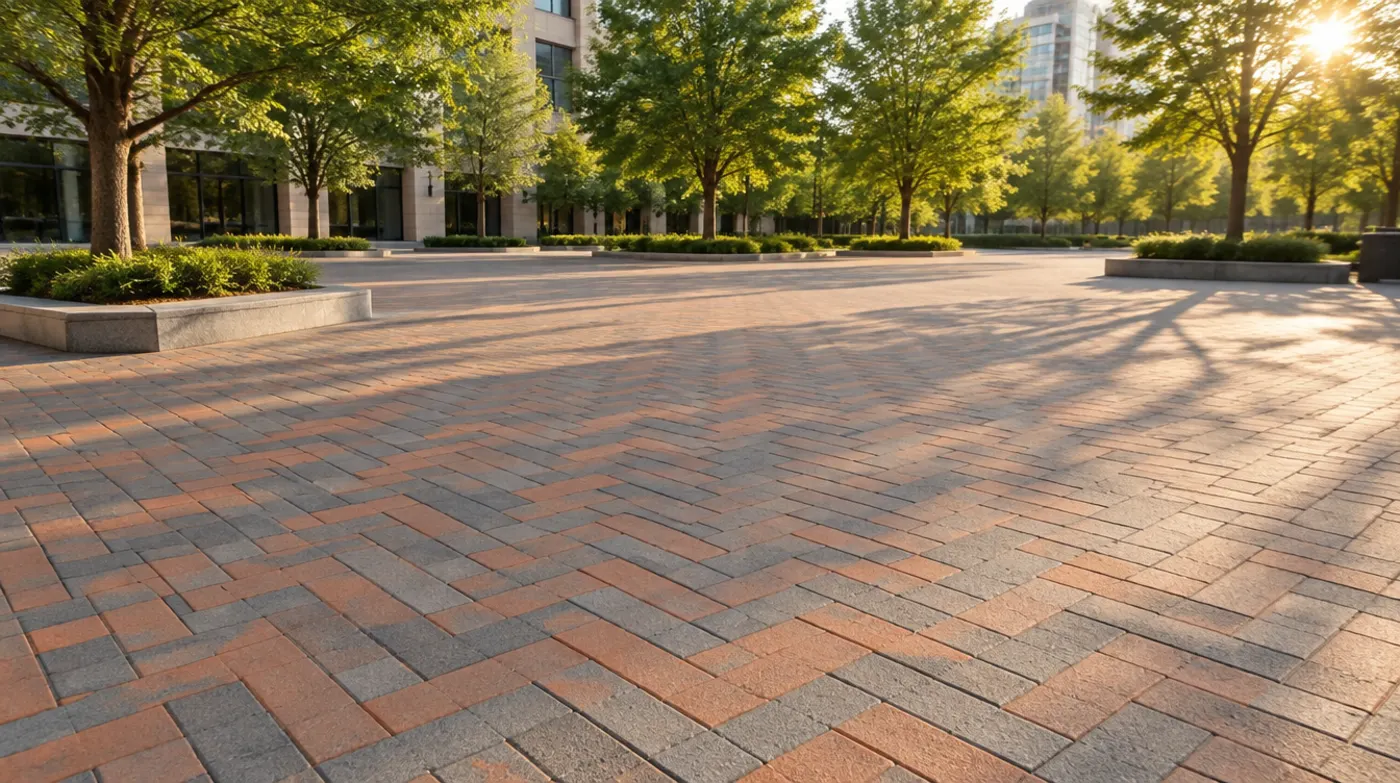
A concrete paving mold (also known as a paving stone mold or interlocking concrete mold) comes in two types: steel for TM series stationary paver machines, and polymer for production on a vibration table. Common patterns include dumbbell, square, Nostalit, brick, hexagon, basket-weave or wave, cross, star, Saso, grass and tactile pavers for the visually impaired.
Steel paver molds also come in two types. A one-piece mold is made from a single solid steel plate, with its grooves and cavities cut by CNC; it offers better dimensional accuracy and a longer life at a higher price. A welded multi-piece mold is cheaper but less accurate and less durable. To learn about production methods, see our article on concrete paver and paving stone production methods.
Drain channel and canyo molds
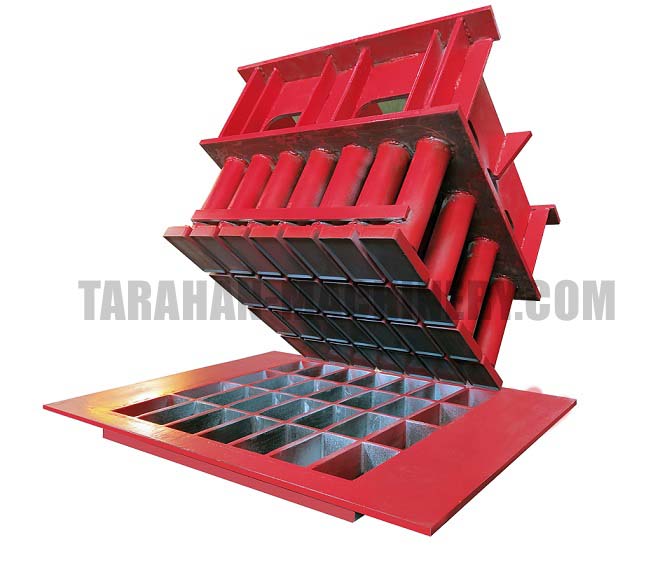
Drain channels and canyo channels both carry water, and in their molds, cross-section accuracy and watertight joints matter more than anything else. A concrete drain mold is built for U, V, trapezoidal, semicircular and box culvert sections; a box culvert mold usually has a collapsible inner core so the piece does not stick during stripping. The mold’s latches can be pin, wedge or bolt type, and its seams are sealed with rubber strip or sealant to stop cement slurry from leaking.
A concrete canyo mold is built for pieces 50 to 100 cm long (customizable) with a semicircular, trapezoidal or rectangular section. A tongue and groove at the two ends and a slot for a sealing strip let the pieces sit end to end without leaks.
Flower box molds and decorative pieces
Molds for municipal concrete planters and slope planter blocks prioritize the quality of the visible surface, because these pieces are on display. The Tarahan concrete flower box mold has a steel body with polished contact surfaces, mechanical latches for quick opening and closing, replaceable liners, and pins and guide plates for alignment, and it is used on semi-automatic lines and on vibration tables. To learn about the models and how this product is made, read our guide to the concrete flower box.
Machine mold or plastic hand mold?
Of the three families above, the real choice for most plants is between a steel machine mold and a plastic wet-cast mold. Knowing the difference between the two prevents a wrong purchase.
A steel machine mold is mounted on a block, curbstone or paver machine (manual, mobile, stationary or automatic). Dry concrete is compacted by pressure and vibration, and the piece leaves the mold immediately. Production is fast, with one mold turning out hundreds to thousands of pieces a day, but the mold must exactly match the specifications of that machine (mounting plate, attachment points, vibration and press locations).
A plastic or polymer wet-cast mold is filled with a more fluid concrete and compacted on a vibration table. The piece usually stays in the mold until the next day (about 24 hours, and sometimes longer in cold weather) until it is firm enough to come out undamaged, and then it is released. The vibration table is the oldest method of making concrete pavers and paving stones, and today it is also used for all kinds of artificial stone. Linear vibration tables are usually built in sizes of 0.5×3 or 0.7×4 m. This method requires less initial capital, but you need one mold for each piece, it takes more labor, and daily output is limited by the number of molds you own.
In short: if you want high output of a standard product (blocks, curbs, pavers), a steel machine mold makes sense. If you have decorative or patterned pieces or low volumes, a wet-cast mold on a vibration table is usually more economical.
Hand molds or a machine: where is the tipping point?
Small plants usually start with hand molds, and the question is when to move to a machine and steel mold. Three signs usually show up before any detailed calculation does:
- Volume: Because a wet-cast piece stays in the mold until the next day, doubling your daily output takes roughly twice the molds and curing space. With a machine mold, that one mold turns out a full pallet or row of pieces every cycle, and output depends on machine speed.
- Labor: Filling, vibrating, moving and demolding are all hand work in the manual method. Once wages make up most of the cost of each piece, or steady workers are hard to find, a machine reduces the workload, even a manual or mobile model.
- Consistency and project delivery: Contractors and municipalities want a shipment whose thickness and dimensions are the same from the first piece to the last. With a steel mold, pressure and vibration, dimensions are set by the mold and machine, not by the worker’s care.
On the other hand, if your market wants varied, colored designs in small quantities, or you do not have steady sales yet, staying with hand molds and a vibration table makes more sense. Many plants keep both methods side by side: standard pieces on the machine and decorative pieces in wet-cast molds.
One machine, several molds
One advantage of machine molds is that you can change products by changing the mold. For example, on the Tarahan manual block making machine, changing the mold lets you produce 10, 15 and 20 cm blocks and custom blocks. The M.KB and M.KH mobile semi-hydraulic machines can also make 30×50 curbs with a curb mold (6 per pallet), although a dedicated curbstone machine is recommended for continuous, professional curb production.
Why doesn’t a mold from one machine fit another?
A “20 cm block mold” is not a standard item you can buy from any seller and bolt onto any machine. The number of cavities, the outer dimensions and the mold’s attachment points are determined by the size of the machine’s pallet or mold holder. Two examples from Tarahan’s own machines:
- A 20 cm block mold on the TM-104 stationary block machine has only 4 cavities, because this machine’s pallet is 46 by 87 cm (for 15 and 10 cm blocks, 5 and 7 cavities respectively); the same block is made on the M.BD mobile machine with a 12-cavity mold per cycle. So these two molds, despite the identical product, do not share a single part.
- On a stationary curbstone making machine, the number of 30×50 curbs per pallet (approximate figures) is three on the TM-208, six on the TM-110 and TM-210, and eight on the TM-118 and TM-218; the M.KC mobile machine makes 6 curbs of 50×50 or 50×30 per cycle, and its mold is upright, not horizontal.
The practical takeaway: if you already have a machine, state its model and the size of its pallet or mold holder when you order a mold; if you do not, choose the mold and machine together. For pavers, a comparison of models and capacity is on the paving block making machine page.
What makes a good concrete mold?
Two molds that look identical can have completely different service lives and output quality. The difference lies in details you do not see at first glance. Ask about these points when buying:
Steel grade and hardening
In a curb mold, the body is usually made of ST37 steel, but the inner surfaces can be made from abrasion-resistant plates such as CK45 or Hardox to extend the mold’s life. In block, ceiling block and canyo molds, high-wear and high-stress areas receive local heat treatment. Paver molds can also get heat treatment or special plating to extend their life. The general rule: wherever the material causes more wear, the steel must be harder.
Cutting and machining method
In Tarahan molds, functional parts are laser cut and sensitive areas are finished by CNC milling and turning. Oxy-fuel cutting is not recommended for functional components; its rough edges reduce dimensional accuracy and also cause pieces to stick on the way out.
Welding with distortion control
Welding heat can warp the plate, and a mold that looks flat on the bench can turn out crooked blocks in practice. Controlled welding on a fixture and an assembly test after fabrication prevent this problem.
Replaceable wear parts
A mold whose bushings or liner can be replaced has a longer economic life, because only the worn part is replaced instead of the whole mold. Greaseable bushings and guides also keep the tamper head moving smoothly and without play. For example, the Tarahan partition block mold can be repaired, rebushed and rebuilt.
Machine fit: what gets matched before the mold is built?
Most problems that appear after a mold is installed (unbalanced vibration, pieces sticking, the tamper head hitting the wall) come from not matching the mold to the machine, not from the steel grade. Before fabrication, these items must be matched to your machine:
- Mounting plate and attachment points: The bolt spacing and the location of the mold clamps on the machine frame.
- Vibration and press locations: Vibration force must reach all cavities evenly; otherwise the outer cavities yield less dense pieces.
- Pallet or mold holder size: This determines the number of cavities and the outer dimensions of the mold.
- Stroke and allowable height: Every machine has a maximum piece height; on the M.KC mobile curbstone machine, for example, curb height goes up to 50 cm.
- Tamper head and mold alignment: Bushings and guide rods must let the tamper head move up and down inside the cavities with no play and no friction.
- Piece exit path: The chamfers and edge radii and the direction in which the piece leaves the mold, especially in upright and horizontal curb molds.
How to ask about heat treatment and wear plates
The phrase “hardened mold” says nothing on its own. Ask the manufacturer which areas (walls, cores, tamper head edge) have been hardened or heat treated, what plate the concrete contact surface is made of, and whether the wear plates and liners can be replaced separately or are integral with the body. A mold with an ordinary body but replaceable, abrasion-resistant plate on its high-wear surfaces usually runs more economically than one made entirely from one plate. Tell them about your materials too; sharp crushed aggregate wears the walls faster than rounded sand, and the manufacturer should choose the hardening accordingly.
Dimensional accuracy and quality control
A good mold goes through dimensional measurement, an assembly test and a check against the approved drawing before delivery. For drain molds, a concrete trial is even run when needed. Edges should also have a proper chamfer or radius so the piece does not chip when it comes out of the mold or during handling.
Custom molds: when do you need one and what information should you provide?
Block, curb, paver and drain molds at Tarahan are always custom built; that is, the piece dimensions, the number and shape of the voids, the edge type, the surface design and the number of cavities are set according to your drawing or sample. The Tarahan paver mold can be built for both Iranian and foreign machines, and in other molds too, the mounting plate and attachment points are set according to your machine model.
A custom mold is usually needed in these cases: your machine is from another brand, you want a piece with unusual dimensions, a civil project has a specific drawing (such as a drain or canyo channel with a particular slope and section), or you want to bring a distinctive patterned piece to market. To get a technical proposal and a price, have this information ready:
- Drawing or sample of the piece: length, width, height, voids and edge type
- Machine model and brand and, if the machine is custom built, its mold holder dimensions
- Surface design: smooth, decorative-face or patterned
- Target daily or monthly output
- For civil engineering pieces: load class, installation method and accessories such as covers or corner pieces
Concrete mold maintenance: what extends mold life
Many molds wear out early not because of how they were built but because of poor maintenance. These simple habits make a big difference.
Cleaning after every shift
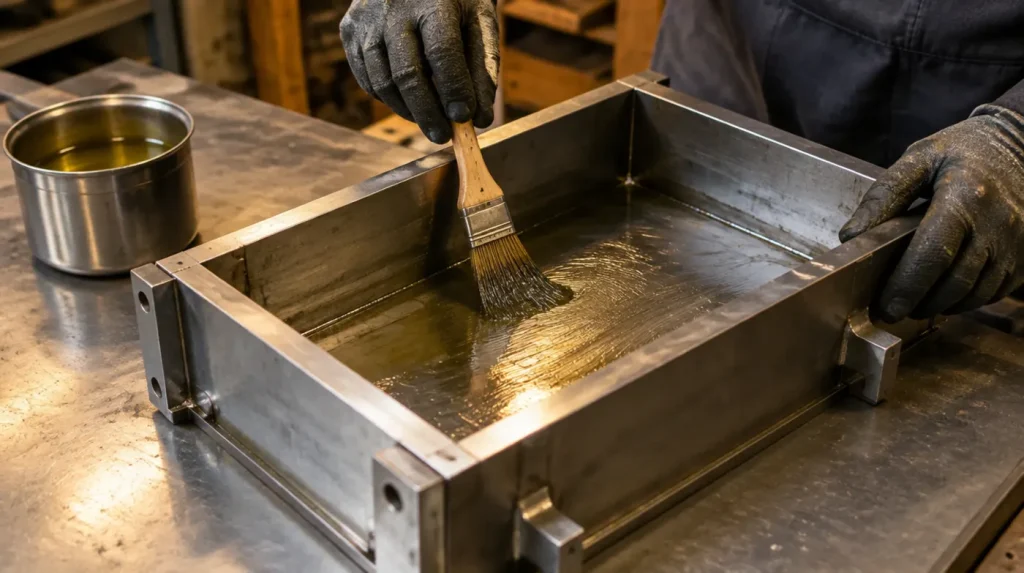
Concrete left on the walls, cores and tamper head is hard to remove once it sets, and it ruins the surface of the next pieces. Clean the mold at the end of every shift, before the mortar hardens, with a brush, a non-metallic scraper or water. Do not hammer on the mold to knock off dried concrete; that dents the wall and throws off the alignment.
Mold oil in the right place
In molds where a more fluid concrete is poured and the piece stays inside for some time (such as plastic and polymer vibration table molds, or drain molds in precast and cast-in-place work), mold oil or a release agent is commonly used. A thin, even coat is enough; excess oil can stain the piece surface and create small surface voids. Use a proper mold oil suited to the mold material (steel or plastic), not used engine oil, which stains the piece surface. In press-and-vibration machine molds, where the piece leaves immediately, keeping the mold surface clean and sound matters more than oiling; for example, the Tarahan wall block mold and paver mold have a non-stick coating.
Greasing and periodic inspection
Grease the bushings and guide rods on schedule. Inspect the bolts and fittings connecting the mold to the machine at regular intervals; constant vibration can loosen bolts, and a loose mold throws off the piece dimensions. Check the welds for cracks, and measure wall wear with a caliper or by measuring a sample piece.
Proper storage
Clean and dry a mold that is not in use, coat its steel surfaces with a thin layer of rust-preventive oil, and keep it under cover on a flat surface. Keep plastic molds out of direct sunlight and do not stack them tightly, so they do not deform.
Caring for plastic and rubber hand molds
Hand molds do not wear the way steel does, but they deform and crack sooner. Release the piece before it has fully hardened, with a gentle tap on the back of the mold, not with a metal bar at the edge. Wash the mold right away, keep it away from strong solvents and used engine oil, and set warped molds aside; a piece that comes out of the mold crooked will also sit crooked in the finished paving.
Signs a mold needs repair or replacement
A mold wears gradually, and the pieces usually reveal it before the mold itself does. If you see these signs, it is time for a serious inspection:
- Variation in piece height or dimensions: If the blocks in a row are not the same size and the problem is not the mix or the machine setting, the walls are probably worn or the tamper head has come loose.
- Burrs and flash on edges: The gap between the tamper head and the mold wall has grown, and mortar is squeezing out through it.
- Chipping and pieces sticking: The mold surface has become rough or the edge chamfers have worn away.
- Play and unusual noise: The bushings and guides are worn.
- Cracked welds or a warped body: This usually calls for a major repair or replacement.
- More scrap than before: If defective pieces have increased with the same mix design and the same operator, the mold is probably the problem.
In many cases, replacing the bushings, liner or tamper head is enough, and there is no need to buy a complete mold. But if the body is warped or the walls are worn beyond the allowable limit, repeated repairs usually end up costing more than replacement.
Concrete mold buying checklist
Before buying a cement mold, ask yourself and the seller these questions:
- Exactly which machine and model is the mold designed for? Will the mounting plate and attachment points be matched to my machine?
- What steel are the body and inner surfaces made of, and which areas are hardened or heat treated?
- Are functional parts laser cut or oxy-fuel cut? Are sensitive areas machined?
- Is the mold one-piece or welded multi-piece? (Especially for pavers)
- Does the number of cavities suit my target output and my machine’s capacity?
- Are the bushings, liner and tamper head replaceable, and are spare parts available?
- Are dimensional checks and an assembly test done before delivery?
- What is the fabrication and delivery time?
One practical tip: do not consider the mold separately from the machine. If you have not bought a machine yet, first decide on the product type and output, then choose the machine and mold together.
Frequently asked questions
Is a cement mold different from a concrete mold or a hand mold?
In the Iranian market, “cement mold” and “concrete mold” mean the same thing: a mold in which a concrete piece takes shape. But three different tools sit under that name: plastic and rubber hand molds for manual production, formwork for cast-in-place concrete, and steel molds for block making, curbstone and paver machines.
Is a steel mold or a plastic mold better?
It depends on the production method. A steel mold is built for press-and-vibration machines and high output, and the piece leaves it immediately. A plastic or polymer mold is better suited to vibration tables, decorative pieces and low volumes and requires less initial capital, but it takes more labor.
Can you build a mold for another brand’s machine?
Yes. Tarahan molds are designed to the specifications of the customer’s machine; paver molds, for example, are built for both Iranian and foreign machines. Just tell us the machine model, vibration type and the dimensions of its pallet or mold holder.
How long does a concrete mold last?
There is no fixed figure. Mold life depends on the steel grade, the hardening of high-wear areas, the type of material (sharp aggregate wears the mold faster), output and the quality of maintenance. A mold with replaceable wear parts has a longer economic life.
What determines the price of a concrete mold?
The dimensions and complexity of the piece, the number of voids and mold cavities, the steel grade and heat treatment, the fabrication method (one-piece or multi-piece, laser and CNC) and machine fit. Since steel prices change constantly, you need to request a quote for the current price.
Conclusion
A concrete mold directly affects the quality and consistency of your product. Choose a mold that suits your machine and product, has the right steel and hardening, has replaceable wear parts and has been dimensionally checked before delivery. After that, protect its service life with daily cleaning and periodic inspection.
If you have a drawing or sample of a piece, or you are not sure which mold fits your machine, send the specifications to the Tarahan Machinery experts or call +98 914 584 1914 to get a technical proposal and the current price.


Submit Comment: