


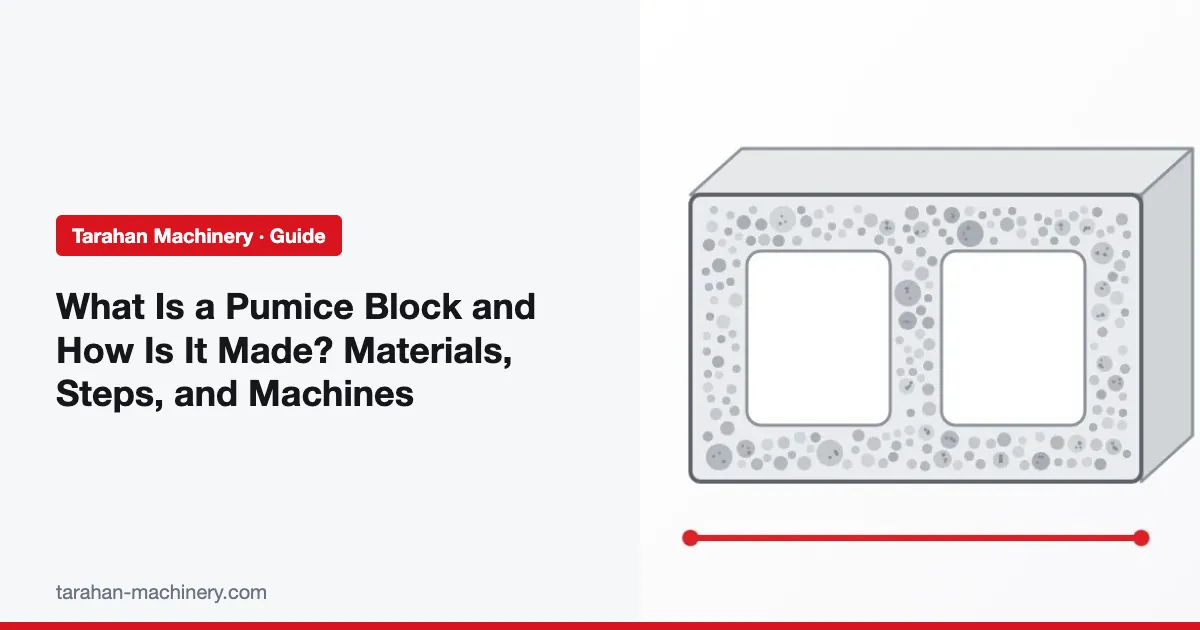
A pumice block is a lightweight cement block made with porous pumice grains, cement, and water instead of sand and gravel. To produce it, the pumice is lightly moistened, then combined with cement and water in a mixer to form a dry, uniform mix. The mix is compacted in the mold of a block making machine using vibration and pressing, and the green block is cured for anywhere from about one day (with steam) to about one week (with water), then stockpiled so it dries evenly. The result is a block that is lighter and better insulating than a sand block, provided moisture, mixing, and compaction are properly controlled.
What Is a Pumice Block?
The pumice block belongs to the family of concrete and cement blocks. In all of these blocks, cement is the main binder, and the key difference is the type of aggregate. A regular or “heavy” block uses sand and gravel; in a pumice block, the main aggregate is pumice. That is why the market also calls it a lightweight block, a lightweight aggregate block, or a light pumice block.
This block is used mostly in non-load-bearing walls, interior partitions, and joist-and-block slabs, meaning places where the building frame carries the main load and the wall’s job is to enclose space with minimum weight and better insulation. With clay blocks now restricted in some cities in Iran and high-quality pumice easier to get, builders are turning to this block more than before.
What Is Pumice?
Pumice is a light, spongy volcanic rock. As it formed, gas bubbles became trapped inside it, leaving a texture full of tiny voids. These voids give the block its low density, and the still air inside them provides thermal and acoustic insulation.
In Iran, especially in the country’s western cities, pumice is used in block production more than it was in the past. The two common types producers work with are Tabriz white pumice and Qorveh black pumice. The many pumice mines around Tabriz are one of the reasons lightweight block production has become so widespread in that region. The production advice in this guide applies to both types.
A pumice block is also different from cellular lightweight concrete (foam concrete, or CLC). In foam concrete, the low weight comes from foam bubbles in the cement slurry, not from a porous aggregate.
Advantages and Limitations of Pumice Blocks vs. Sand Blocks
Choosing between a pumice block and a sand block is a trade-off, both for the builder and for the producer. The pumice block wins on weight and insulation, but its production is more sensitive, and a small mistake in the workshop quickly shows up as a brittle block.
| Criterion | Pumice block (lightweight) | Sand block (heavy) |
|---|---|---|
| Main aggregate | Porous pumice | Sand and gravel |
| Weight | Light; puts less dead load on the frame | Heavy |
| Thermal and acoustic insulation | Better, thanks to the air trapped in the grains | Poorer |
| Water absorption of the aggregate | High; mix moisture must be precisely controlled | Low; moisture is easier to control |
| Sensitivity to compaction | High; weak vibration and pressing produce a loose, under-compacted block | Lower; the grains lock together more easily |
| Edge damage during handling | More likely if compaction and curing are inadequate | Less likely |
| Common use | Non-load-bearing walls, partitions, ceiling blocks | Yard and site walls, places where weight does not matter |
One of Tarahan Machinery’s technical articles puts the density of lightweight block at 1200 to 1450 kg/m³ and that of block made from sand and gravel at about 2000 kg/m³. A lighter square meter of wall means less load on the frame and foundation.
The other side of the story is production sensitivity. Sand grains lock together more easily because of their weight and shape. In a pumice block, however, if the cement does not coat the grains well, or the machine cannot compact the material with enough vibration and pressing, the inside of the block stays loose. A block like this looks sound, but it chips or breaks in the stockyard, during loading, or while the wall is being built.

Types of Pumice Blocks
Pumice blocks are almost identical in terms of material; what separates the types is the geometry of the unit and where it is used. By changing the mold, a single block making machine can produce all three types below.
Pumice Wall Block
This is the most widely used type, used for non-load-bearing perimeter and dividing walls. Common sizes for hollow wall blocks are 20×40×10, 20×40×15, and 20×40×20 cm. The number and shape of the cores (usually two or three) affect the final weight, insulation, and strength, and are set in the design of the wall block mold. The edge can be plain, tongue-and-groove, or decorative-faced.
Pumice Partition Block
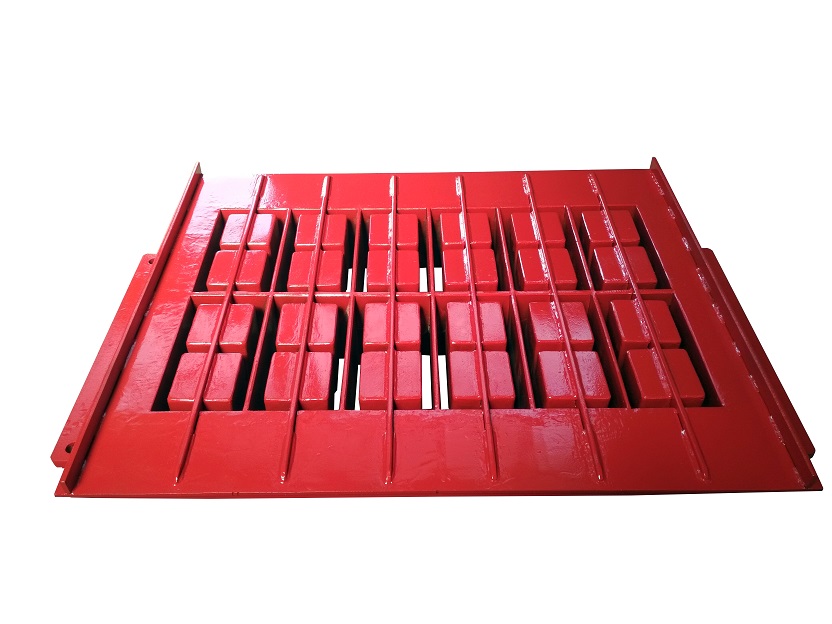
Partition blocks are made for interior walls and light partitions. On the market, widths of 7, 8, or 10 cm with a length of 40 cm and a height of 20 cm are common. This block has thin walls and elongated cores, so both making the mold and producing the unit are more demanding than with a wall block: any weakness in compaction turns into chipped edges and cracks sooner in a partition block. For this job, Tarahan Machinery builds a dedicated partition block mold with warpage control and a precise demolding path.
Pumice Ceiling Block
A ceiling block fills the space between the joists in a joist-and-block slab. In this unit, light weight and edges that stay intact during handling are especially important, because the block must sit precisely on the joists and must not crush under a worker’s foot or the weight of fresh concrete. That is why the seats and corners of the ceiling block mold are locally reinforced.
Raw Materials and General Mix Proportion Principles
A pumice block has three main components: pumice, cement, and water. The list is short, but the quality of each component and their proportions directly affect strength and workshop waste.
- Pumice: Ideally a blend of fine and coarse grains, so the fine grains fill the space between the coarse ones. The pumice must be clean and free of clay, roots, and organic matter. The largest grain must also not be so coarse that it gets stuck between the mold walls, which matters even more in partition blocks with their thin walls.
- Cement: The main binder of the block; there must be enough of it to coat every grain in a thin layer. For block production, Type II Portland cement with a strength class of 42.5N or higher is generally recommended.
- Water: Clean and free of excessive dissolved salts. Water is needed both for the cement reaction and for curing.
The key principle for proportions is that block mix is “dry,” not a slurry. The mix must be moist enough to hold its shape when squeezed by hand without falling apart, but not so wet that water seeps out of it or the fresh block bulges after leaving the mold. Too little cement gives a weak block, and too much drives up the cost for no reason. Since water absorption and pumice grading vary from one mine to another, and even from one shipment to the next, you need to set the final proportions by making samples and testing them in your own workshop.
We have covered the numbers for the mix design and the method for preparing the mix in two separate articles and will not repeat them here: for proportions and the general formula, see principles of cement block production and mix design, and for mixing order, water-to-cement ratio, and hardening additives, go to how to prepare cement block mix.
Pumice Block Production, Step by Step
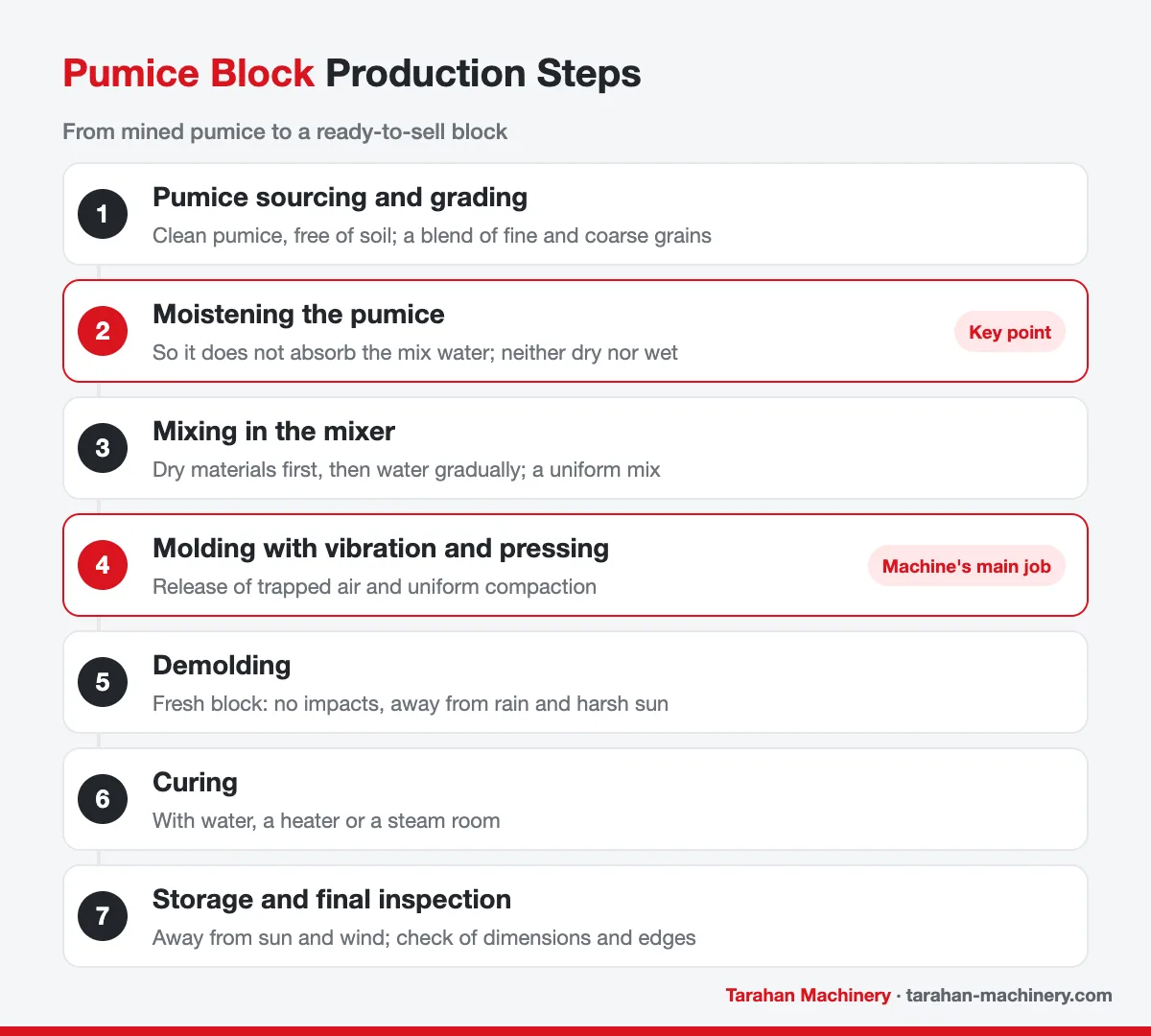
Making pumice blocks follows the same logic in a manual workshop and an automatic plant; the difference lies in speed, how much workers need to intervene, and how precisely each stage is controlled. The steps are carried out in this order:
1. Sourcing, Stockpiling, and Grading the Pumice
Buy pumice from a supplier who delivers consistent grading, and stockpile it on a firm, clean surface so soil does not get into the material. If shipments are not uniform, sieving and removing very coarse grains helps keep the product consistent.
2. Moistening the Pumice Before Mixing
This step is the most important difference between producing pumice blocks and sand blocks. Pumice is highly absorbent. If it enters the mixer dry, it soaks up the water in the mix and the cement does not get enough moisture to set, leaving a powdery mix with poor cohesion. That is why the pumice is lightly moistened before mixing. At the same time, adding too much water is no solution either, because the excess later evaporates and the space it leaves behind becomes tiny voids and a starting point for cracks.
3. Mixing in the Mixer
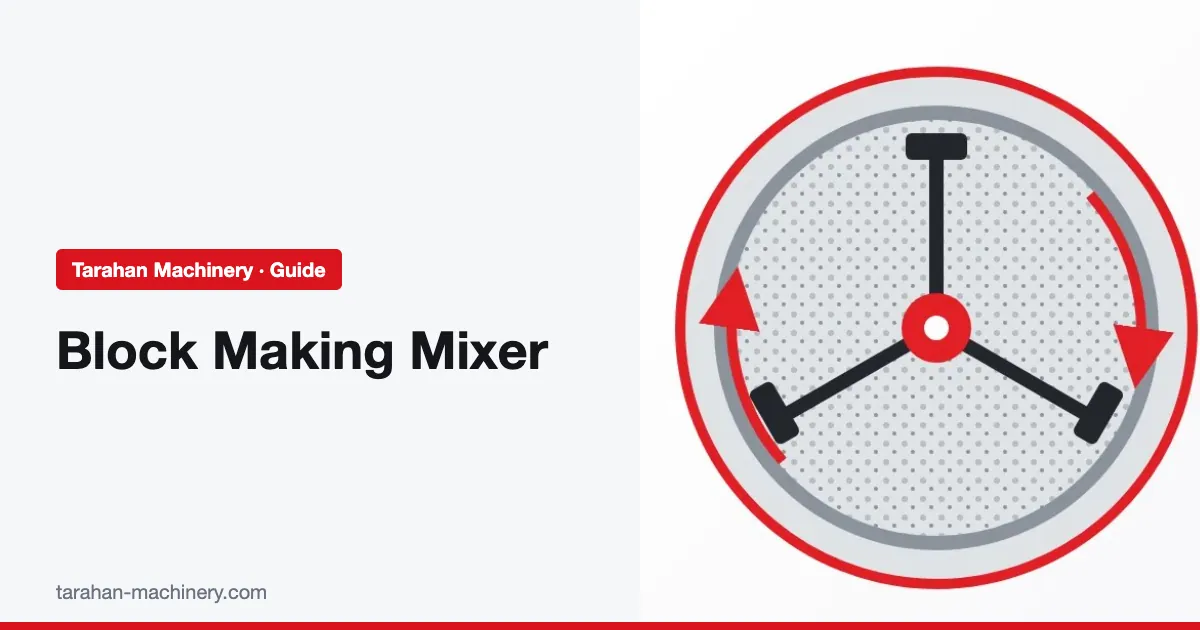
The usual order is to blend the dry materials well first, then add water gradually. The goal is for the cement to coat every pumice grain evenly. If part of the mix stays drier and part stays wetter, the block will not have the same strength throughout. For lightweight materials, mixers that turn the material over thoroughly, such as single-shaft and twin-shaft models, give a more uniform result.
4. Molding with Vibration and Pressing
The prepared mix is delivered by wheelbarrow or mix cart and loaded into the machine’s mold. Vibration moves the grains so they settle into one another and trapped air escapes; pressing compresses the material and evens out the block height. This stage is decisive for pumice blocks, because even a small amount of trapped air noticeably lowers strength.
5. Demolding and Initial Handling
On a mobile machine, the green block stays on the ground or a concrete slab; on a stationary machine, it stays on the pallet. A fresh block still has little strength and, during the first few hours, must not be knocked or left in rain or harsh sun.
6. Curing
Curing means providing the right moisture and temperature so the cement can complete its reaction. There are three common methods:
- Water curing: The blocks are kept moist with a sprinkler so they do not lose moisture too quickly. This needs no special facilities and usually takes about one week.
- Heater curing: In small workshops, the blocks are placed in front of a heater or fan heater and covered to retain the heat.
- Steam curing: In high-volume production, a steam room at about 80°C shortens curing time to about one day.
7. Stockpiling, Drying, and Final Inspection
After curing, the blocks should ideally stay for up to about three weeks in a place sheltered from direct sun and strong wind so they dry evenly. If a block still holds a lot of moisture when it is used, it shrinks in the wall and cracks. Before selling, check several blocks from each batch for dimensions, intact edges, and the sound they make when tapped.
Equipment Needed for a Pumice Block Production Line
A lightweight block workshop, even in its simplest form, needs three main pieces of equipment: a block making machine, a mixer, and a mold. As output rises, these become more automated and more closely linked. A vibration table is an optional add-on, and larger lines also add a cement silo, a conveyor belt, and a batching plant.
Block Making Machine
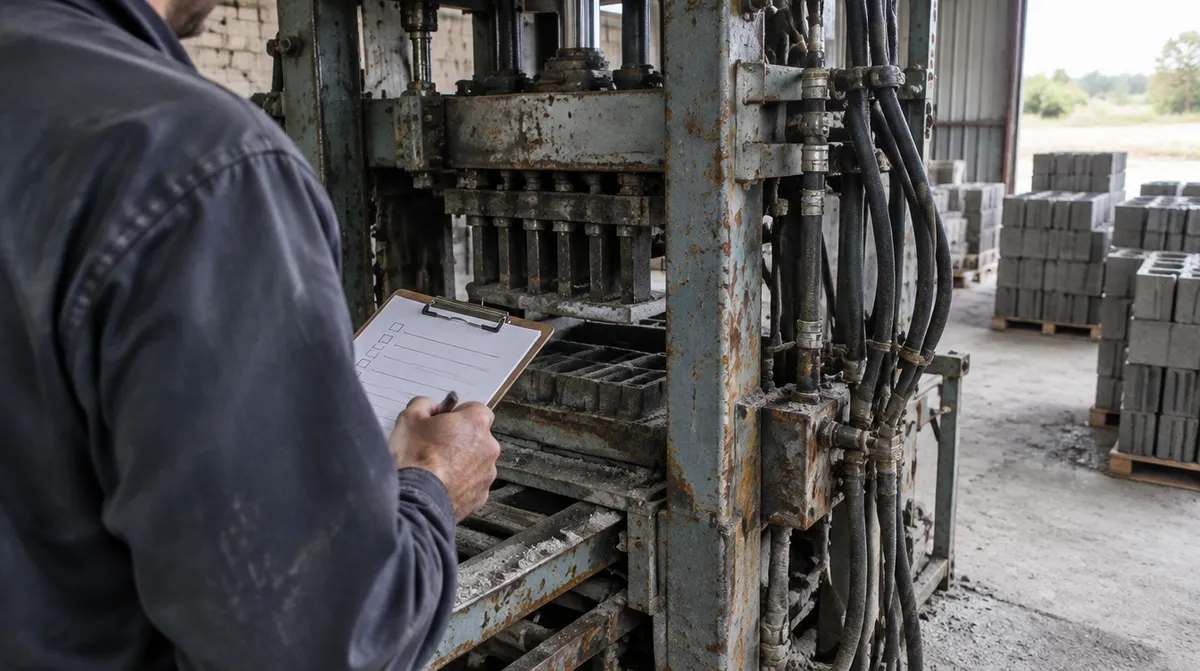
This is the most important machine on the line, and block compaction quality depends on it more than anything else. Block making machines fall into two broad groups: mobile (egg-laying) machines, which place the block directly on the ground or a concrete slab and need no pallets, and stationary machines, which are installed on a foundation and produce on pallets. Mobile machines range from simple manual to fully hydraulic models, and stationary machines from semi-automatic to fully automatic. The full list of models and how they compare is on the page for Tarahan block making machine types.
If you want to start with a compact stationary machine, the TM-104 lightweight pumice block making machine is an option Tarahan Machinery designed for small workshops and limited space. This single-hopper, electro-hydraulic machine has 120 bar of hydraulic pressure and two 3 kW bottom vibrators, and according to the specifications on our website, it produces 4 blocks of 20 cm, 5 blocks of 15 cm, or 7 blocks of 10 cm per pallet. Its stated applications include ceiling, wall, and partition blocks as well as lightweight blocks.

Mixer
The mixer determines how uniform the mix will be. Vertical (pan-type) mixers, widely known as block making mixers, are built for the dry mix used in concrete products. For lightweight materials, as noted in the mixing step, mixers that turn the material over thoroughly are more valuable. See the models and capacities in the Tarahan concrete mixers category; for choosing the mixer type and capacity to match your machine, we have also prepared a guide on choosing a mixer for block making.
Mold
The mold determines the shape, dimensions, number of cores, and edge quality of the block. A good mold must match the pressure and vibration of its machine, hold stable dimensional accuracy, and release the unit cleanly without sticking. Tarahan Machinery builds wall, partition, and ceiling block molds for manual, mobile, stationary hydraulic, and automatic machines, and you can see them all in the concrete molds category.
Vibration Table
The vibration table is the oldest method of producing concrete pavers and paving stones with plastic molds, and today it is also used to make artificial stone. If you plan to produce decorative units or pavers alongside pumice blocks, a vibration table is a useful add-on; for hollow pumice blocks, however, the block making machine does the main work with vibration and pressing.
Choosing a Block Making Machine by Production Volume
The first question to answer before buying a machine is this: how many blocks per day do you want to make, and how many can you sell? The answer, together with your budget, available power, and land, narrows the choice considerably. The table below compares the stated capacity of several Tarahan models over an 8-hour shift. These figures are approximate and vary with the block type, mix quality, and operator skill.
| Output level | Recommended machine | Stated capacity (8-hour shift) | Note |
|---|---|---|---|
| Small start, limited budget | Single-motor manual block machine | 500 to 700 blocks | Runs on single-phase or three-phase power; quality depends on operator skill |
| Small workshop | Twin-motor manual block machine | 900 to 1200 blocks | Separate motor for moving the machine, higher speed |
| Small to medium workshop | M.KB (Cadona) semi-hydraulic mobile machine | 1500 to 2000 blocks | Semi-hydraulic pressing and vibration; at least 500 m² of flat concrete ground |
| Workshop with limited space, producing on pallets | TM-104 stationary block machine | About 4000 blocks | Single-hopper, 120 bar hydraulic pressure; about 500 m² of space and 3 workers |
| High output and continuous production | Fully hydraulic mobile block machine or larger stationary line | Depends on the model; ask a specialist | Fully hydraulic mobile models have a silo and can be fitted with a PLC; three-phase power is required |
A few points to help you decide, specific to pumice blocks:
- Do not sacrifice compaction for price. With sand blocks, a weaker machine can sometimes still give an acceptable product; with pumice blocks, weak vibration and pressing translate directly into loose blocks and more waste. Producing lightweight blocks at high volume with consistent quality is easier and more controllable with hydraulic and automatic machines.
- Manual is possible, with a caveat. You can also produce lightweight blocks with a manual block making machine, but strength consistency then depends more on operator skill, pumice quality, and careful control of mix moisture. For local projects and a low-cost start, it is a sensible choice.
- The next step up from manual is semi-hydraulic. The Cadona M.KB semi-hydraulic block making machine, with hydraulic mix feeding and semi-hydraulic pressing and vibration, offers higher productivity and quality than fully manual models, and it also suits block production at the project site.
- Check your power supply in advance. Hydraulic and automatic models usually require three-phase power. If you only have single-phase power, your choice is mostly limited to manual machines unless you get a generator; ask a specialist what power the model you want requires before you buy.
Machine prices depend on the model, options, and market conditions, and they change constantly. For current prices and advice on the model that suits your output and land, call Tarahan’s sales specialists at +98 914 584 1914.
Quality Tips and Common Defects in Pumice Block Production
The most common complaint from lightweight block producers is chipped edges, cracks, and corners that turn to powder when blocks are collected from the slab or loaded. Many blame the cement first, but the root cause is usually one of the following:
- Uncontrolled moisture: Dry pumice soaks up the water in the mix and the mix turns powdery; too much water leaves voids and cracks behind once it evaporates.
- Incomplete mixing: When the cement does not coat every grain, the block lacks cohesion and develops weak spots.
- Weak vibration and pressing: Air trapped between the grains lowers strength; a machine whose vibration or hydraulics have lost performance turns out loose blocks.
- Poor curing: A block that dries too quickly or is left in sun and wind does not reach the required strength.
- Worn mold or one that does not match the machine: Mold play and wear throw off the dimensions and break the edges during demolding.
We look at the causes and ways to increase density in more detail in the article why pumice blocks crumble and how to increase their density. One simple habit also helps: set aside a few blocks from each batch and compare them after curing; a sudden change can usually be traced to moisture or a new shipment of pumice.
Frequently Asked Questions
What is the difference between a pumice block and a regular cement block?
Both are cement blocks; the difference is the aggregate. A regular block is made with sand and gravel and is heavy, while a pumice block is made with porous pumice and is lighter and better insulating.
Is a pumice block suitable for load-bearing walls?
The main uses of pumice blocks are non-load-bearing walls, partitions, and ceiling blocks. Materials for a load-bearing wall must be chosen as specified in the drawings and by the structural engineer.
Why should pumice be moistened before mixing?
Because pumice absorbs a lot of water. If it enters the mixer dry, it takes the water the cement needs to set, and the mix becomes powdery with poor cohesion, which results in a brittle block.
How long does it take to cure a pumice block?
It depends on the method: water curing usually takes about one week, and a steam room about one day. After that, the blocks should ideally stay for up to about three weeks away from direct sun and wind so they dry evenly.
Can pumice blocks be produced with a manual block making machine?
Yes, but quality consistency depends more on operator skill and moisture control. For higher output and steadier quality, semi-hydraulic, hydraulic, or stationary machines are a more reliable option.
Conclusion
A pumice block is made with pumice, cement, and water, and its light weight and insulation make it a common choice for non-load-bearing walls, partitions, and joist-and-block slabs. Its quality is made or lost in four places: pumice moisture, mixing uniformity, compaction through vibration and pressing, and curing. If you take these four stages seriously and choose a machine that matches your real output, lightweight block production is a manageable business. To review the models, start with the TM-104 machine page or the list of Tarahan block making machines, and consult the sales specialists for your final choice.



Submit Comment: