


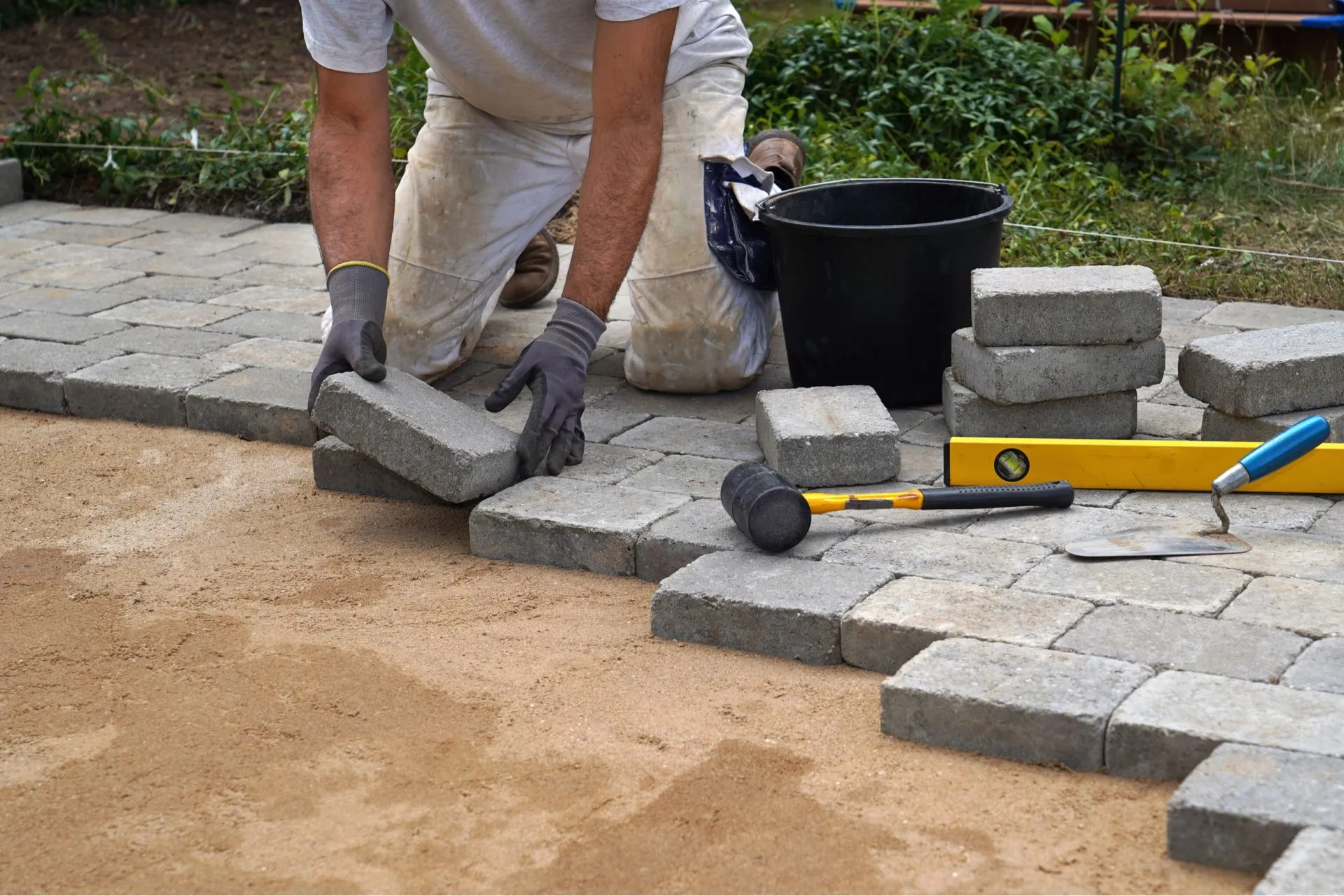
Concrete pavers and curbstones used on sidewalks and in urban areas are constantly exposed to moisture, cold, heat and frost, so their concrete surfaces are at risk of erosion and cracking. Major causes of damage to concrete pavers and curbstones are a high volume of voids and pores, the high water absorption that results, poor resistance to freeze-thaw cycles, and low abrasion resistance.
This article covers methods for making paving stones and concrete curbstones with corrosion-resistant properties. Based on the research and the points discussed here, the mix design alone does not appear to be enough to produce these units. For corrosion-resistant concrete in pavers and curbstones, research, experimental and laboratory studies have been carried out in five areas: production method, mix design, surface layer materials, use of nano-sealers, and curing. Each is described below.
Concrete Paver Production Methods
In general, concrete pavers and curbstones are produced in a concrete mold by three methods: dry press, wet press and cast-in-mold. This section introduces these methods and outlines their general advantages and disadvantages. For the types of steel molds and how to maintain them, see our guide to concrete mold types.
1. Dry-Press Method
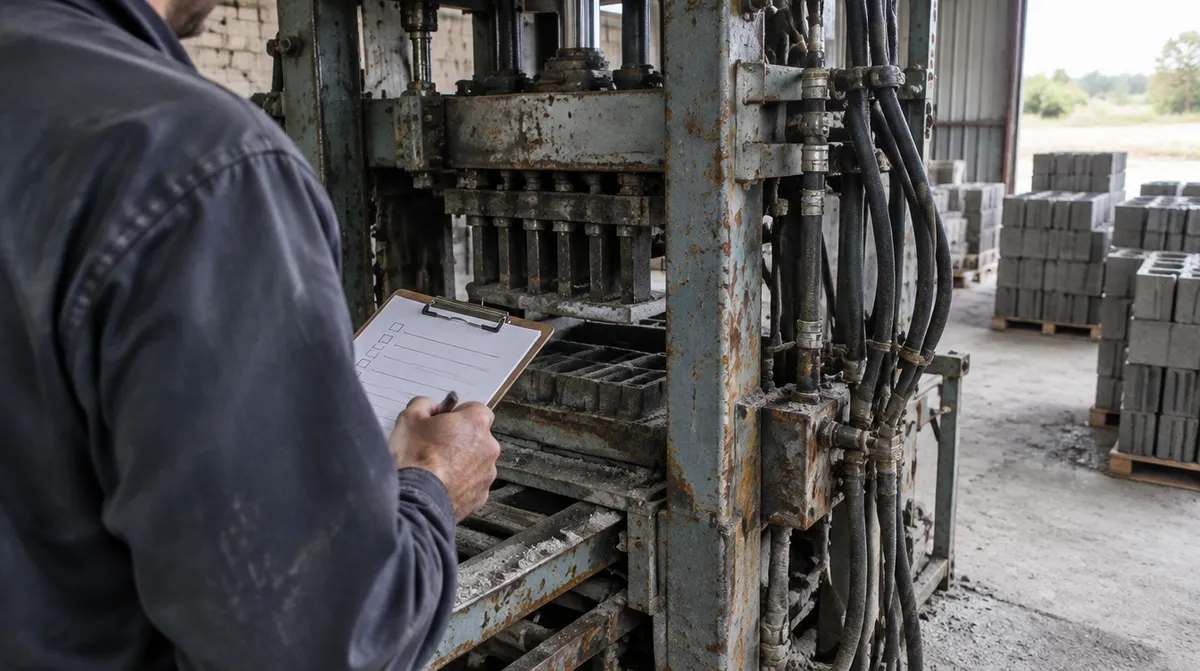
A dry-press paving stone machine mostly produces two-layer units: one layer serves as the base and the other as the surface layer. Pavers can also be made as a single layer on the machine, but two-layer production is more economical, because it gives more control over the surface layer mix design and costs less, since surface layer materials are more expensive than base materials.
As for the machine’s mechanical operation, it is best to pour the base material into the mold, apply vibration, and then press this layer once at 10 tons for a short time. The surface layer is then poured, and the 10-ton press plus vibration is applied to the paver for the longest time possible. Because this method limits both the water in the mix design and the vibration and pressing time, the surface layer is less uniform and resistance to freeze-thaw cycles is lower than with the other methods. Its advantages, however, include fast forming of the concrete unit, uninterrupted production and high output. To make colored concrete units with this method, it is enough to add pigment to the surface layer materials, which saves pigment compared with the wet-press method.
2.2 Wet-Press Method
In this method, concrete with a collapse slump is poured into the mold and then pressed at 500 tons. At the same time, the machine’s vacuum system draws out and discharges up to 70 percent of the water in the concrete unit. Next, the vacuum system lifts the formed unit out of the mold. The collapse slump produces a cement slurry that coats every surface of the concrete unit in a completely uniform layer. This seals the unit’s pores and gives it high resistance to freeze-thaw cycles. Overall, concrete units made on wet-press machinery are the best and most durable products of all the production methods.
2.3 Cast-in-Mold (Vibration) Method
Producing concrete units by the vibration method, which is done on a vibration table, usually works as follows: after mixing, the materials are placed by hand into the concrete mold. The molds then travel on a conveyor belt to the vibration table and, once vibrated, are taken to the curing area. The vibration time must be limited so that the concrete does not bleed, because bleeding significantly reduces concrete strength. This is a traditional method, and its products have lower strength.
3.1 Mix Design for Wet Press
From experience, the optimal mix design for this production method, per cubic meter, is 350 kg of Type II cement, aggregate of 10 to 25 mm diameter making up the rest of the volume, and enough water to bring the slump above 16 cm. Note that 7 to 15 percent of the cement can be left out and replaced with the limestone-based stone powders commonly sold on the market.
3.2 Mix Design for Molded (Vibration) Production
From experience, the optimal mix design for this production method, per cubic meter, is 350 kg of Type II cement, aggregate with a maximum diameter of 10 mm, superplasticizer at 5 percent of the cement weight, microsilica, and enough water to bring the slump to between 6 and 10 cm. The superplasticizer is critical because of the microsilica: microsilica absorbs a lot of water, which raises the concrete’s water demand and so reduces its strength. Superplasticizer is very effective at solving this problem and cutting the need for extra water.
4. Surface Layer (Surface Materials) in Concrete Pavers
As noted, once a paver is installed, its underside is bonded to the ground with mortar and its sides are joined to the neighboring pavers. Only the top surface is therefore exposed to weather, abrasion and environmental pollutants, and the main reason installed concrete pavers fail on streets and walkways is that the surface layer cannot withstand these environmental factors.
In two-layer dry-press pavers, the surface layer materials generally differ from those of the base layer. Clearly, the denser and more uniform the surface layer is, and the fewer holes and channels it has, the less water and fewer chemicals it absorbs from the environment, and the more durable it will be. This shows why filler matters in paver surface materials. Using filler alongside the other surface materials, however, requires attention to the points below:
4.1 Diameter, Shape and Type of Aggregate
Experience shows that aggregates larger than 3 mm in diameter in the surface layer increase its voids, leading to higher water absorption and deterioration.
- Aggregate shape: Crushed aggregates are the better choice, because they interlock with the filler better than natural aggregates and so create a more uniform surface.
- Aggregate type: Experience shows that aggregates from stone-crushing plants perform better than sand, thanks to their more uniform texture and better interlock with the filler.
- Water absorption: The aggregate type must not reduce the initial water absorption of the concrete. Silica aggregates, for example, which lower initial water absorption, are unsuitable, because concrete needs to absorb water during the 28-day production cycle until final set.
4.2 Type and Amount of Filler
The most suitable fillers are the stone powders commonly sold on the market and the stone dust produced by stone-crushing plants. The key point is that the filler must have the same mineral base as the aggregates used, because this increases interlock and adhesion between aggregate and filler.
- Example: Marble powder from Jowshaqan, Iran, is a good match for Jowshaqan marble aggregates.
- Amount of filler : Too much filler can leave the surface layer uneven and non-uniform and create paste-like balls, because the fine particles absorb a lot of water. From experience, the best filler content in the surface layer is one-third of the amount of aggregate used.
5. Curing
Curing is the process of preventing moisture loss from concrete and keeping its temperature at a satisfactory level. Curing has a major effect on the properties of hardened concrete, including lower permeability and better resistance to freeze-thaw cycles. Common curing methods for concrete units are direct watering, sealing and steam curing, each of which is covered separately below:
5.1 Direct Watering
This method is only permitted when there is no risk of freezing. Water is sprayed on the surface of the units continuously. It is best to apply the water in a way that does not erode the concrete surface through constant watering, for example with a water spray. The water temperature must not exceed 23°C. The time to start watering varies with the type of unit. The right time is when spraying water will no longer break up the concrete.
5.2 Sealing
In this method, the surfaces of the concrete unit are fully sealed so that the concrete cures under its initial moisture and its own heat of hydration, and the temperature and water needed for continued hydration are retained.
5.3 Steam Curing
This method is used when gaining early strength in a short time is very important, or in cold weather, when more heat is needed to speed up cement hydration. There are two steam curing methods:
- Method 1: Steam curing at atmospheric pressure
This method has the following four stages:- Hold the concrete unit in open air for 2 to 5 hours immediately after production.
- Place the concrete unit in the steam room and raise the temperature to the maximum over 2.5 hours.
- Hold the whole load at a constant temperature for 12 to 72 hours.
- Gradually lower the temperature from the maximum to the target temperature over 2 hours.
The temperature in the third stage should preferably not exceed 85°C, and the rate of temperature rise or fall in the second and fourth stages should not exceed 20°C per hour.
- Method 2: High-pressure steam curing (autoclave)
In this method, the concrete cures quickly. To reach the required strengths, the curing temperature is between 165 and 190°C and the working pressure in the steam system is between 5.5 and 11.7 MPa.
For steam curing, the optimal temperature and time are as follows:
- a) Curing at atmospheric pressure: 50 to 80°C for 72 hours.
- b) Curing with steam and pressure: 190°C, 11 MPa pressure, for 36 hours.
Additional notes:
- Units made by the vibration method must stay in the concrete mold for at least 5 hours before being demolded and starting curing.
- Curing of wet-press units can begin 2 hours after production.
- Dry-press units must stay in normal ambient conditions for at least 4 hours before curing begins.
6. Sealing Materials (Nano-Sealers)
The sealers that can be used to waterproof concrete pavers include:
- Film-forming sealers: Silicones, Acrylic, Waxes, Epoxy, Urethane
- Solvent-based penetrating sealers: Siloxane, Silane
- Water-based penetrating sealers (Zycosil)
Test results from 100 sealed paver samples show the following:
- Penetrating nano-sealers perform better than film-forming nano-sealers, because film-forming sealers do not penetrate the material and so do not resist abrasion.
- The material used must not contain particles larger than 6 nanometers.
- The nano-sealer must be applied after the concrete paver’s curing cycle is complete.
Table 1: Average water absorption results for the 100 tested samples
| Production method | Water absorption without nano-sealer (%) | Water absorption with nano-sealer (%) |
| Dry press | 5 | 2/4 |
| Wet press | 5/3 | 75/1 |
| Molded (vibration) | 5 | 1 |
Conclusion
This study examined how to produce corrosion-resistant concrete pavers. Five factors matter in producing highly corrosion-resistant concrete: production method, mix design, surface layer materials, concrete curing, and the use of nano-sealers.
Among the production methods, wet press showed the best freeze-thaw resistance, thanks to its uniform structure and sealed pores. Even so, a separate mix design using microsilica to raise abrasion resistance is recommended for each production method. And since the top surface of a paver is the part most exposed to erosion and corrosion, uniform aggregate grading and the use of filler are recommended.
Like other concrete units, pavers need proper curing to reach the desired strength. This article does not examine in detail how the choice of curing method affects a concrete paver’s final strength, but the key point in the final stage of concrete paver production is the use of penetrating nano-sealers with particles smaller than 6 nanometers, which must be applied after the curing cycle is complete.
If you have not yet chosen the design and thickness of the pavers for your project, our guide to types of concrete pavers reviews the right thickness for sidewalks, parking areas and vehicle lanes, and the difference between single-layer and two-layer pavers.

Submit Comment: