


When people hear “interlocking block,” most think first of how it looks: blocks that lock together like puzzle pieces. But a working definition for a project owner, contractor, or production line investor has to answer a more practical question: what kind of block is it exactly, and what kind of project is it designed for? How does it differ from other blocks, and what are its advantages and drawbacks? And what does it take to set up an interlocking block production line with an interlocking block making machine? In this article from the Tarahan Machinery blog, we answer these questions and cover all the key points about this block and its production line.
What Is an Interlocking Block and What Are Its Features?
An interlocking block is a type of building block that:
- Has interlocking edges and surfaces
The top, bottom, and sides of the block have projections and recesses that make the blocks seat neatly on top of and next to one another during laying.
- Is used to make blocklaying faster and more accurate
Because the courses lock onto each other mechanically, the work depends less on the mason’s eye and experience, and the wall goes up faster and more neatly.
- Is mainly used for dividing walls
This type is used mostly for yard walls, site walls, interior dividing walls, and partitions, not for load-bearing or structural walls.
- Can be made from different materials
It can be made from regular concrete, lightweight concrete, lightweight aggregate materials, or even clay and decorative mixes. In all of these versions the logic is the same:
the courses lock onto each other so the wall goes up straighter, neater, and faster.

How Is an Interlocking Block Built, and How Does It Lock?
To make the later discussion of machine production easier to follow, we first need to look at how the interlocking block itself is built and how these blocks lock onto each other.
Interlocking block designs usually share a few features:
1. Vertical projections and recesses (like a puzzle or Lego)
One or more projections are placed on the top face of the block, with matching recesses at the same spots on the bottom face, much like puzzle or Lego pieces. When the next course of blocks is laid on the previous one:
- The upper blocks automatically drop into the correct position on the course below.
- The wall is less likely to lean or become wavy as work progresses.
2. Horizontal tongues and grooves on the sides
Some models also have a tongue and groove on the long edges of the block (left and right sides). This:
- Makes the connection between neighboring blocks in a course stronger.
- Keeps the vertical joints between blocks from opening up as much and gives the wall a more uniform look.
3. Voids and hollow spaces inside the block
The inside of an interlocking block may:
- Have voids, like hollow lightweight concrete blocks, to reduce weight and improve thermal and sound insulation.
- Or be designed more solid and heavier to increase the strength of the wall.
The shape and size of these voids directly affect several things:
- Block weight
- Sound and heat insulation
- How joints are filled and mortar is placed
These seemingly simple details make mold design and block making machine accuracy all the more important at the production stage, because if the projections and recesses are off by just a few millimeters:
- The blocks do not lock together properly.
- The wall leans and turns wavy during construction.
- And the mason has to spend more time straightening and adjusting the wall.
Types of Interlocking Blocks by Material, Shape, and Application
1. Concrete (cement) interlocking block
2. Lightweight interlocking block (LECA or lightweight aggregate)
3. Clay or decorative interlocking brick or block
| Interlocking block type | Material | Main applications | Features |
| Concrete (cement) interlocking block | Cement mix Sand and gravel | Yard walls Site walls Dividing walls | Strong Durable Compatible with common construction methods |
| Lightweight interlocking block (LECA or lightweight aggregate) | Cement mix with sand and gravel | Interior walls Partitions and some non-structural exterior walls | Low weight Better heat and sound insulation Requires precise production |
| Clay or decorative interlocking brick or block | Compressed and fired clay and similar compounds | Facades Garden and villa walls Perimeter and decorative walls | More attractive appearance Suitable for architectural projects and signature facades |
For Tarahan Machinery, this variety means:
By designing different molds, a single machine or a single interlocking block production line can make a range of interlocking models for different applications (walls, facades, site work).
What Blocks Are Interlocking Blocks Similar To, and What Do They Compete With?
When a project owner or contractor has to choose a block for a wall or partition, the decision usually comes down to regular cement block, LECA block, or interlocking block. In this section we compare these blocks with the interlocking block:
Interlocking Block vs. Hollow Cement Block
| Comparison item | Concrete interlocking block | Regular hollow cement block |
| Main use | Yard walls Site walls Walls dividing spaces and properties | Yard walls Site walls Dividing walls |
| How courses are laid | Courses lock onto each other; wall level and alignment are easier to control. | Wall level and alignment depend more on the mason’s accuracy and experience. |
| Construction speed | Usually higher, because courses are guided into place and laid faster. | Usually lower; more time is needed to adjust and correct each course. |
| Wall appearance | The wall surface is even and the joints look neater. | Without careful work, the wall surface ends up uneven and irregular. |
| Mortar consumption | Mortar between courses can be thinner and more uniform | Usually more mortar is used, with irregular thickness. |
| Dependence on mason skill | Lower; the block’s shape helps correct construction errors to some extent. | Higher; the final quality of the wall depends directly on the mason’s skill. |
| Production sensitivity | Requires a precise mold and a quality machine to form the locks and teeth correctly | Less sensitive to details of form; small errors are easier to compensate for during construction. |
Lightweight Interlocking Block vs. Lightweight LECA Block
| Comparison item | Lightweight interlocking block | Lightweight LECA block or regular lightweight aggregate block |
| Main purpose | A lightweight wall whose courses can lock onto each other | A lightweight, insulating wall, with no mechanical lock between blocks |
| How courses connect | Courses lock onto each other and wall alignment is better maintained. | Courses sit on each other with mortar only; level control is up to the mason. |
| Wall uniformity | The wall is neater and leveling is simpler. | Wall uniformity depends entirely on construction accuracy. |
| Construction speed | Usually higher, especially on long walls | Moderate; part of the time goes to correcting unevenness and height differences. |
| Heat and sound insulation | Good insulation, depending on the type and amount of lightweight aggregate | Good to very good insulation, depending on block design and density |
| Sensitivity to production quality | Sensitive; incorrect pressure and vibration settings cause edge chipping and defects in the teeth. | Sensitive; low quality can leave the block porous and prone to crumbling. |
| Suitable for | Residential, office, and commercial projects where construction speed and a neat wall are priorities | All kinds of partitions and interior walls in various projects |
Advantages of Interlocking Blocks in Construction and Performance
- Faster blocklaying because courses align easily
- Less need for constant straightening and leveling of the wall
- Less repositioning and repeated tapping of blocks
- Time savings on long walls (yards, sites, industrial halls, etc.)
- Better locking of blocks into each other
- A more uniform, cohesive wall that holds up better against impact
Limitations and Key Points of Interlocking Blocks
- High sensitivity to the accuracy of the interlocking block mold and to production quality
- The price per block is usually higher than that of a plain cement block.
- Masons working with this block for the first time need a little time to get used to it.
- If production quality is poor, the “interlocking” advantage effectively disappears.
Applications of Interlocking Blocks in Different Projects
In practice, the interlocking block is considered a replacement for, or a more advanced option than, common blocks and wall materials. Here are a few practical scenarios for this block:
1. Yard and site walls
- Walls around gardens, villas, industrial halls, and workshops
- Walls between land plots in residential developments
2. Interior dividing walls
- Partitions between units or rooms in residential, office, and commercial projects
3. Walls between industrial and service plots
- Separating spaces in factories, warehouses, and workshops
- Perimeter walls for parking lots and industrial areas
4. Facades and decorative walls
- Clay or colored concrete interlocking bricks or blocks on villa facades, garden walls, and site walls
5. Urban landscaping
- Building low walls, planters, and platforms
Interlocking Block Price and Cost-Effectiveness
The most important question about the price of the different blocks on the market is this: once you count time and labor, which option or block is the better value for each square meter of wall?
When buying interlocking blocks, three costs usually matter:
- Wall material cost:
price per block × number of blocks needed per square meter - Mortar and finishing cost:
mortar volume, need for plaster guide strips, additional gypsum base coat, and amount of leveling - Construction cost and project time:
blocklaying speed, number of workers needed, and the effect on project delivery time
In budget projects (such as a simple yard wall in low-cost areas), the block with the lowest unit price is usually chosen, and if the price gap between the interlocking block and the regular block is large, the regular block wins.
But in mid-range and higher-end projects (villas, urban buildings, housing complexes), the interlocking block can make economic sense even though its unit price is higher.
As a result, on such projects the total cost per square meter of wall (materials + construction + finishing) can come out in favor of the interlocking block, even if the block itself costs more.
So even from the manufacturer’s point of view, the interlocking block is a “value-added” product with a higher profit margin than the regular cement block. In return, however, it:
- Needs a more precise mold and stricter quality control.
- Suits markets where the project owner is willing to pay more than the cheapest option in exchange for faster construction and a better wall.
Is the Interlocking Block Right for Your Project?
When deciding for or against the interlocking block, consider these questions:
- What type of project is it?
- Yard and site walls
- Interior and dividing walls
- Villas and buildings with higher architectural quality
- Budget mass-housing projects
- How important is construction speed?
- If a delay of a few days in building the wall is not a major issue, the interlocking block’s higher speed will not be much of an advantage.
- If, on the other hand, the delivery schedule is tight, the shorter blocklaying time with interlocking blocks counts as an economic advantage.
- How much does the final look of the wall matter?
- If the wall will end up hidden under thick layers of insulation and facade, there is no need to pay extra for interlocking blocks.
- If the wall stays in view (yards, sites, villa perimeters, etc.), the neatness and uniformity of the interlocking block become more valuable.
- How important are the block’s weight and insulation?
- In weight-sensitive structures or buildings where thermal and sound insulation matter, using a lightweight interlocking block, or combining one with an insulation layer, can be an advantage.
- On a simple yard wall, this factor is usually not decisive; price and ease of construction carry more weight.
- What is the project’s budget level?
- If the lowest upfront cost is the main criterion, a plain cement block is usually chosen.
- If a slightly higher cost is affordable in exchange for faster construction and a neater wall, the interlocking block is recommended.

Key Requirements for Producing Interlocking Blocks from the Manufacturer’s Perspective
In interlocking block production, accuracy and quality matter more than they do for regular cement blocks:
- Dimensional accuracy and lock shape
On an interlocking block, the projections and recesses must be produced with high accuracy.
Any error in these areas makes the blocks hard to lock together and wipes out the main advantage of the product.
The block making machine and its settings must therefore be able to hold this accuracy throughout production. - Mold quality and durability
An interlocking block mold must:- Have precise, sharply defined edges for the teeth and grooves,
- Resist wear and impact,
- Keep its shape and dimensions after producing large numbers of blocks.
Keep in mind that any loss of mold quality over time leads directly to poorer block locking.
- Correct pressure and vibration settings
Pressure and vibration play an important role in interlocking block production:- Insufficient pressure leaves the block weak and brittle.
- Improper vibration keeps the corners and teeth from filling completely.
The result is a block with visible flaws that also chips and breaks during construction.
- Curing and post-production storage
After the block leaves the mold, proper humidity and temperature conditions must be maintained for several days so that:- The block reaches the required strength,
- Cracks and damage to the edges and teeth are prevented.
Finally, because interlocking blocks have more edges and details, this stage is more sensitive than it is for a plain block.
How Interlocking Block Production Differs from Regular Cement Block Production
For the manufacturer, the main difference is that the interlocking block requires higher accuracy:
- With a regular cement block
a small dimensional error is usually compensated for during construction with more or less mortar and causes no serious problem. - With an interlocking block
the shape of the block and its teeth directly affects locking and wall alignment.
Any small production error shows up during construction and can cancel out the interlocking advantage.
That is why choosing a machine with sufficient accuracy and investing in a quality mold are among the main conditions for a successful product and satisfied masons.
What Machine Is Suitable for Producing Interlocking Blocks?
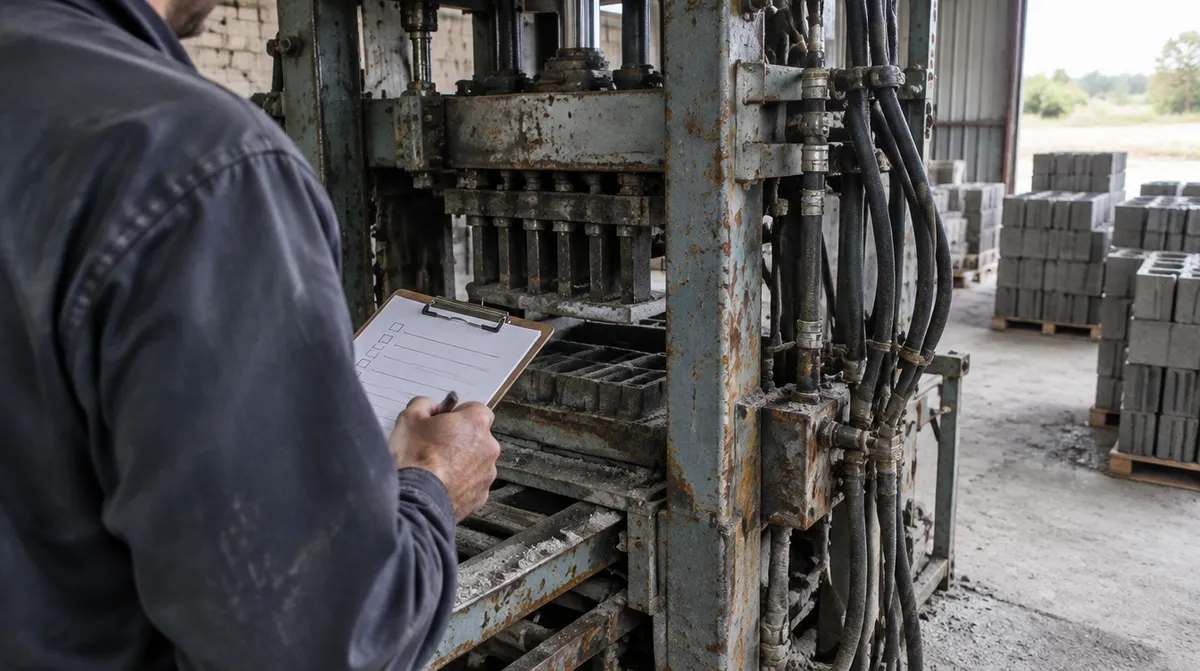
A block making machine suited to interlocking block production should have several key features:
1. A stable frame and chassis suited to the interlocking mold
- The machine’s body and chassis must be strong and stable.
- The machine must not shake or twist excessively during operation.
Otherwise, even an accurate mold will gradually go out of adjustment and the blocks will lose dimensional accuracy.
2. Matched pressure and vibration
The machine must be able to:
- Provide enough pressure to compact the mix;
- Generate effective vibration so the mix reaches every part of the mold, especially the teeth and corners.
A machine that only forms the outward shape of the block, without properly compacting the mix inside it, is not suitable for producing interlocking blocks.
3. Uniform output throughout the shift
The machine’s quality must be such that:
- Blocks from the beginning and end of the shift, in terms of
- Height
- Length and width
- Shape and accuracy of the teeth
Are as uniform and alike as possible.
This uniformity is the result of:
- Correct machine design
- Component quality (cylinders, motion system, vibration)
- And the manufacturer’s experience in building block making machines.

The Role of the Interlocking Mold in Final Block Quality
The mold is the most important element in interlocking block production, and the quality of the final product depends on it to a large extent.
1. Correct geometric design
Before the mold is built, the following must be carefully designed:
- Shape and angle of the teeth
- Depth and width of the grooves
- Overall block dimensions and spacing
If the geometric design is not correct:
- Blocks may wobble on top of each other.
- Or they may engage so tightly that building the wall becomes difficult for the mason.
2. Mold material and construction
A suitable interlocking block mold must:
- Be made from wear-resistant plates;
- Have precise welding and assembly;
- Not develop play or deform over time and after producing large numbers of blocks.
Because the interlocking block has teeth and more details, mold quality is more critical than it is for a regular block.
3. Using different molds on one machine
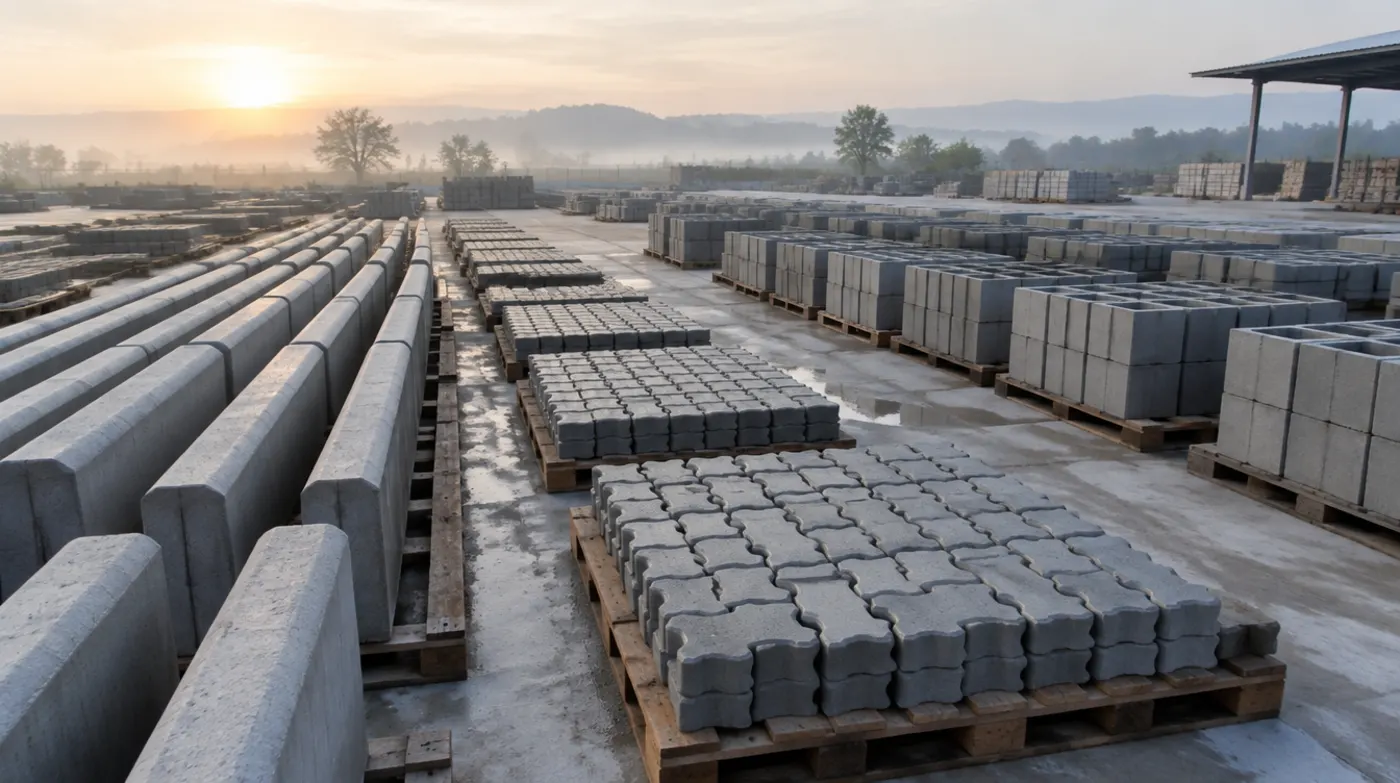
For the manufacturer, a major advantage is being able to install different molds on one block making machine, such as:
- Regular cement block mold
- Interlocking block mold
- Curbstone mold
- Paver mold
In this setup:
- The investment in the machine is not limited to a single product;
- The manufacturer can switch between products depending on the season and market demand.
This is where Tarahan Machinery can add value: by designing and building machines that work with several types of molds, and by supplying specialized molds, such as the interlocking block mold, for the same machine.
Who Should Consider Setting Up an Interlocking Block Production Line?
Setting up or adding an interlocking block production line is not necessary for every manufacturer, but for these groups it can be a sensible choice and a step forward:
1. Existing cement block manufacturers
If you already produce regular cement blocks and have a fairly steady market, adding interlocking blocks can:
- Add a new value-added product to your range.
- Serve customers who care about workmanship, blocklaying speed, and a neater appearance
In that case, it usually takes:
Adding an interlocking mold to a suitable machine, or upgrading your existing machine, to start producing interlocking blocks without building a new industrial hall.
2. Contractors and mass builders with their own production yard
If your organization is both a construction contractor and able to produce materials, making interlocking blocks can increase the speed and quality of wall construction on your own projects and, if you have surplus capacity, also allow sales to the surrounding market.
3. New investors in concrete products
For investors who want to enter concrete product manufacturing from scratch, the interlocking block can be:
- A more distinctive product on the market than the regular cement block
- Provided that builders and project owners in the target region care about workmanship and speed, and are willing to accept a slightly higher cost for that quality.
Common Mistakes When Starting Interlocking Block Production
A few mistakes come up again and again at the start and are best avoided:
- Not researching the market before investing
Starting production only because the product is attractive, without checking how many interested contractors and project owners are in the region, raises the risk.
- Choosing a low-accuracy machine
With interlocking blocks, a machine that cannot hold dimensional accuracy creates more problems than opportunities, because the errors show up directly during construction.
- Cutting too many corners on the mold
Using a cheap, poorly designed mold undermines the quality of the entire output and damages the manufacturer’s brand.
- Neglecting to train project crews
If crews do not know the correct way to lay interlocking blocks, even a good product will not deliver the desired result, and the dissatisfaction gets blamed on the block itself.
Why Is a Multi-Purpose Block Making Machine More Cost-Effective?
For many workshops and factories, it does not make sense to buy a separate machine for each product. The more economical solution is to:
- Get one strong, standard block making machine
- And install various molds on that same machine, such as:
- Regular cement block mold
- Interlocking block mold
- Curbstone mold
- Paver mold
The advantage of this approach is that the workshop or factory can focus on regular cement blocks in periods when demand for them is high, and when special projects such as villas, landscaping, or better-looking yard walls are active, easily continue with interlocking blocks, curbstones, and pavers on the same line.
Because a company like Tarahan Machinery handles machine design, manufacturing, installation, and commissioning, along with the design and supply of specialized molds, under one roof, the investor can be confident that the machine they buy can produce regular cement blocks and can also make interlocking blocks and other concrete products on the same line.
Finally, if you are looking for a block making machine that can produce interlocking blocks and other concrete products as well as regular cement blocks, you can view the specifications of Tarahan Machinery’s machines on the block making machine page.


Submit Comment: