


LECA block vs AAC block: when it comes to building walls with lightweight block, no two names come up more often. Both are used to reduce the weight of a building, both weigh less than ordinary cement blocks, and both are widely used on construction projects.
But the real question is this: which is better, AAC block or LECA block?
The answer depends on your goal. If you are a builder or contractor looking at the cost of putting up a wall, you get one answer. If you plan to set up a block production workshop, the answer is completely different.
In this article, we compare LECA and AAC blocks from two angles:
- Which block is more cost-effective for wall building and project construction?
- Which block is the more sensible choice for production and investing in a workshop?
What Is LECA Block?
LECA block is a type of lightweight cement block made with lightweight LECA aggregate. LECA is expanded clay aggregate, and its low weight is what makes the block lighter.
LECA block is usually made from a mix of cement, water, LECA aggregate and, in some cases, sand or other fine material. The mix is fed into the machine’s mold, and vibration and pressure give the block its final shape. The blocks must then go through curing to develop the required strength.
LECA block is most often used for non-load-bearing walls, partitions, interior walls and some perimeter walls. Many masons and site crews already know how to lay it, and the method is very similar to laying common cement blocks.
What Is AAC Block?
Hebel block, also known as AAC block, is a type of autoclaved aerated concrete. It is made from materials such as cement, lime, silica, water and aerating agents. The air bubbles inside the block give it its low weight and good thermal insulation.
Producing AAC block is more complex than producing LECA block. After raw material preparation, molding and cutting, the product has to go into an autoclave, where it gains strength under steam, pressure and controlled temperature.
For this reason, AAC block is better thought of as an industrial product. Producing it takes more capital, more specialized equipment, a larger space and tighter quality control.
LECA Block vs. AAC Block at a Glance
To start the comparison, here is a short, simple summary of the main differences between the two blocks.
| Criterion | LECA block | AAC block |
| Product type | Lightweight cement block with LECA aggregate | Autoclaved aerated concrete |
| Weight | Lighter than ordinary cement block | Lighter than LECA |
| Laying method | Sand and cement mortar | Special AAC adhesive |
| Wall-building speed | Adequate | Usually faster |
| Thermal insulation | Acceptable | Better than LECA |
| Material waste | Higher than AAC | Lower, because it cuts better |
| Chasing for utilities | Harder, with more damage to the wall | Cleaner and simpler |
| Need for skilled installers | Lower | Higher |
| Workshop-scale production | Simpler and more accessible | Harder and more industrial |
| Initial production capital | Relatively lower | Much higher |
| Suitable for a first-time producer | Yes, in many cases | Usually not |
LECA Block vs. AAC Block: Weight
Both LECA and AAC blocks are used to make walls lighter than traditional materials do. In general, though, AAC block usually weighs less than LECA block.
- The light weight of AAC block reduces the dead load of the building. On projects where controlling structural weight matters a great deal, this is a serious advantage.
- LECA block, for its part, is also lighter than ordinary cement block and is an acceptable option for many projects.
So if weight were the only criterion, AAC block would score higher. But weight is not the only factor in the final decision. Purchase price, installation cost, labor wages, transportation, material waste and even finishing costs all need to be considered.
LECA vs. AAC: Thermal and Sound Insulation
Thanks to its porous structure and air bubbles, AAC block insulates against heat better than many other lightweight blocks. That makes it an attractive option on projects where reducing energy use and controlling indoor temperature are important.
LECA block, with its light, porous aggregate, also provides some thermal and sound insulation. In most cases, however, AAC block performs better on thermal insulation.
An important point on real job sites
How well a wall insulates does not depend only on the type of block. These factors also affect the final result:
- Wall thickness
- Quality of the wall construction
- Type of mortar or adhesive
- Properly made joints
- Type of plastering
- Construction details around doors, windows and utilities
In other words, even if you choose the best block, poor workmanship can drag down the final performance of the wall.

LECA Block vs. AAC Block Price: Purchase Price Is Not All That Matters
One common mistake when comparing LECA and AAC block prices is to look only at the price per block or per cubic meter of block. For a builder or contractor, the more important number is the total cost per square meter of finished wall.
At first glance, AAC block may cost more to buy than LECA block. But on site, other costs enter the calculation and can change the result.
Costs to include in a price comparison
For a realistic comparison, these items must also be taken into account:
1. Cost of mortar or adhesive
LECA block is usually laid with sand and cement mortar. This mortar has to be prepared on site, carried up to the upper floors and used in relatively large volumes.
AAC block, on the other hand, is laid with a special adhesive. The adhesive costs more per kilogram than traditional mortar, but it is applied in a much thinner layer. This can offset part of the price difference.
2. Labor cost
Because of its larger dimensions and smoother surface, AAC block is usually faster to lay. The faster the work goes, the lower the labor bill and the project downtime.
Building with LECA block, by contrast, is often slower, because the blocks are smaller and traditional mortar takes more time to apply.
3. Transportation and on-site handling costs
The lower weight of AAC block can make transportation and handling easier. Of course, transportation cost also depends on the distance from the factory to the project, the order volume and local conditions.
4. Material waste
On construction projects, some material is always lost during cutting, handling and utility installation. Because it cuts better, AAC block usually produces less waste. LECA block, on the other hand, may break and crumble more when it is cut or chased.
5. Finishing cost
The surface of AAC block is smoother and more regular. If the wall is built correctly, surface preparation and finishing costs can be reduced on some projects. LECA walls, with their rougher surface and mortar joints, need more surface preparation.
So on Price, Is AAC Block or LECA Block Better?
If you look only at the purchase price of the block, LECA may seem more economical. But if you calculate the full cost of building the wall, AAC block can be more competitive on many projects.
Put simply:
If your only criterion is the purchase price of the block:
LECA block can be the cheaper option in many markets.
If your criterion is the total cost of the wall:
AAC block can work out more cost-effective thanks to faster installation, lower mortar use, less waste and savings on some finishing costs.
This conclusion does not always hold, of course. Material prices in each city, labor wages, transport distance, the skill of the crew and the type of project all affect the final decision.
LECA vs. AAC: Wall-Building Speed
High wall-building speed is one of the strengths of AAC block. AAC blocks usually have larger dimensions and are laid with a thin layer of adhesive, so the wall goes up with fewer pieces and in less time.
On projects where time is critical, this can matter a great deal. Less time spent building walls means:
- Lower labor costs
- Less time tying up the crew
- Later project stages starting sooner
- Lower site overhead costs
Laying LECA block, by contrast, usually takes longer because of the traditional mortar and smaller dimensions. The advantage of LECA is that many crews are familiar with it, and labor to install it is easier to find in different cities.
Material Waste and Chasing for Utilities: The Point Usually Forgotten
In the initial project estimate, many people count only the number of blocks and their purchase price. In practice, some costs only show up during construction, especially in cutting, chasing and utility installation.
With LECA block
Because of its granular, cement-based structure, LECA block may crumble or break unevenly when cut. Cutting clean, accurate chases for electrical conduit, water pipes and other utilities is also usually more difficult.
This can lead to more material waste, more patching mortar and longer installation time.
With AAC block
AAC block has a more uniform structure and cuts more easily. Chases in an AAC wall are often cleaner and do less damage to the wall as a whole.
For this reason, on projects with a lot of utilities running through the walls, AAC block can make the work simpler.
LECA vs. AAC: Finishing Work
The final surface of the wall after it is built has a direct effect on later project costs.
- A LECA wall usually has a rougher surface and thicker joints. As a result, it needs more surface preparation and plaster to get a smooth surface ready for paint or a final covering.
- AAC block, with its smoother surface and more accurate dimensions, can reduce finishing costs if the wall is built correctly. This does depend on the quality of the work, how level the wall is and the type of final covering.
So in an economic comparison, finishing costs must be weighed alongside the block price and the cost of building the wall.

For Project Construction, Is AAC Block or LECA Block Better?
From the point of view of a builder, contractor or project manager, AAC block has serious advantages on many projects. Lower weight, faster installation, adhesive instead of thick mortar, less waste and a smoother surface are among the reasons it can bring down the final cost of a wall.
But that does not rule out LECA altogether. LECA is still a good choice on many projects, especially in areas where its price is more competitive, where crews know it better, or where supplying AAC block comes with high transport costs.
Summing up this section
For project construction, if skilled labor and the right ancillary materials are available, AAC block is in most cases the faster and cleaner option for wall building.
But if the project is in an area where LECA is cheaper, easier to get and easier for local crews to install, LECA block can still be an economical and acceptable choice.
For Production and Investment, Is LECA Block or AAC Block Better?
This is where the result of the comparison changes.
For someone planning to manufacture, wall-building advantages are not the only thing that matters. A producer also has to think about initial capital, required equipment, workshop space, technical staff, repair costs, the sales market and startup risk.
From this angle, producing LECA block or lightweight cement block is usually a simpler and more accessible path than producing AAC block.
Why Is AAC Block Production Harder and More Expensive?
AAC block production is a full industrial process. To set it up, one simple machine is not enough. An AAC production line needs specialized equipment and heavy infrastructure.
Equipment and conditions needed to produce AAC block
Producing AAC block requires the following:
- A raw material preparation and mixing system
- Precision cutting equipment
- Special molds
- An autoclave for pressure curing
- A steam boiler and ancillary facilities
- A larger production space
- Technical staff who know the process
- Tight quality control of raw materials and the final product
All of this makes entering AAC block production far from easy for small workshops and first-time investors. Without capital, technical know-how, a strong sales market and suitable infrastructure, the risk of this investment goes up.
Why Is Producing LECA Block and Lightweight Cement Block Simpler?
Producing LECA block does not require complex processes such as autoclaving, industrial cutting or pressure curing. With the right equipment, a correct mix design and proper curing, a producer can enter the lightweight block market.
To start producing LECA block or lightweight cement block, you need this equipment:
- A suitable block making machine
- A concrete mixer or mortar mixer
- A standard mold
- Storage and curing space
- Raw materials such as cement, water, and LECA or other lightweight aggregates
- A trained operator
For this reason, LECA block production is the more sensible path for many small and medium-sized workshops. A producer can start at lower capacity, test the local market and, as sales grow, upgrade the machine or production line.
The Role of the Block Making Machine in LECA Block Quality
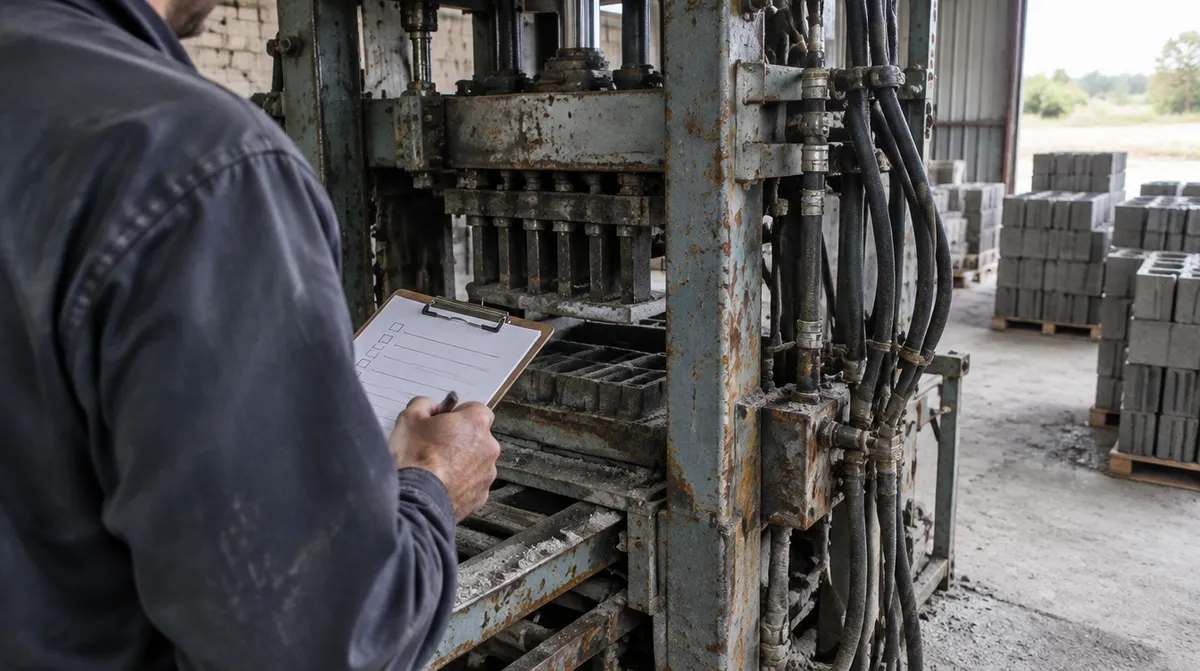
In LECA block production, machine quality has a direct effect on the quality of the final product. If the machine does not have proper vibration, a sturdy chassis, a standard mold and a reliable hydraulic system, its output will not be uniform.
A poor-quality block making machine may look cheaper at first, but in practice it causes the following problems:
- Lower block density
- More product breakage
- Quality falling off during the work shift
- Constant machine breakdowns
- Higher repair costs
- Lower daily production capacity
- Dissatisfied end customers
That is why, for a producer who intends to compete seriously in the market, choosing a reliable block making machine is more than a simple purchase; it is an important decision for the future of the workshop.
Is a Stationary or a Mobile Block Making Machine Better?
For producing LECA block and other concrete products, the choice between a stationary and a mobile machine depends on your budget, workshop space, production volume and product type.
Stationary machines
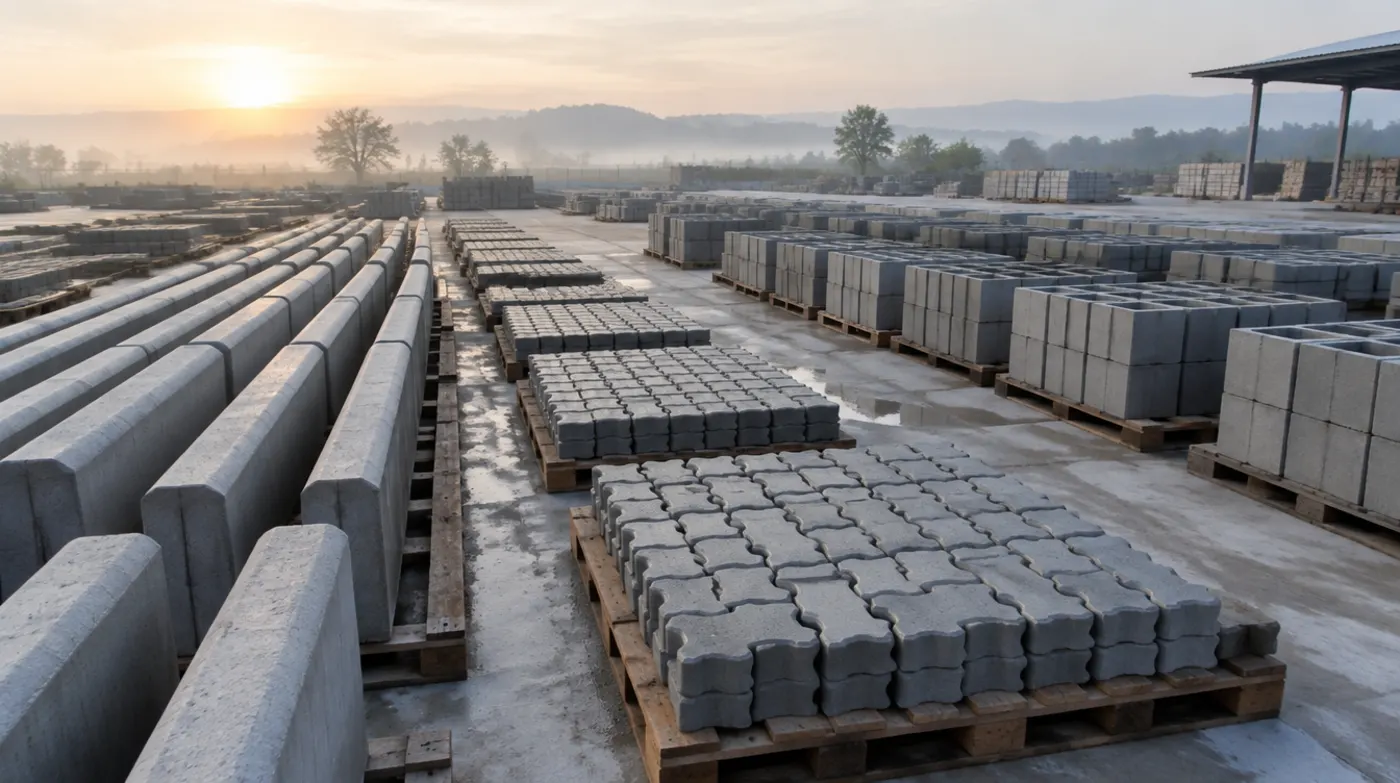
Stationary block making machines suit workshops that plan more regular production, higher output and a wider product range. By changing the mold, these machines can usually produce blocks, curbstones, pavers and some other concrete products.
At Tarahan Machinery, stationary machines are built in single-hopper and double-hopper models. Single-hopper models are used for blocks and simpler products, while double-hopper models are better suited to products such as two-layer pavers and colored items.
Mobile machines
Mobile, or egg-laying, machines suit workshops that want to eliminate the cost of buying pallets. These machines travel over a concrete pad and lay the blocks directly on the ground.
Mobile machines can be a good option for getting started, for regional projects or for production in open areas. They do, however, need a suitable concrete surface and enough room for the machine to move.
In Lightweight Block Production, the Mixer and Batching Plant Matter Too
Some producers focus only on the block making machine, yet the quality of the initial mix is also very important. If the mortar or concrete is not prepared correctly, even the best machine cannot produce a quality block.
In LECA block production, mix uniformity is critical. Water content, cement ratio, type of lightweight aggregate and mixing time must all be controlled. If the LECA aggregate is crushed or the mix is not uniform, block quality drops.
For production at higher capacities, concrete preparation equipment such as a concrete batching plant can help you control materials more accurately and produce more uniformly. At smaller capacities, choosing the right mixer also plays an important role in the final quality of the block.
Which Has the Better Sales Market, LECA Block or AAC Block?
The market for both products depends on the region. In some cities, AAC block is better known among builders and large projects welcome it. In other areas, LECA block, pumice block or lightweight cement block sells better because of a better price, easier availability or more familiar installation.
For a producer, the most important step before buying a machine is to study the local market.
Ask these questions before starting production
- What type of block do builders in your city or province mostly use?
- What is the selling price of lightweight block in the local market?
- What quality do local competitors produce?
- How much does transportation to projects cost?
- Is there an opportunity for bulk sales to large housing developers?
- Do customers trust LECA, pumice or lightweight cement block?
- What could your daily sales capacity be?
Sometimes a LECA block workshop with medium capacity, consistent quality and a competitive price is more profitable than a high-risk move into AAC block production.

So, in the End, Is AAC Block or LECA Block Better?
To answer precisely, we have to define who is asking.
If you are a builder or contractor
AAC block can be the better choice on many projects, because it is lighter, goes up faster, produces less waste and, when installed correctly, reduces the associated costs of wall building.
However, if AAC block is expensive in your area, skilled crews are not available or transport costs are high, LECA can also be an economical and acceptable option.
If you are a producer or investor
LECA block or lightweight cement block is usually the more sensible choice to start with, because producing it takes less capital, simpler equipment and a more manageable space, and carries lower risk.
AAC block production is better suited to investors who have the means to set up a complete industrial line, a broad sales market and a strong technical team.
Final Verdict: Which Lightweight Block Is More Cost-Effective?
When comparing LECA block and AAC block, there is no single answer for everyone. Each of these blocks has its own advantages and limitations.
- For building walls, AAC block has important advantages on many projects. Lower weight, higher speed, adhesive instead of thick mortar, less waste and a smoother surface make it an attractive option in terms of total wall cost.
- In terms of production and setting up a workshop, however, LECA block and lightweight cement block offer a simpler and more economical path. AAC block production requires more capital, more specialized equipment and tighter technical control, while LECA block production can start with a suitable block making machine, a mixer, a mold and curing space.
So the final answer is this:
For wall building and project construction, AAC block is more cost-effective and faster in many situations. For production and workshop investment, LECA block and lightweight cement block are usually the more practical, lower-risk and more accessible choice.
If you plan to set up a lightweight block production workshop and are not sure which machine, mold or production capacity is right for you, it is best to consult an experienced manufacturer before buying a machine. The experts at Tarahan Machinery can recommend the most suitable path based on your budget, workshop space, local market and production goals.
For free advice on choosing a block making machine, mixer or ancillary equipment, or even on setting up a concrete products plant, you can contact Tarahan Machinery and make a more informed choice before you invest.




Submit Comment: