


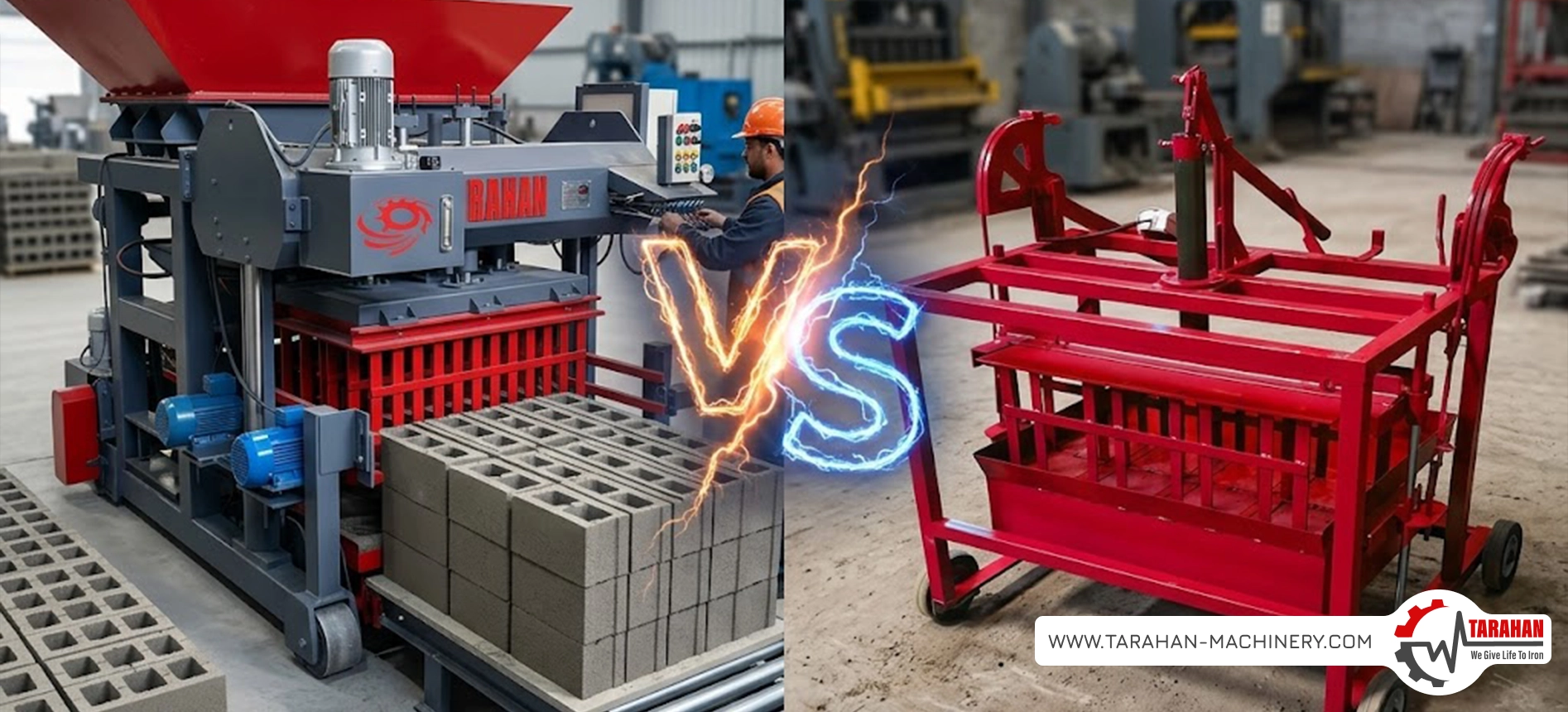
One of the most important decisions when setting up or expanding a concrete products plant is how much automation to invest in. Many investors starting out face the same manual vs automatic block making machine question: are low-cost manual machines the more sensible way to begin, or, given the production volume and target market, will investing in automatic lines bring a better return?
The answer is not the same for every plant. It depends on factors such as the initial budget, the output you need, access to industrial power, the size of the workforce and the type of customers you serve.
This article examines the technical and economic differences between the two production methods, based on real plant conditions and on running costs for the Iranian calendar years 1404 and 1405 (roughly 2025–2026), so the decision becomes completely clear.
1. Working Mechanism and Output Compared (Physical Labor vs. Hydraulic System)
A plant’s production speed and efficiency depend directly on the time needed to complete one production cycle. With mechanical equipment, much of the process relies on manual labor. On a manual block making machine (whether single-motor or twin-motor), the operator moves the mix by wheelbarrow, fills the mold with a shovel and repositions the machine for the next cycle. For this reason, output and working speed depend to some extent on the operator’s experience and the working conditions. Even so, for small plants or projects with limited production needs, this simple setup can be an economic advantage. As a rough estimate of what these machines can produce, their output in an 8-hour shift, depending on the model and other factors, typically ranges from 300 to a maximum of 1,200 blocks.
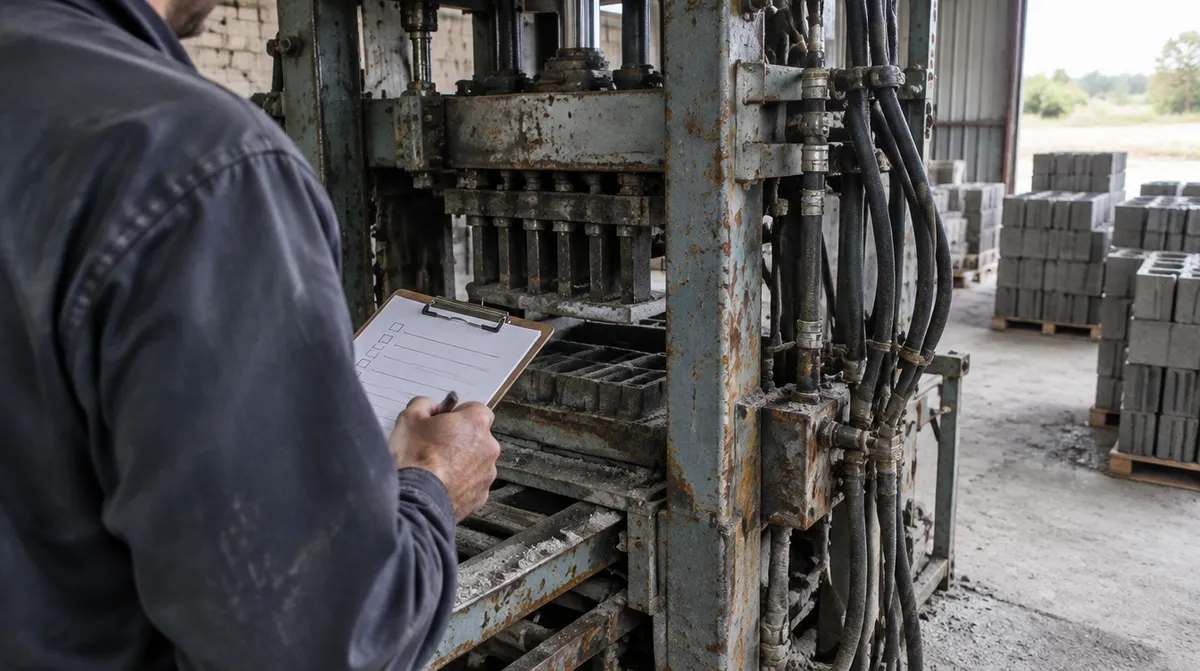
Automatic machines, by contrast, mechanize material feeding and pressing, which keeps reliance on manual labor to a minimum. The mix enters the mold automatically through a silo and a feed cart, and each cycle takes a steady 35 to 45 seconds without interruption. For example, a 6-cavity mobile automatic block making machine (such as Tarahan Machinery’s M.BS model) can produce up to 3,500 blocks a day. On 12-cavity models with a smart PLC system (such as the M.BD), this capacity reaches 5,500 to nearly 8,000 blocks per shift.
2. Block Quality and Contractors’ Concerns About Hidden Costs
In Iran today, supervising engineers from the Construction Engineering Organization pay particular attention to the compressive strength and dimensional accuracy of building materials. The reason is that block quality directly affects construction speed, mortar consumption and the final quality of the masonry.
Porosity and Block Quality on Manual Machines
On manual machines, the mix is compacted mainly by vibration and the weight of the mold. As a result, the final quality of the block depends largely on the raw materials, the machine setup and the operator’s skill. In some production runs, the edges may be less uniform than those of industrially made blocks, and more mortar may be needed to level the courses during wall building.
Even so, blocks from manual machines are still used on many local projects, in light partition walls and in small-scale construction. With suitable raw materials, they can offer acceptable quality for this type of project.
The Advantage of Industrial Blocks from Automatic Machines
Automatic machines use hydraulic cylinders to apply high pressure to the mold together with vibration. The result is a denser block of consistent weight, with a more uniform surface and more precise edges.
These qualities reduce breakage during transport and lower mortar consumption on site. That is why large projects and mass housing developments usually prefer blocks made on automatic lines.

3. Producing Modern Materials: The Challenge of Entering the Lightweight Block Market (LECA and Pumice)
Because of the requirements of Iran’s National Building Regulations on energy efficiency and on reducing a structure’s dead load, demand for lightweight insulating blocks (pumice and LECA) has grown dramatically in recent years.
- Producing lightweight blocks of consistent quality at high volume is simpler and easier to control on automatic machines. The hydraulic system on these machines spreads the cement slurry evenly, under controlled pressure, through the porous structure of the lightweight aggregate, which increases the compressive strength of the finished product.
- Some lightweight blocks can also be produced on manual machines, but keeping strength and final quality consistent depends more heavily on the operator’s skill, the raw materials and the care taken in production.
4. Plant Infrastructure and Maintenance Costs (CAPEX)
Providing the infrastructure each type of machine requires makes up a significant part of your initial capital.
Requirements of a Manual Machine
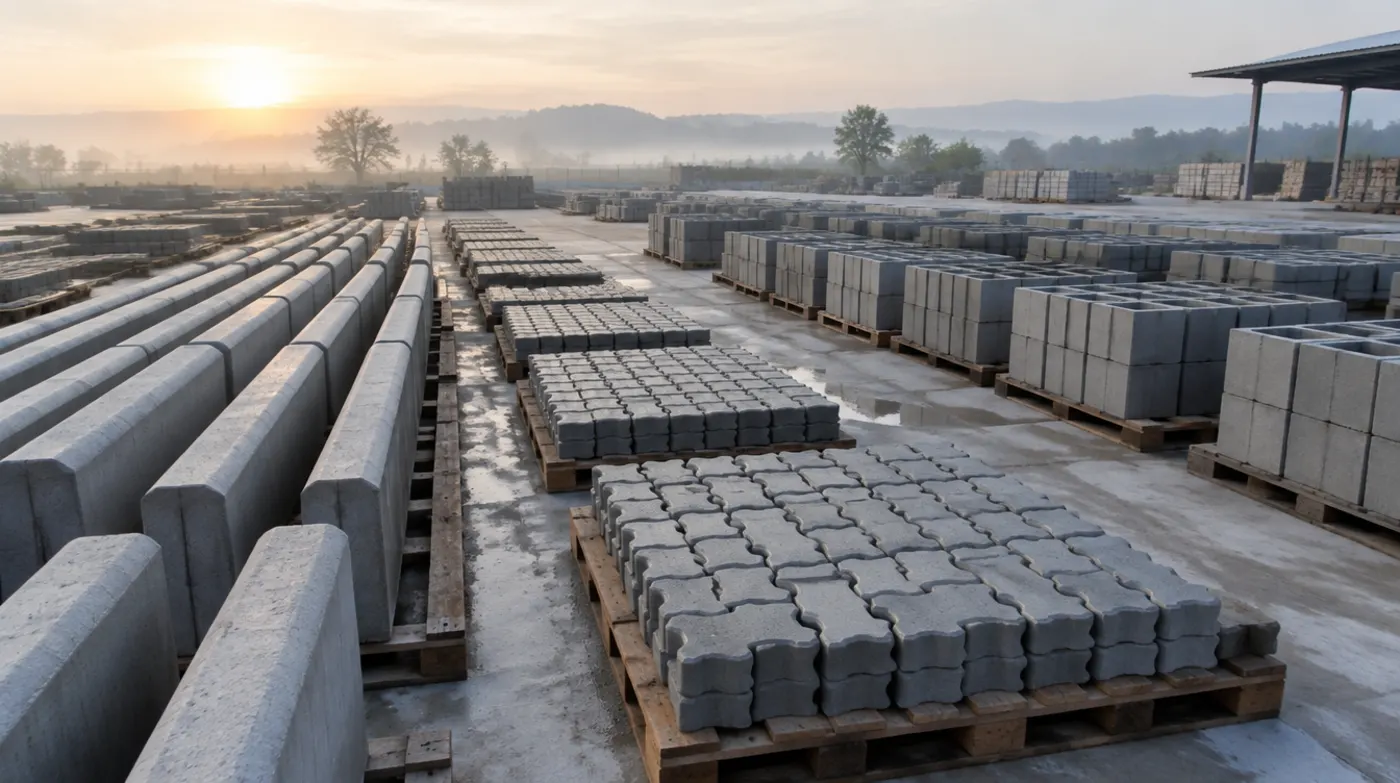
A plant based on manual machines can usually be set up on a more economical budget (under 200 million Toman). These machines mostly run on single-phase power and need less space (about 300 to 500 square meters) for production and for storing finished products.
Their maintenance costs are also relatively low and are usually limited to replacing the mold or servicing the electric motors. This makes them a practical option for starting a business or for working in areas with limited industrial infrastructure.
Requirements of Automatic Lines
The investment needed to buy mobile automatic machines ranges from 1 billion to more than 2 billion Toman. Installing this equipment requires access to three-phase industrial power (50 amps) and the construction of a large, strong and perfectly level concrete slab (at least 1,500 square meters).
These systems also need regular periodic servicing, such as changing the hydraulic oil filters and greasing the moving parts, to prevent the production line from stopping.
5. Day-to-Day Operating Costs: Labor Wages vs. Electricity (OPEX)
Much of any plant’s economic case depends on how well it manages its daily costs.
- In manual production, labor makes up a larger share of running costs. For this reason, this model makes the most economic sense for limited output, local markets or starting a business with less initial capital.
- Automatic lines, on the other hand, cost more in industrial electricity and hydraulic servicing. But when these costs are spread over high output, the final production cost per piece falls.
- An advanced automatic line can run with only a few workers, namely the machine operator, a loader driver and a supervisor, and at high volumes it can deliver a more stable profit margin.
6. Profit and Loss: Which Machine Makes Better Economic Sense?
For a clearer picture, let’s simulate production over one month (25 working days), assuming a minimum net profit of 3,000 Toman per block (after deducting the cost of cement, pumice and sand):
Manual Block Making Plant
With average production of 300 to 500 blocks a day, the plant’s gross profit will be between 22 and 37 million Toman a month. This production model is usually the more economical choice for small plants, regional projects and people who want to start out with limited capital.
On the other hand, higher output and market growth in the future may create a need to upgrade to semi-automatic or automatic lines.
Automatic Production Line (12-Cavity Mobile Machine)
With average production of 6,000 blocks per shift, profit comes to 18 million Toman a day and about 450 million Toman a month. This level of production usually suits factories with a wider sales market, public construction contracts or plans to grow on an industrial scale.
Under these conditions, the higher revenue can cover depreciation, industrial electricity and maintenance of the hydraulic system, making a return on investment possible within a reasonable 12 to 24 months.
Final Verdict: Choose Your Investment Path
The choice between a manual and an automatic machine has less to do with one being “better” than the other, and more to do with the scale of your operation and your business model.
- If your goal is to start with less capital, supply materials for a limited number of projects or work in areas with simpler infrastructure, manual machines can be a cost-effective and practical choice.
- By contrast, for mass production, working with large public construction projects and entering the market for standard industrial and lightweight blocks, automatic lines offer the greater advantage.
Tarahan Machinery, one of the independent manufacturers in the industrial hub of Tabriz, builds a range of manual block making machines (single-motor and twin-motor) and mobile automatic machines (such as the 6-cavity M.BS and 12-cavity M.BD models) using components that meet international standards.
For expert advice based on your land area, power supply and plant budget, our technical specialists are ready to help:
If you are still torn between the two types, the article Mobile or Stationary Block Machine? compares those two side by side in terms of land, pallets, capacity and labor.



Submit Comment: