


Buying a used block making machine is tempting for many new workshops: less startup capital, a machine that is ready right now, and no wait for one to be built. But a machine that has spent years under vibration and impact can have faults a short visit will not reveal. The same goes for used curbstone making machines, concrete mixers and interlocking brick machines.
This guide explains who a used purchase makes sense for, what to ask before you travel to see a machine, exactly where to look during the technical inspection, and how to judge the machine’s condition with a real test. At the end, we compare used and new machines on warranty, service, parts, delivery time and risk so you can decide with a fuller picture.
Who Should Consider Buying a Used Machine?
A used machine is not a bad choice by nature. In some situations it is a perfectly sound decision, provided the buyer knows what they are buying and accepts the risk. These groups usually gain the most from buying used:
- Buyers testing the market: If you are not yet sure block production has enough customers in your area, a simple, cheaper machine can lower the risk of entry.
- Short-term projects: A contractor who needs blocks or curbstones for one specific project and will sell the machine afterward.
- Buyers with hands-on technical knowledge: Someone who can do their own welding, hydraulic repairs or electrical panel wiring pays less for any repairs that come up.
- Workshops that want a second or backup machine: When the main line is running and the used machine only provides extra capacity or covers breakdowns, its downtime risk matters less.
On the other hand, if you are putting all your capital into one machine, have a block supply contract with a fixed schedule, or lack technical experience, every day of downtime will cost you dearly. In that case, weigh the value of a new machine’s warranty and support more seriously. If you have not chosen the type of machine yet, read the block making machine buying guide first, because the type of machine matters more than whether it is new or used.
What to Ask Before the Inspection
Many listings can be ruled out with a few phone calls, which saves you wasted trips. Before going on site, ask the seller these questions and write down the answers:
- Who made the machine, and what model is it? Parts and molds are easier to find for a machine whose manufacturer is known and still in business.
- What year was it built, and roughly how long has it been in service? How many shifts a day, and for how many years?
- Why is it being sold? A workshop closing, an upgrade to a bigger machine or a finished project are common reasons; a vague answer is a warning sign.
- What major repairs has it had? Ask about replacement of the pump, hydraulic cylinders or electric motor, and about welding on the frame.
- Does the machine run right now? Can it be started and tested with real mix on site?
- What molds and equipment come with it? Are extra molds, the electrical panel, a mixer or pallets part of the deal?
- What proof of ownership is there? The original purchase invoice, a previous contract or any document showing the seller owns the machine.
- What power supply does the machine need? Single-phase or three-phase, and at what amperage; your workshop’s supply must match it.
If you are looking for listings, the used machinery section of the Tarahan Machinery website gathers for-sale ads in various categories. This section is a place for posting ads, which means that inspecting and checking the machine is the buyer’s responsibility, as with any other used purchase.
Technical Inspection Checklist for Used Machines
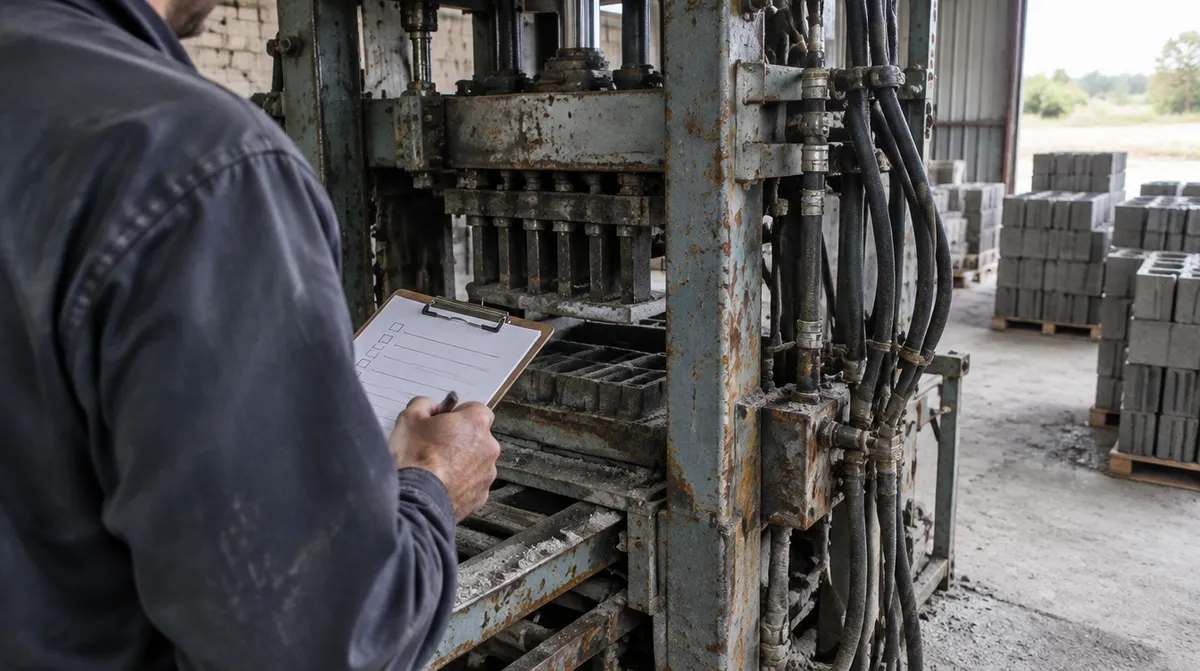
It is best to bring someone familiar with hydraulics and industrial electrics to the inspection. Do it in daylight and take photos of the machine, especially the welds and the nameplate. The checklist below covers the three machine types most common in listings.
Block Making Machine
This checklist applies to both mobile and stationary models, whether you are after a used semi-automatic block making machine or a manual model.
- Hydraulic system:
- Oil leaks around the cylinders, fittings and hoses; old oil stains on the ground under the machine are also a sign.
- Cracked or perished hoses, and the cleanliness and color of the oil in the sight glass.
- Pump noise during operation; a whine or knocking can be a sign of wear.
- Cylinders should move evenly, without shaking or sudden stops.
- Vibration motors:
- Abnormal heating after a few minutes of running.
- Bearing noise and play in the shaft.
- Tightness of the bolts securing the motor to the table or mold.
- Mold:
- Wear on the walls and edges; a worn mold produces blocks with incorrect dimensions and rough edges.
- Warping or multiple welds on the mold.
- Alignment of the tamper head (ram) with the mold cavities.
- Frame and body:
- Cracks at the welds, especially near the vibration motors, where stress is highest.
- Signs of repair welding and patches on the frame.
- Deep rust, not just surface rust.
- On mobile models, the condition of the wheels, axle and travel system.
- Guide rods: Wear or corrosion on the chrome surface and play in the bushings.
- Electrics and controls:
- Sound condition of the electrical panel, contactors and wiring; spliced or bypassed wires are warning signs.
- If the machine has a PLC, whether the PLC is working and its program is available.
- Operation of the emergency stop switches and guards.
Knowing the differences between models also helps during the inspection. If the machine is mobile, for example, our article comparing mobile and stationary block machines shows what land and labor each one requires and what capacity it offers.
Curbstone Making Machine
A curbstone making machine usually has heavier molds and higher press force, so its wear shows up in different places. When reviewing listings for used curbstone making machines, pay attention to the following:
- Curbstone mold: Wear on the facing surface, straightness of the edges, and the condition of any extra molds supplied with the machine.
- Press system: Pressure gauge reading during operation, leaks from the main cylinder, and evenness of the press movement.
- Pallets (on stationary machines): Warping, cracks and consistent pallet dimensions.
- Frame: Cracks around the vibrator mounts and repair welds.
- Sample product: If curbstones made on this machine are on site, check their surface, edges and dimensional consistency.
Concrete Mixer
Most block and curbstone workshops need a mixer, and there is no shortage of used ones for sale. When checking a used concrete mixer, look at the following:
- Mixing pan and floor: Remaining plate thickness, holes or patches, and dried concrete stuck to the wall.
- Paddles and blades: The amount of wear and their clearance from the floor; a worn paddle will not give an even mix.
- Gearbox: Abnormal noise, oil leaks and play in the output shaft.
- Electric motor and belt: Motor heating under load and the condition of the belt and pulley.
- Discharge gate: Whether it seals properly and opens and closes easily.
The same logic holds for a used interlocking brick (paver) machine: the mold, vibration, press and consistency of the sample product are the four main inspection points.
Running a Test with Real Materials
The most important part of the inspection is seeing the machine work with real mix. A machine that merely “starts up” will not necessarily make sound blocks. If the seller cannot offer a test, factor that into your assessment of the risk and the price.
- Run several full cycles: Run at least a few cycles back to back so you can also see how the machine performs once it has warmed up.
- Use a suitable mix: A mix that is too dry or too wet will make the test results misleading.
- Check the product: Measure several blocks with a tape, look at the edges, and see whether the blocks crack or crumble when moved.
- Check consistency: Blocks from the same cycle should be nearly the same height; a large difference usually comes down to the vibration or the mold.
- Time the cycle: If it is slow, find out whether the problem lies with the operator or with the hydraulics and vibration.
Block quality depends heavily on the vibration setting. If the sample blocks are not dense enough, review the tips in our article on adjusting block making machine vibration before judging the machine, so you can tell whether the fault lies in the setting or in wear.
What Determines the Price of a Used Machine?
Used machine prices, from used concrete mixers to used curbstone machines, are not fixed and vary from one listing to the next and from month to month; that is why this article quotes no price figures. Instead of a number, learn the factors that set a fair price:
- Type and level of automation: Manual, semi-hydraulic and automatic machines carry very different prices.
- Manufacturer: A machine whose maker is well known and still in business is worth more because parts are available.
- Age and time in service: The number of years and shifts the machine has worked.
- Technical condition: The result of the inspection checklist above; every fault is a repair cost that should come off the price.
- Included equipment: Extra molds, mixer, electrical panel and pallets.
- Price of a new machine: A used machine’s price is always measured against the current price of a new one.
- Transport cost: The distance from the machine to your workshop and whether a crane or trailer is needed.
One practical method is to get a quote for a comparable new machine, add the cost of necessary repairs, transport and commissioning to the listing price, and then set the two figures side by side.
Risks and Hidden Costs of Buying Used
The listing price is only part of the real cost. Work these items into your numbers before you close the deal:
- No warranty: In most used deals, the machine is sold “as is,” and if it breaks down in the first week, the buyer pays.
- Parts and molds: If the manufacturer is no longer in business, finding parts or having a new mold made becomes slow and expensive.
- Initial repairs: Hoses, hydraulic oil, bearings and belts usually need replacing right after purchase.
- Transport and installation: Dismantling, loading, hauling and reinstalling, especially for stationary machines.
- Operator training: A used machine usually comes with no manual and no formal training.
- Production downtime: Every day of breakdown means late orders and workers drawing wages without producing anything.
- Legal risk: Buying from someone who does not own the machine, or buying a machine that has been seized or pledged as collateral. Always sign a written contract with the machine’s specifications, serial or nameplate number, and confirmation of ownership.
Used vs. New Machine Comparison
In the table below, the new-machine column is based on information from Tarahan Machinery’s product pages. The used column shows typical market conditions and will naturally vary from one listing to another.
| Criterion | Used machine | New Tarahan machine |
|---|---|---|
| Warranty | Usually none; depends on what you agree with the seller | 12-month warranty (as stated on each product page) |
| After-sales service | Usually left to the buyer and a local repair technician | 10 years of after-sales service and parts supply; operator training and phone consulting for some models |
| Parts and molds | Depends on whether the manufacturer is active and how common the model is | Parts supplied by the manufacturer; custom molds available to order |
| Delivery time | Usually immediate, plus time for transport and initial repairs | Depends on the model; for example, M.KB typically takes 20 to 30 working days, and the M.KC and M.CS curbstone machines about 60 to 70 working days |
| Technical risk | Higher; hidden faults do not show up in a short inspection | Lower; an unused machine covered by warranty |
| Initial capital | Lower | Higher; installment purchase possible for some models in stable market conditions |
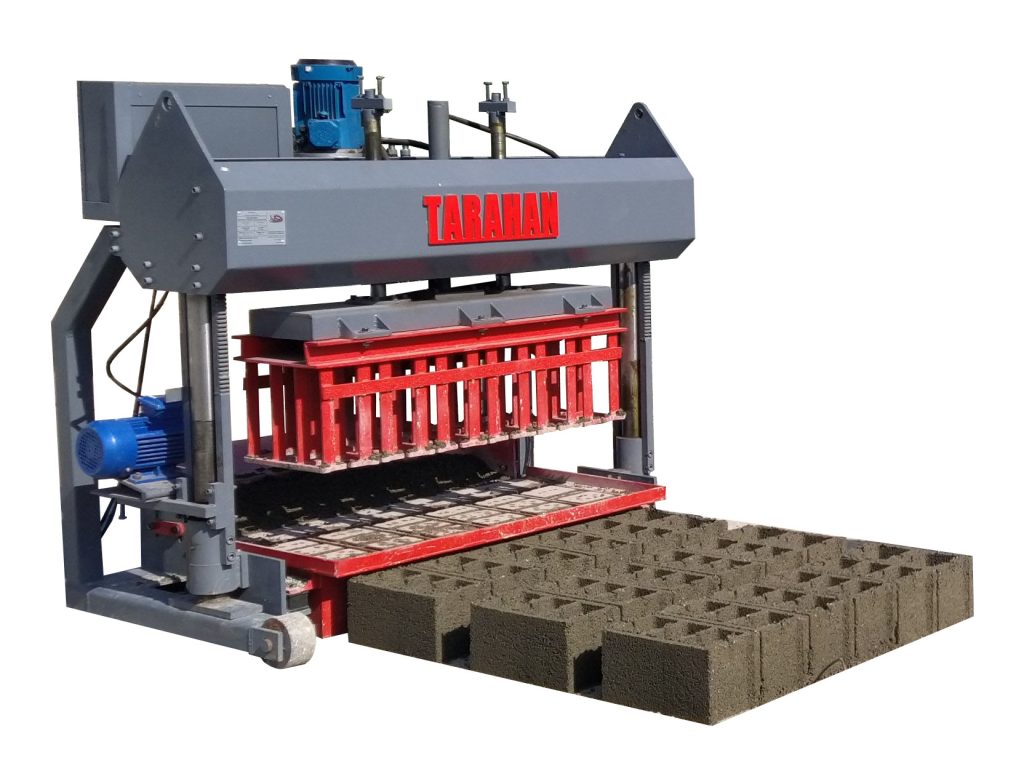
For small workshops, it is worth getting prices on simpler new models before you decide. For example, Tarahan’s manual block making machine is built in single-motor and twin-motor versions and, according to the product page, comes with a 12-month warranty and 10 years of parts supply. One step up is the Cadona M.KB semi-hydraulic block making machine, which runs on single-phase or three-phase 25-amp power, needs at least 500 square meters of flat concrete ground, and makes six 20 cm blocks per pallet (capacities are approximate, per the product page). According to the same page, this model is also offered on 6-month installment terms when purchased with its auxiliary equipment.
If you are looking for a curbstone machine, new models are listed on the curbstone making machine page; for example, the M.KC semi-hydraulic curbstone machine comes with a 12-month warranty covering replacement of defective parts and 10 years of spare parts supply. The full list of new block machines is on the types of block making machines page.
Frequently Asked Questions
Is a used semi-automatic block making machine worth buying?
It depends on the machine’s condition and your circumstances. If it makes sound, consistent blocks in a test with real mix, its manufacturer is still active, and you have the technical experience to maintain it, it can be good value. If it needs many repairs, the total cost may come close to the price of a new machine.
How much does a used manual block making machine cost?
There is no fixed price; it depends on the manufacturer, age, technical condition, included molds and the current price of a new machine. The best approach is to compare several similar listings and get a quote for a new machine at the same time.
What should I check most carefully when buying a used concrete mixer?
The plate thickness of the pan and floor, paddle wear, gearbox noise and leaks, and the seal on the discharge gate. Always run the mixer under a real load to see how hot the motor gets and how even the mix is.
Does Tarahan guarantee the machines advertised in its used section?
The used section of the website is a place to post for-sale ads. You must check the machine’s technical condition, test it and verify its ownership documents yourself or through an expert you trust. The 12-month warranty and 10 years of after-sales service stated on the product pages apply to new Tarahan machines.
How do I test a used curbstone making machine?
Make several curbstones with real mix and check their face, edges and dimensions. Also check the pressure gauge reading during pressing, cylinder leaks, and the condition of the mold and pallets.
What documents should I get when buying a used machine?
A document showing the seller’s ownership, such as the original purchase invoice or a previous contract, and a written contract recording the machine’s specifications, included equipment, price and delivery terms.
Conclusion
Buying a used machine can be the right decision as long as you go in with your eyes open: ask the initial questions by phone, carry out the technical inspection with a checklist and someone knowledgeable, test the machine with real mix, and add the hidden costs to the listing price. Then set the final figure next to the price and terms of a new machine and see which makes more sense for your workshop.
If you need current prices, delivery times or specifications of new machines for comparison, the Tarahan Machinery experts in Tabriz can help you at +98 41 3630 4464.
If you are also buying a used mixer with the machine, the used concrete mixer buying checklist separately covers inspection of the pan, paddles, gearbox and electrical panel.
Here are a few active listings on this website where you can try out the checklist above: used Talaei Isfahan block making machine in like-new condition, used Cadona semi-automatic block and curbstone machine, used semi-automatic block making machine and used semi-automatic 6-mold block making machine.


Submit Comment: