


Concrete products machines, from the concrete block making machine to curbstone and paver equipment, are key to the construction industry and play an important role in producing quality building materials. Tarahan Machinery, one of the pioneers in manufacturing block making, curbstone making and paver machines, offers a wide range of this equipment. Knowing the types of machines and their technical features helps producers pick the best option for their construction projects.
This article gives customers and anyone looking to buy these machines complete information on them and on the terminology used for concrete products machines (cement blocks, curbstones and concrete pavers), so they can buy from the manufacturer with full confidence.
It will also help you choose the right type of machine for your production volume, product type and investment before setting up a workshop or plant.
Types of Concrete Block, Curbstone and Paver Machines
Various machines are available for producing the different types of cement blocks, and they fall into two general groups:
- Stationary machines
- Mobile machines
1. Stationary Machines
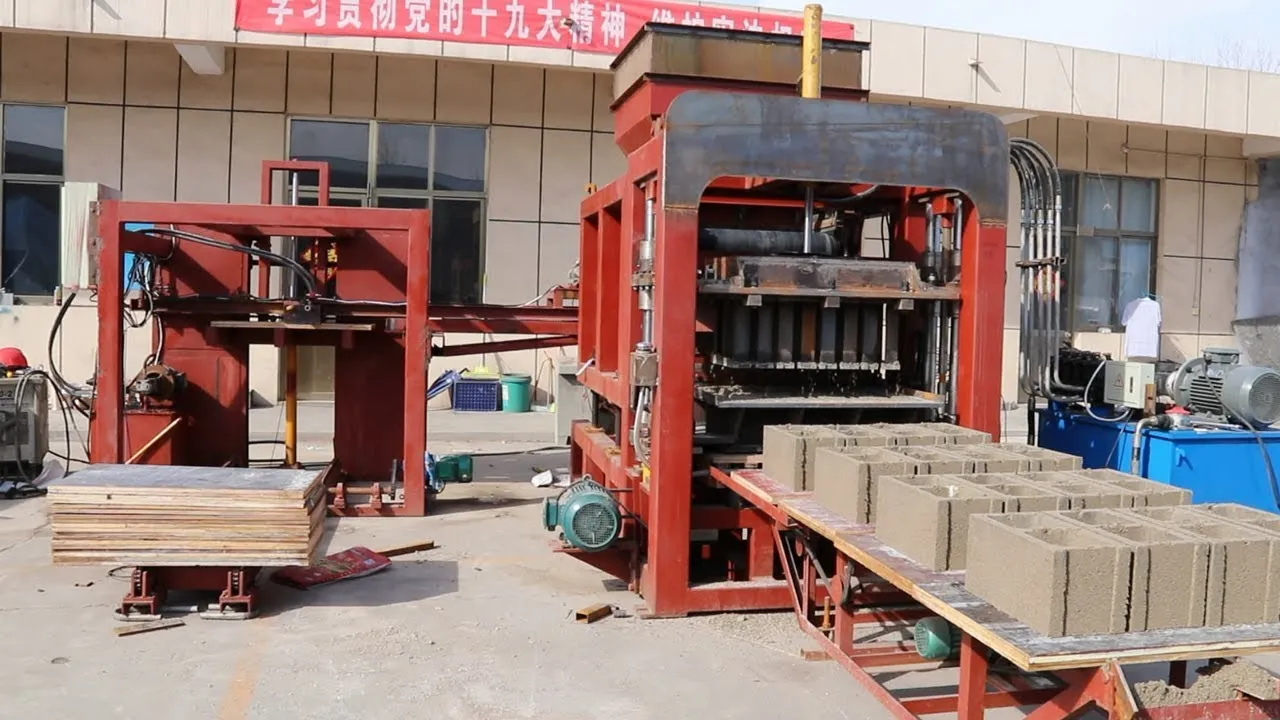
Stationary machines, known on the Iranian market as paving or pavesing machines, work the same way; the two names differ only in pronunciation. The more accurate term is paving, which refers to paving stone. To learn how this machine works, how single-hopper and double-hopper models differ and what to look for when choosing one, read our article What Is a Paving Machine?
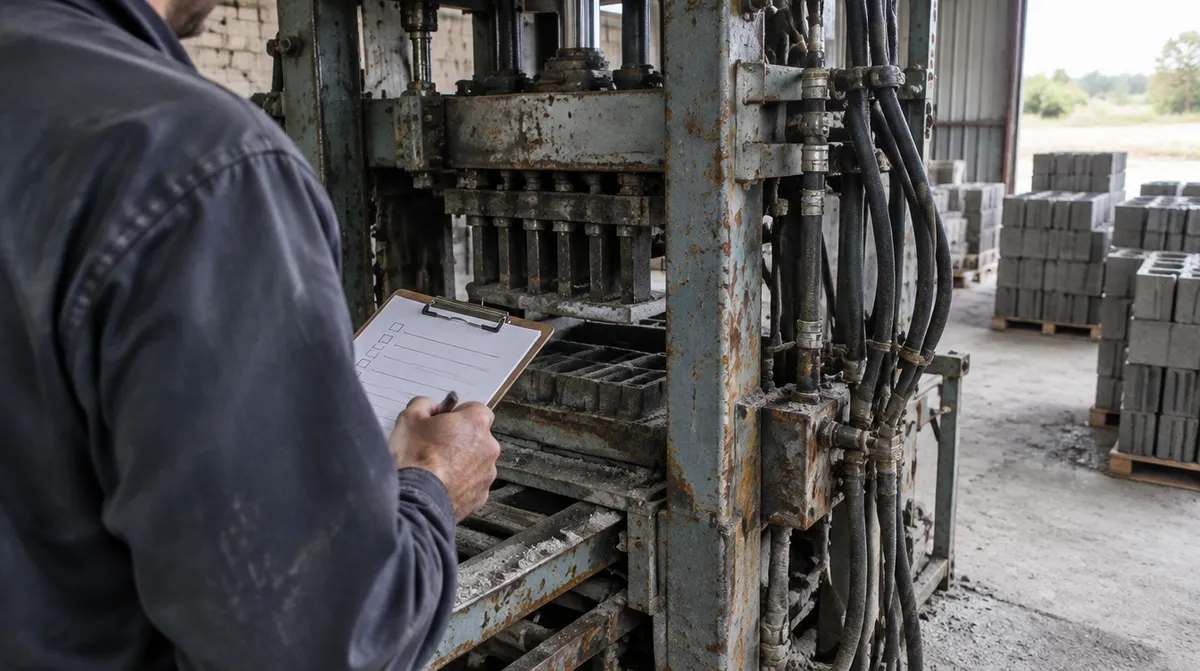
Stationary machines are built in two types: single-hopper and double-hopper. The difference between them is the ability to produce two-color pavers; it has no effect on production capacity. These machines are installed on a foundation, at a location with a pit dug to give access to the lower part of the machine (where the vibrators sit), and are set up as a production line.
Concrete Products Production Lines
Depending on the equipment and automation system placed alongside the main (paving) machine, a concrete products production line falls into one of three types:
- Semi-automatic production line
- Automatic production line
- Fully automatic production line (uses the same accessories as the automatic line, equipped with a PLC system and sensors)
The Complete Concrete Products Manufacturing Process
- A loader feeds materials such as gravel, sand and pumice into the feeder or concrete batching plant.
- After weighing, a conveyor belt carries the materials to the mixer. At this stage, cement enters the mixer through a screw conveyor and is combined with water.
- Once the mix is ready, the concrete moves to the paving machine and enters the dedicated mold.
- Inside the mold, the concrete is vibrated and pressed to form the concrete product.
- The concrete products are placed on pallets, and a robot stacks them neatly on top of one another.
- A forklift moves the pallets to the curing area or dryer.
Types of Pallets for Stationary Machines
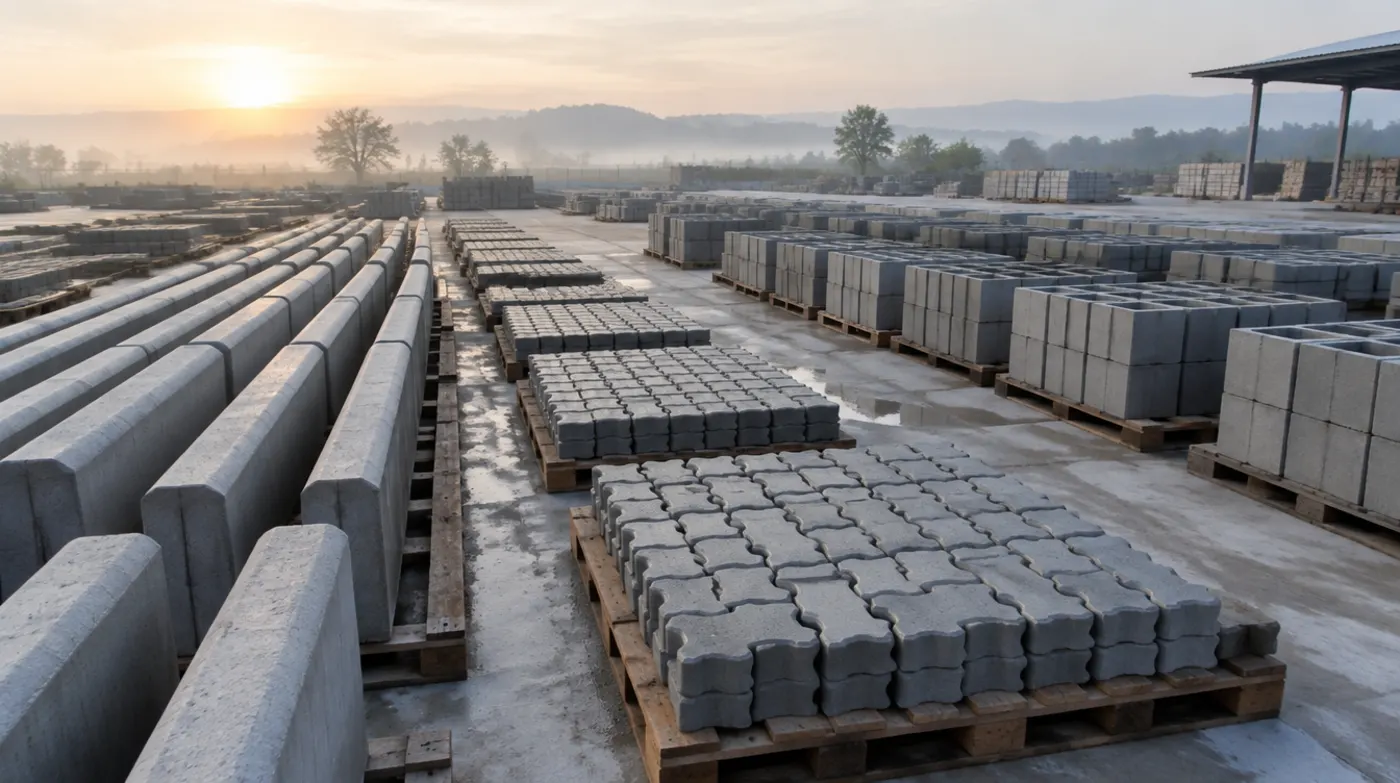
Stationary machines produce concrete products on wooden, metal or PVC pallets. The number of pallets is determined by the production capacity of the machine.
- Flat or legless pallets (for block production)
- Pallets with legs
- Double-sided pallets with legs
- Wooden pallets: the most common type, made from Russian timber and reinforced.
- Metal pallets: popular because of their lower price and resale value.
- PVC pallets: lightweight but expensive.
2. Mobile Machines
Mobile or egg-laying machines produce concrete products directly on a smooth, level concrete floor. Unlike stationary machines, which produce on pallets, mobile machines can make curbstones and blocks, but they are not recommended for producing concrete pavers or paving stones because their vibration and pressing force are too weak. To learn about the uses and types of concrete curbstones, see the related article.
Mobile machines are built in three general models:
- Manual block making machine (self-propelled or basic)
- Semi-hydraulic mobile machine (Cadona model)
- Fully hydraulic mobile machine (hopper or silo model)
Choosing and Buying the Best Concrete Products Machine
Choosing the right concrete products machine directly affects the quality and productivity of construction projects. Stationary machines, which make a variety of products with high precision, are an ideal choice for mass production, while mobile machines are better suited to smaller projects. For smaller workshops, you can also consider a semi-automatic block making machine.
Tarahan Machinery designs and builds advanced machines, offers effective solutions for producing concrete products, and ensures the confidence and satisfaction of its customers through specialized technical support.
If you are still torn between the two types of machine, our article Mobile or Stationary Block Machine? compares them side by side on land, pallets, capacity and labor.

Submit Comment: